


10 unknown songs ripped off by classic tracks

Claiming a tune is a bit like claiming a recipe as your own; it’s a futile and facile debate that simply proves that it is more to do with how you cook it. As Nick Cave once said: “The great beauty of contemporary music, and what gives it its edge and vitality, is its devil-may-care attitude toward appropriation — everybody is grabbing stuff from everybody else, all the time. It’s a feeding frenzy of borrowed ideas that goes toward the advancement of rock music — the great artistic experiment of our era.”
Vitally, however, Cave goes on to add: “Plagiarism is an ugly word for what, in rock and roll, is a natural and necessary — even admirable — tendency, and that is to steal. Theft is the engine of progress, and should be encouraged, even celebrated, provided the stolen idea has been advanced in some way. To advance an idea is to steal something from someone and make it so cool and covetable that someone then steals it from you. In this way, modern music progresses, collecting ideas, and mutating and transforming as it goes.”
Cave’s words themselves even shared a kinship with one of his heroes, the poet Stevie Smith, who chimed in, not only on this subject but the origins of great art on the whole, when she remarked: “A great artist … takes what he did not make and makes of it something that only he can make.”
Vitally, however, he goes on to add: “Plagiarism is an ugly word for what, in rock and roll, is a natural and necessary — even admirable — tendency, and that is to steal. Theft is the engine of progress, and should be encouraged, even celebrated, provided the stolen idea has been advanced in some way. To advance an idea is to steal something from someone and make it so cool and covetable that someone then steals it from you. In this way, modern music progresses, collecting ideas, and mutating and transforming as it goes.”
Cave’s words themselves even shared a kinship with one of his heroes, the poet Stevie Smith, who chimed in, not only on this subject but the origins of great art on the whole, when she remarked: “A great artist … takes what he did not make and makes of it something that only he can make.”
However, as Cave adds in his concluding words: “But a word of caution, if you steal an idea and demean or diminish it, you are committing a dire crime for which you will pay a terrible price — whatever talents you may have will, in time, abandon you.”
Beyond the impeachment of your creativity, one of the main troubles with devil-may-care ‘inspiration’ is when that appropriation is a little bit too direct, and the original creator is left in the shade. Throughout history, there have been several examples of this whereby a lowly artist is lost to the sands of time while the benefactors scores a massive hit with something nabbed from their work and laughs all the way to the bank.
In the pre-internet age, this is a scary thought. How much of history was stolen from the nameless lowly and passed off by the high and mighty without any possible recourse? Well, below are some examples of ripped-off songs that have thankfully been flagged.
10 unknown songs ripped off by classic tracks:
10. ‘How Sweet To Be An Idiot’ – Neil Innes / ‘Whatever’ – Oasis
Oasis settled on three songs over the years, proving that Noel Gallagher has a liberal eye for appropriation – a trend which has continued in his solo work. However, of the two cases compelling enough to grant the original songwriter’s credits, Neil Innes’ name is the sorest spot. After all, the other name is Stevie Wonder, so it’s not like the Gallagher were hiding their inspiration all that much in that instance. But without intervention, ‘Whatever’ may well have lived on forevermore without the source material being revealed.
Innes might be known to some as the songwriter who helped apply Monty Python to music and a member of The Bonzo Dog (Doo-dah) Band. However, his 1973 single ‘How Sweet To Be An Idiot’ is not quite so well-known to many. But when you listen, it will sound very familiar given that the melody is a mirror image of ‘Whatever’.
9. ‘Dazed and Confused’ – Jack Holmes / ‘Dazed and Confused’ – Led Zeppelin
Jimmy Page has made no secret about his inspirations over the years. Theft, to him, is almost an engine of originality. As he once stated: “I believe every guitar player inherently has something unique about their playing. They just have to identify what makes them different and develop it.” Thus, you can play the same notes and still sound different, and that is pretty much the tenet of individualism that rock ‘n’ roll thrives on. However, that has also placed Led Zeppelin of being in the peculiar position of being a band that pretty much spawned a genre and one of the bands most heavily linked to plagiarism in rock history.
The most compelling and damning case on that front comes from Jack Holmes. Over 55 years ago, Page was in the Yardbirds, and they were headlining a show at the Village Theatre, the famed venue which later became the Fillmore East in New York City. Jake Holmes opened the show and blazed up his stoner anthem, ‘Dazed and Confused’. Page was peeping behind the curtain and found himself flawed by the sludgy folk gem that staggers and saunters in a style that preserved the zeitgeist in amber, so he seemingly stole it. In June 2010, Holmes finally got Led Zeppelin to pay attention to him after years of trying when he sued, citing copyright infringement and the matter was resolved out of court.
8. ‘Watch Your Step’ – Bobby Parker / ‘I Feel Fine’ – The Beatles
The Beatles loved the blues and what they took from the genre they usually reinvented into pop, but this Sevenths melody remains a bit close to the original for Bobby Parker’s comfort. In an interview on MSNBC, Parker spoke about the likeness, stating: “McCartney was a good friend of mine, he still is! But they should put a little leverage on some of the songs that they y’know…” at which point the interviewer blurt, “They stole your riff man!” And Parker humorously replies, “I’m pleased you said it!”
The forever upbeat Bobby Parker was simply flattered that they liked his work, and when he met them, he was happy to shelve it with a handshake, even if he does joke that they should have maybe lined his hand with something other than a mere shake. In fairness, the two riffs might sound similar, but in a musicological sense, one is a E7 and the other in G7.
7. ‘Crescent City Blues’ – Gordon Jenkins / ‘Folsom Prison Blues’ – Johnny Cash
There is taking inspiration, and then there is copying a song almost like-for-like, bar an uptake in tempo and hoping nobody notices. With the reassurance of Sun Records founder Sam Phillips, Cash tweaked the 1953 track, later citing: “At the time, I really had no idea I would be a professional recording artist; I wasn’t trying to rip anybody off.”
That, indeed, was true. Cash was just laying down some licks in the studio and subverted one of his old favourites to show Phillips what he could do in the hopes of making it as a musician and leaving the airforce behind. But Phillips smelt a hit immediately. In the end, Phillips was right, the song became popular, and Jenkins eventually sued, settling on a payout of $75,000 in the early 1970s. Alas, at least Cash also edited in one of the finest lines of all time with “I shot a man in Reno just to watch him die”.
6. ‘Taj Mahal’ – Jorge Ben Jor / ‘Da Ya Think I’m Sexy?’ – Rod Stewart
In an ironic way, the world should be very thankful for the virtuous-by-proxy nature of Rod Stewart’s shameful theft because it introduces us to the absolute banger that is ‘Taj Mahal’. It’s ‘Da Ya Think I’m Sexy?’ without any of the cringe-inducing guilt. And rounding off the positive vibe of this one is that the whole thing was settled out of court with the fee being donated to UNICEF.
Jorge Ben Jor was a Brazilian musician who wrote his effort in 1972. A few years later, Rod was enjoying a carnival in Rio where the buzz of the crowd seeped into his addled brain. By 1978 he was singing the same melody (and appropriating the string arrangement) as Jor’s effort without knowing it. He later admitted in his memoir to an act of “unconscious plagiarism”.
5. ‘Speedy Gonzales’ – Pat Boone / ‘Crocodile Rock’ – Elton John
If it’s wrong to steal from a song, it’s far worse to steal from a highly culturally insensitive song. ‘Speedy Gonzales’ is not quite a classic, and thankfully so. However, the melody given off by a wailing Mexican protagonist went on to inspire Elton John’s least favourite hit and even Bernie Taupin said, “It’s not something I would listen to” as well.
Well, they might not like it, but they knew it was a hit, holding the same melodic mainstay that so many songs used in the late-1950s. As Elton would later admit, it is “a really blatant homage to ‘Speedy Gonzales’ and all the great ’50s and ’60s records that we used to love”. An out-of-court settlement was later reached between the songwriting parties.
4. ‘The Air That I Breathe’ – Albert Hammond & Mike Hazlewood / ‘Creep’ – Radiohead
Much like ‘Crocodile Rock’, Radiohead hate ‘Creep’. Which made a disputed patch in its history all the more peculiar. Shortly after its release, music nerds claimed it wasn’t even an original, as the chord progression and melody resemble Albert Hammond Sr and Mike Hazelwood’s 1972 ballad ‘The Air That I Breathe’, which later became a hit for The Hollies in 1974.
Rondor Music soon pushed for royalties. And Hammond and Hazelwood were soon given a cut and a co-writing credit. “I only own the writer’s end,” Hammond revealed. “The publisher of the song, Rondor Music, felt [‘Creep’] was a steal from ‘The Air That I Breathe’, and he sued Radiohead, and they agreed.”
He continued: “Because they were honest, they weren’t sued to the point of saying ‘we want the whole thing’. So we ended up just getting a little piece of it.”
3. ‘Takin’ Me to Paradise’ – Bruno Bergonzi and Michele Vicino / ‘The Most Beautiful Girl in the World’ – Prince
There has been a long-running dispute regarding ‘Takin’ Me to Paradise’ vs ‘The Most Beautiful Girl in the World’ since 1995. This is why if you go to Italy, you’ll struggle to come across Prince’s record, The Gold Experience. Bruno Bergonzi and Michele Vicino penned an Italian disco song in 1983 with a slightly similar vocal melody to Prince’s hit effort. Then when his track gained traction, they dug their heels in.
An Italian court ruled in their favour, and Prince’s subsequent appeals resulted in decades of disputes. In 2021, his estate finally decided that the verdict should be upheld (or couldn’t be bothered to fight it anymore). The similar choruses are notable, but with the difference largely stopping there, it is possible that Prince pleaded innocence in all honesty.
2. ‘Sugar Don’t Bite’ – Sam Harris / ‘Papa Don’t Preach’ – Madonna
Sam Harris is a renaissance man known for his acting, singing, novels, theatre work, and superb flowing locks. While he was hedging his bets on where to ply his creative craft, after becoming the champion of Star Search in 1983, he decided to sign a deal with Motown and chance his hand at an album. He hit 36 in the charts with a resultant single, ‘Sugar Don’t Bite’, only for it to fade into obscurity enough for Madonna to nab it. When he raised the alarm, the pair agreed on an undisclosed fee to settle any rights dispute.
In fairness, I come down on Madonna’s side on this one. At the same time, you can even tell the similarities from the title when it comes down to the melodic refrain of the title, which turns out to be just a minor snippet of the whole song. Naturally, it has drawn attention because it just so happens to be the most significant three-bar refrain of the whole song, but thereafter the compositions vary greatly.
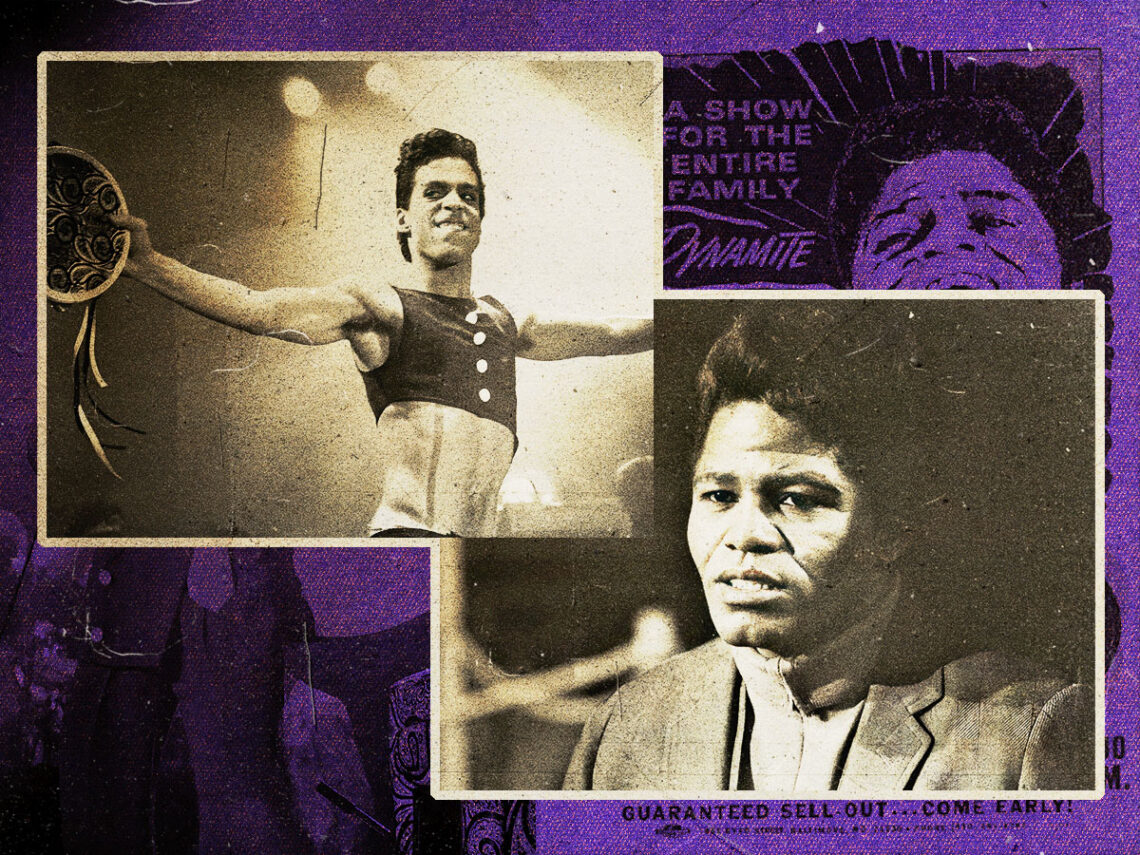
1. ‘It’s a Man’s World (But What Would He Do Without a Woman)’ – Betty Jean Newsome / “It’s a Man’s Man’s Man’s World” – James Brown
It’s the ultimate irony that the song’s message is redefined in a patriarchal sense by the debacle behind its royalties debate. Newsome had been observing the balance between the sexes in society for some time. When she met James Brown, and they started dating, the up-and-coming singer took a liking to a tune she was working on. He then took it for his own and popped himself down as the song’s co-writer.
Newsome later disputed this in court, stating that she had already written the song in its entirety and that he often failed to pay her royalties. The ultimate verdict is very telling when it comes to the song’s message: Newsome received copyright and a mere third of the overall royalties. The official court report for the claim states: “As the complaint states, Newsome wrote the words and music to the song ‘It’s a Man’s World’, which was registered with the Copyright Office on October 23, 1964 under the number Ep 193698 in the name of Clamike Music Publishing Company. Newsome was listed as the author.”
However, it also explains that she hummed the tune of her song in the back of a limo to Brown while working as his backing vocalist, and he spun it into a new track.

Never Miss A Beat
The Far Out Beatles Newsletter
All the latest stories about The Beatles from the independent voice of culture.
Straight to your inbox.