


Right story, wrong screen: 10 underwhelming movies that would have thrived as TV shows

The gap between cinema and television has been narrowing for some time, and as a result, the lines between film and TV have become increasingly blurred.
While there’s definitely a distinct difference between the two mediums, despite showrunners’ protestations that episodic storytelling isn’t TV by any stretch of the imagination, some stories are better suited to the big screen than the small one.
On the other side of the coin, the opposite is just as true, with plenty of movies having missed a trick by deciding 90 minutes was the better choice than six, eight, ten, or even 12 hours. Of course, hindsight is always 20/20, making it easy to look back and pick out the worst offenders.
None of the following ten flicks are great, several of them are OK at best, and a couple are flat-out awful. And yet, the one thing that unites them all is that their stories, concepts, and themes would have thrived on TV instead of floundering in cinema.
10 movies that should have been TV shows:
10. The Dark Tower (Nikolaj Arcel, 2017)
On the plus side, the dismal Stephen King adaptation is already in the midst of a rapid-fire reboot, and there’s a distinctly high probability it’s going to be everything the movie was not.
Regarded by many as the prolific author’s magnum opus, the sprawling fantasy saga could never be done justice in the space of a single feature, never mind one that endured a tortured development and was hacked to pieces in post-production and whittled down to just 95 minutes including credits.
On the small screen, Mike Flanagan has yet to put a foot wrong, and the fact The Dark Tower has always been a passion project virtually guarantees the belief it would be better on the small screen will be proven completely correct.
9. The Adjustment Bureau (George Nolfi, 2011)
Philip K Dick has been a fountain of inspiration for sci-fi movies and TV shows for decades, but some of his stories require a little more time to breathe to get their message across, and The Adjustment Bureau is one of them.
That’s ironic in itself when 1954’s The Adjustment Team was only a short story, but George Nolfi shot himself in the foot by trying to cram so many big, bold, and interesting ideas into a 106-minute thriller that didn’t linger long in the memory at all.
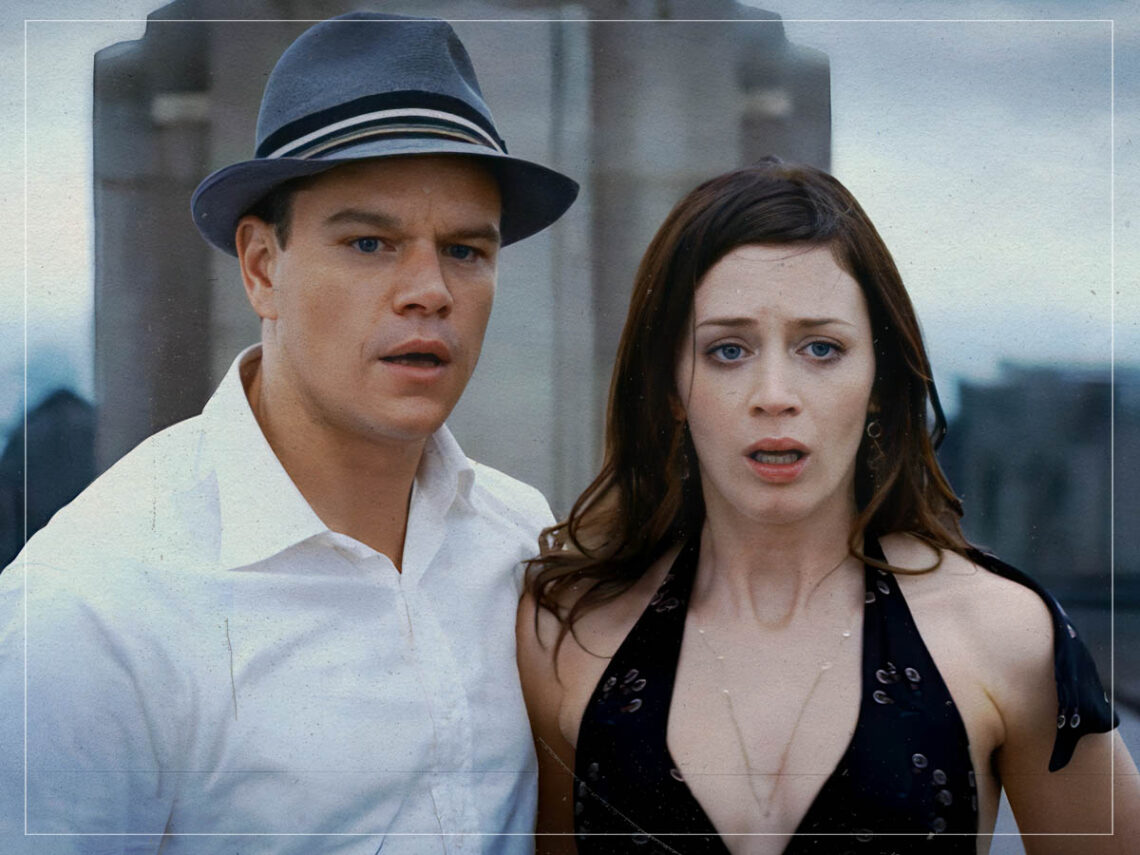
Manifesting the idea of fate as a physical entity that pushes people in a pre-ordained direction is a fascinating one, and it was wasted on a rote Matt Damon caper. In theory, the concept has unlimited potential on the small screen, with each new season focusing on a fresh protagonist, should anyone get the itch for a reboot.
8. The Book of Eli (The Hughes Brothers, 2010)
While there’s the obvious downside of sacrificing the involvement of Denzel Washington, given his aversion to TV acting, The Book of Eli was nonetheless full of half-realised concepts that were ripe for exploration.
The social commentary capable of being mined from a single religious text carrying the potential to upend the post-apocalyptic new world order could sustain a series in itself, never mind expanding the scope to politics, fear, control, and subjugation.
Ruined wastelands are all the rage on the small screen, as they have been for years, but throwing a ‘Man with No Name’ substitute into the mix while ruminating on what’s always been at the heart of many global issues would present an undeniably fresh perspective.
7. Bright (David Ayer, 2017)
Netflix’s first major original blockbuster possessed the novelty value of seeing Will Smith in a streaming exclusive, but beyond that, Bright was as forgettable as it was uninteresting.
Many of the biggest shows in modern television are rooted in the fantasy genre, but Bright unfolding on the streets of Los Angeles would immediately make it stand out from a crowded pack of faraway lands and magical kingdoms.
In the movie, there’s a dragon flying across the skyline and a traffic cop who also happens to be a centaur. They never get seen or mentioned again, but that alone is enticing enough to hint towards a much larger world that was sacrificed in favour of standard Smith shenanigans.
6. Surrogates (Jonathan Mostow, 2009)
If anything, the concept of Surrogates has never been more timely than it is now, but the powers-that-be decided the premise was best used for a monotonous Bruce Willis blockbuster nobody remembers.
Surrogates unfolds in the near future when people decide that the best way to avoid danger, conflict, and generally the things they don’t want to do is to live their lives through physical representations of their idealised selves before the first murder in over a decade shakes up the status quo.
In the social media age, where people build their personalities around sharing an existence curated to within an inch of their life with people they’ve never even met, the thematic boundaries of a world where society has taken the next step and remained housebound for that very reason are endless. Plus, it’d be a procedural, and everybody watches at least one.
5. Hotel Artemis (Drew Pearce, 2018)
Coming in at just over an hour and a half, Hotel Artemis didn’t have a chance to make the most of its engaging titular location, with Jodie Foster and a star-studded cast barrelling through more than enough story to fill a series.
One major reason the film flopped and was cold-shouldered by critics and audiences was that it teased something unique, only to drop its most enticing aspects in favour of standard crime thriller fare with a dystopian bent and a cavalcade of big names.
A 13-story establishment with a members-only policy that specialises in treating criminals for the wounds inflicted during their illicit activities – all spearheaded by a mysterious nurse – was never going to thrive with the time restrictions, but as a series? It’s got all the promise in the world.
4. The Book Thief (Brian Percival, 2013)
Hollywood didn’t waste any time in snapping up The Book Thief, with the feature-length adaptation released in cinemas less than a decade after the novel’s publication.
Unfortunately, that meant sacrifices needed to be made, with the 584-page source being crammed into just over two hours of screentime, which ensured that much of what made author Markus Zusak’s book a bestseller to begin with was lost in translation.
Sure, it was profitable, but giving a coming-of-age story and journey of self-discovery unfolding during World War II would have been significantly better off being separated into episodes to reflect the immersion and resonant messages prevalent on the page.
3. Push (Paul McGuigan, 2009)
There’s nothing bigger than superheroes, as has been the case for the majority of the 21st century, but how many of the superpowered stories being told are completely original? Not many.
Screenwriter David Bourla and director Paul McGuigan crafted an entirely unique mythology for Push, which stood in stark contrast to the formula being churned out by the likes of Marvel and DC. It wasn’t a great movie, or even a good one, but it was a concept nonetheless better off for television.
A shady government agency has been experimenting, weaponising, and murdering individuals with an eclectic assortment of abilities for decades, with a ragtag group of heroes taking the fight to their oppressors. On that level, it’s fairly standard, but Push piqued the curiosity to such an extent it’s hard not to think it’d be the perfect antidote to the never-ending superhero onslaught.
2. The League of Extraordinary Gentlemen (Stephen Norrington, 2003)
A movie so wretched it ended two careers, The League of Extraordinary Gentlemen‘s lasting legacy was that of doom, gloom, and self-imposed exile.
Star Sean Connery and director Stephen Norrington never worked in cinema again after butting heads repeatedly during the shooting, while the film itself was hardly reflective of Alan Moore’s acclaimed graphic novel that blended literary giants with steampunk spectacle.
In a nutshell, it’s the Victorian-era Avengers, with Allan Quartermain, Mina Harker, The Invisible Man, Henry Jekyll, and Captain Nemo partnering up to thwart evil. On paper, it was excellent, but onscreen, it was crap. As an episodic story, though, it could easily be a winner.
1. In Time (Andrew Niccol, 2011)
One of the oldest and most applicable sayings in human history is that time is money, so it boggles the mind that nobody thought to take it literally until Andrew Niccol’s sci-fi thriller In Time.
In a future where the sentiment applies, wealthy folks can pretty much live forever, while the lower classes have to graft just to make it through the day. Justin Timberlake gets the gift of a century, which instantly makes him a target for nefarious forces.
In Time was crushingly disappointing based on both Niccol’s previous with similar themes in Gattaca and The Truman Show and the rampant mediocrity displayed onscreen, but as a TV series, it would have more than enough time to luxuriate in a concept that’s as rich and resonant as they come.
