


A nightmare for the eyes: The 10 ugliest movies ever made

Cinema has the power to be stirring, heart-warming, tear-jerking, beautiful, and many more superlatives in between, but it can also be unforgivably ugly on occasion.
While it would be easy to take aim at productions cobbled together on shoestring budgets by an amateur cast and crew as the most egregious offenders, that doesn’t really seem fair when major studios and proven names can be just as bad – if not worse – when painting on a much bigger canvas.
For whatever reason, certain films are allowed to make it all the way through post-production and into multiplexes without anyone stopping to take a moment, catch their breath, and question why on earth the footage is so unfortunate on the eyeballs.
Maybe the titles in question are simply too far gone by that point, but the common thread among the following ten flicks is that they’re best viewed either from a distance, through squinted eyes, or not at all.
The 10 ugliest movies ever made:
10. Sky Captain and the World of Tomorrow (Kerry Conran, 2004)
While it has to be acknowledged that Sky Captain and the World of Tomorrow is a landmark in modern cinema, that doesn’t make it any easier on the eyes. The beige hues and constant soft focus wears out its welcome in minutes, and it’s worth arguing if the film did more harm than good.
After all, it was the first major motion picture to be shot entirely on greenscreens with completely digital backgrounds, something that’s since become the norm. The downside is that viewers can always tell, and as the first of its kind, Kerry Conran’s one and only feature was always going to be rough around the edges.
A pioneer it may have been, then, but with a $70million budget to play with, something a little more appealing wouldn’t have gone amiss. The story was hardly engaging enough to compensate, either, yielding a star-studded but muddily murky retro-futurist tale that’s only diminishing with age in terms of how palatable it is to the peepers.
9. A Sound Of Thunder (Peter Hyams, 2005)
It sounds scarcely believable, but A Sound of Thunder really did cost $80m to produce, not that anyone would have realised based entirely on the grotesque visuals that haunt every single frame of the movie‘s turgid 101 minutes.
Ben Kingsley’s wig alone is enough to get it on the list, to say nothing of the woeful cinematography, repulsive framing, pitch-black lightning, and CGI that would have felt out of place in the late 1980s, never mind the mid-2000s.
It’s a horrible thing to witness unfolding on-screen and a sobering reminder that just because a film costs a lot of money, there are no guarantees it’ll even be competent on a visual level. Instead, A Sound of Thunder is a cautionary tale of just how ugly cinema can turn out if the technology is placed into incompetent hands.
8. The Hobbit (Peter Jackson, 2012-2014)
Visual effects technology had advanced leaps and bounds in the decade between The Lord of the Rings and The Hobbit, which apparently gave Peter Jackson the completely wrong message when he embarked upon the follow-up trilogy.
Ian McKellen was brought to tears by how much CGI and greenscreen was used compared to the previous three, a sentiment that was reciprocated by the viewer. Somehow, the visual effects are exponentially worse than they were on The Lord of the Rings, and the frame rate debacle only compounded matters.
The films were shot at 48 frames per second, but when they were screened that way, they looked nothing like cinema at all. It was akin to watching a rehearsal, except this time the tangible backdrops were replaced by artificial effects, and the creatures appeared as though they’d been ripped right from a PlayStation 2-era cutscene.
7. Indiana Jones and the Kingdom of the Crystal Skull (Steven Spielberg, 2008)
One of the many wonderful things about Steven Spielberg‘s Indiana Jones trilogy was that CGI was used to enhance the action sequences, a belief system that was lobbed out of the window by the time Kingdom of the Crystal Skull escaped from development hell.
The sepia-tinged cinematography was bad enough, but there’s hardly a scene in the entire movie that doesn’t look jarringly false, whether it’s those infernal gophers, the army of human-devouring ants, Shia LaBeouf swinging from vines, or that terrible-looking alien who shows up at the end.
After two decades in development hell, this is what the world was gifted, with Kingdom of the Crystal Skull a garish monstrosity that trades almost exclusively in beiges, browns, and distracting digital facades.
6. The Polar Express (Robert Zemeckis, 2004)
It might have become a staple of the Christmas viewing calendar over the last 20 years, but holy hell is The Polar Express an ugly thing to look at when the festive feeling is placed to the side in favour of cold, hard, truth.
A one-way trip to the uncanny valley, there’s an almost nightmarish quality to the dead-eyed characters who populate the story, with Robert Zemeckis surely the only person who was operating under the impression his family-friendly adventure was here to change the course of cinema history.
Seeing as his ImageMovers digital company went bust less than a decade later after a string of failures, it did not. People may revisit The Polar Express every year, but trying to soak up every fibre of its aesthetic has the potential to cause an aneurysm because it’s an unsightly experience for the eyes and brain.
5. The Adventures of Sharkboy and Lavagirl (Robert Rodriguez, 2005)
Co-written, directed, produced, edited, and scored by Robert Rodriguez – with cinematography also from Robert Rodriguez – The Adventures of Sharkboy and Lavagirl is what happens when there’s nobody around to give a filmmaker a firm ‘no’.
Rodriguez has often come across as the well-funded version of someone who makes DIY genre movies for no other reason than shits and giggles, except he’s a multi-talented technical wizard who owns his own production company and has the backing of a major studio, so he can get them into cinemas.
It might well be a light-hearted romp designed to appeal specifically to a younger generation, but parents still had to sit through it, and their retinas may have never been the same again. It’s a diabolical feature from a purely visual perspective, possessing absolutely no redeeming qualities while making a mockery of cinema’s basic fundamentals.
4. Alice in Wonderland (Tim Burton, 2010)
There’s only one reason why Tim Burton‘s Alice in Wonderland cleared a billion dollars at the box office, and it’s because it was the first major blockbuster to be slapped with a shoddy 3D post-conversion to release in the immediate wake of James Cameron’s Avatar.
Even without the hastily-added third dimension, the big-budget fantasy is a wretched example of uninspired construction. The cinematography is as flat as it gets and barely even one-dimensional, and the production design barely matters when it’s either grey, black, or brown and quite clearly not there when the actors were performing.
As an exercise in squeezing every last penny out of the audience, it was a huge success. On the other side of the coin, it’s one of the ugliest studio-backed tentpoles of the 21st century, a cacophony of cumbersome crap that had Burton coasting on autopilot while leaving his creative cap firmly on the shelf.
3. Alien vs. Predator: Requiem (The Brothers Strause, 2007)
Paul W.S. Anderson’s first Alien vs. Predator crossover was not a good movie by any stretch of the imagination, but for better or worse, at least the people unfortunate enough to watch it were able to comprehend what was happening.
In the dismal Requiem, the portentously named ‘The Brothers Strause’ – Greg and Colin to their friends and family – decided that the best way to pit two of sci-fi’s most iconic creatures against each other was to cloak it in so much darkness nobody would be able to see a fucking thing.
What happens in the AvP sequel? No idea, because it’s borderline impossible to penetrate the overwhelming sense of darkness that plagues every frame. It’s as if nobody bothered to factor lighting into the budget and then when everyone turned up on set, they decided to ahead and shoot without it anyway.
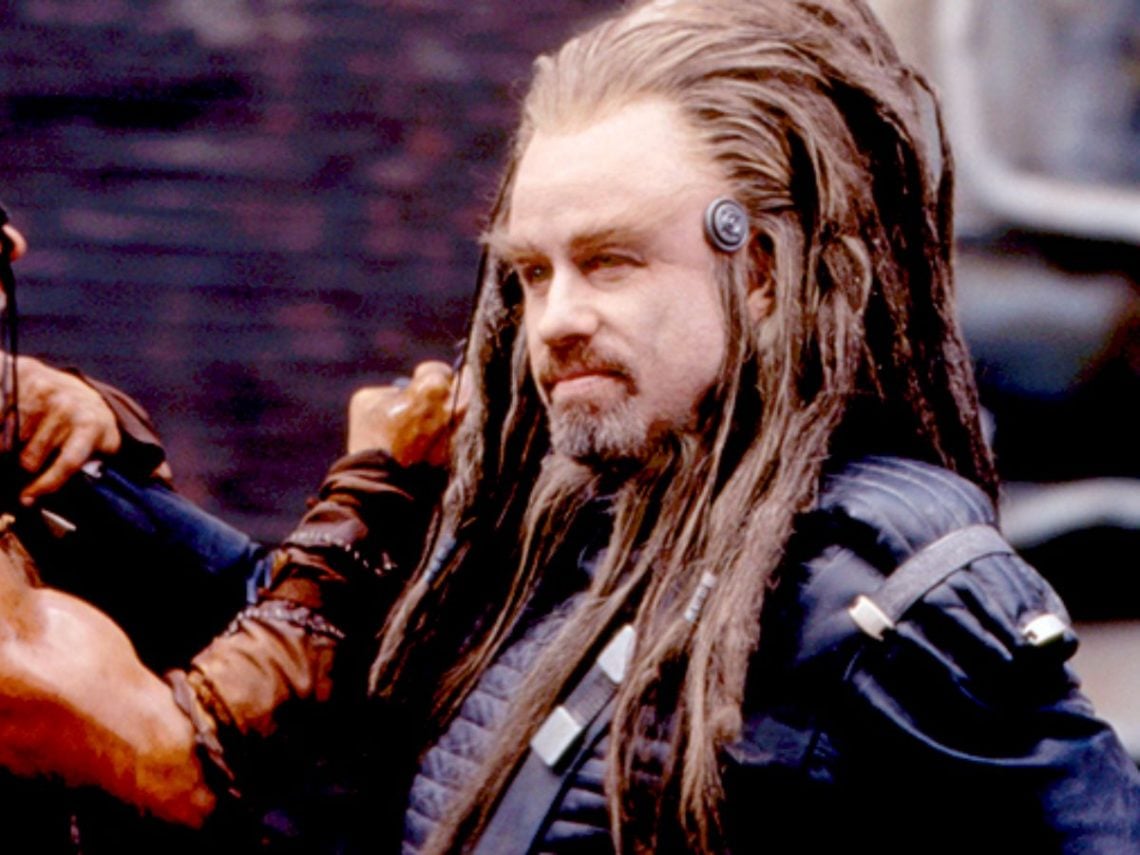
2. Battlefield Earth (Roger Christian, 2000)
To paraphrase Oprah Winfrey, Roger Christian was (probably) walking around the set of Battlefield Earth pointing to all of his camera operators and shouting: “You get a Dutch angle! You get a Dutch angle! You get a Dutch angle! And you get a Dutch angle!”
There’s barely a shot in the entire movie that isn’t tilted to some degree, and while it’s admirable for any filmmaker to try and inject a little style into such blatant Scientology propaganda, it would have been nice to see something else parachuted into the mix beyond a relentless barrage of canted angles.
That’s to say nothing of the horrid bluish-grey hue and tawdry set design, with the tint presumably designed to obscure the fact the sets looked as if they were made of cardboard, which does kind of make sense considering the production company was successfully sued for fraud and went out of business after artificially inflating the budget.
1. Cats (Tom Hooper, 2019)
It’s a question many people have asked themselves after being subjected to the phantasmagorical nightmares of Oscar-winner Tom Hooper’s Cats. What the fuck is this, and who exactly has this been made for?
Actors in cat costumes would have been silly, but turning them into mutant hybrids was even sillier in execution, with no amount of showstopping song-and-dance numbers covering up the fact this expensive folly was a disaster waiting to happen from the very start.
A truly ugly work of cinema in conception, design, and ultimately release, spare a thought for the poor visual effects artist who reportedly had to comb through every frame of footage to digitally erase the buttholes that were said to be running rampant. Unfortunately, they didn’t save everyone some hassle and erase the whole thing from the hard drives.
