


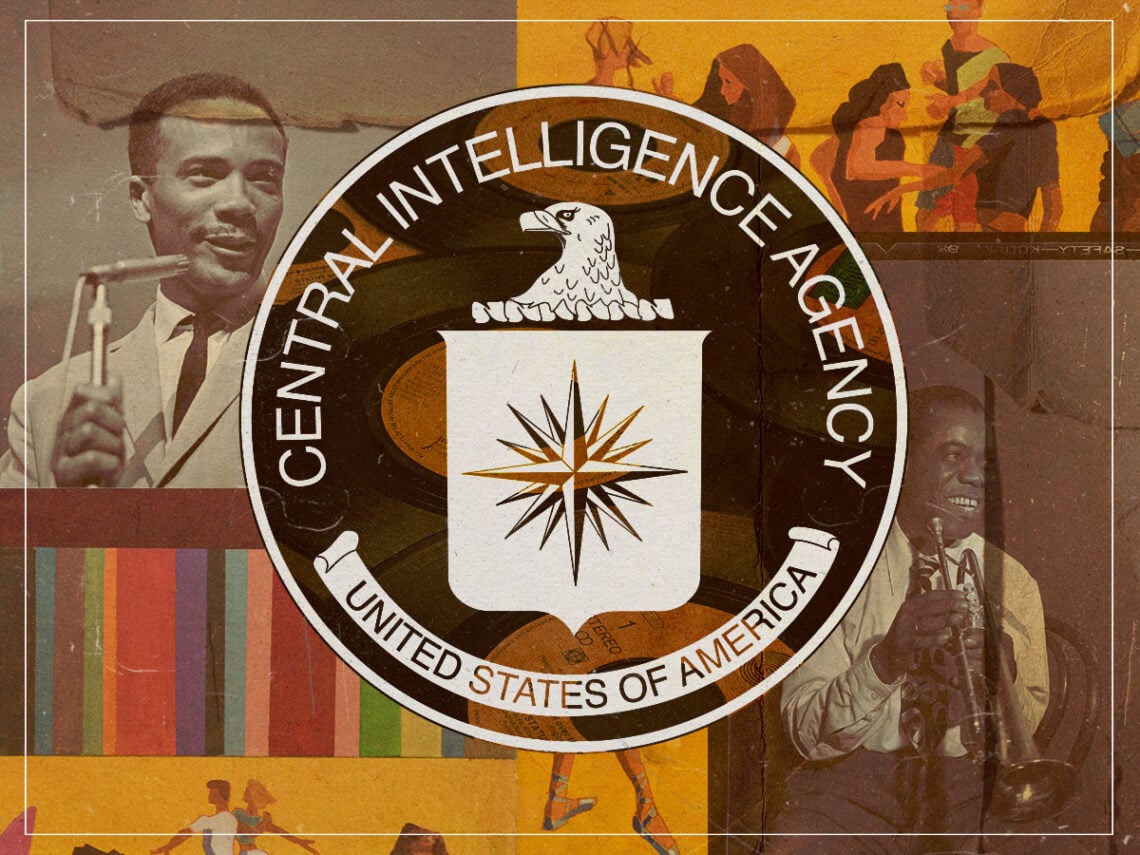
10 songs that the CIA used to torture prisoners

As anyone who has spent any degree of time with a child who has recently discovered the song ‘Baby Shark’ can tell you, music’s potential for annoyance can certainly be stretched to torturous levels. The repeated refrain of the song quickly becomes a sort of sonic Chinese water torture and has you clawing the walls for the sanity of silence once more. This head-spinning reaction is actually something that the CIA has weaponised over the years.
While the pain of ‘Baby Shark’ may have a pithy toddler undertone to it, the realities of musical torture are a far darker affair. As the brilliant Jon Ronson revealed in his book The Men Who Stare at Goats, the CIA are far from afraid of deploying a radical tactic and sometimes these are far from comical film fodder and stretch into a realm of nettlesome morality. The damage caused among inmates, many of whom avowed their innocence, was anything but the ‘torture-lite’ that the CIA touted the practice as.
One technique that the CIA deployed is termed ‘Sound Disorientation’, whereby prisoners are essentially blasted with loud music for sustained 24-hour periods. As internal reports state, “Detainees were kept in complete darkness and constantly shackled in isolated cells with loud noise or music and only a bucket to use for human waste”. The aim of this was to “create fear, disorient” and “prolong capture shock”. However, psychological torment was not the only outlook of the tactic. In some ways, it was also a dark extension of cultural hegemony.
Cultural hegemony is the exportation of iconography as a subtle means of control. In other words, it refers to softly invading a country with your influence by exporting your own ideologies as an agreeable product. For instance, if citizens in communist countries were sitting around in the 1950s thinking, ‘If America has amazing rock ‘n’ roll and delicious hamburgers, can it really be the bad guy’, then it technically aided the American war effort.
This is why the music choice for the CIA’s torture methods are so specific. As the British detainee of Guantanamo Bay, Moazzam Begg, explained, “In a sense, the music didn’t bother me. I’d grown up in Britain, I knew what it was. But Afghan villagers, Yemenis, these guys were dazed, dazzled and confused, bewildered, completely out of it.” The Westernised sounds further their sense of isolation.
As Sergeant Mark Hadsell explained: “These people haven’t heard heavy metal. They can’t take it. If you play it for 24 hours, your brain and body functions start to slide, your train of thought slows down and your will is broken.”
He adds: “That’s when we come in and talk to them.” Furthermore, blasting the music loudly also induces sleep deprivation and all the horrors that come along with that. It is a constant and unabating cerebral assault.
This was explained to us by Dr Concetta Tomaino when we recently discussed how music interacts with the mind. The brain frequently makes “associations with music”, storing tunes alongside the memories they evoke. “There can also be music that we can no longer listen to because of negative associations with it, e.g. listening to it during a difficult period and then not wanting to relive that period again”. In principle, those subjected to the short cycle of repeated songs that the CIA deploy are trapped in a repeated loop of this negative association, which truly breaks spirit.
While this cultural torture method has been widely condemned and protested by many musicians, Stevie Benton of the band Drowning Pool, whose song ‘Bodies’ was reportedly used, commented: “I take it as an honour to think that perhaps our song could be used to quell another 9/11 attack or something like that.” However, he later retracted this and claimed that his quotes had been taken out of context.
His quotes, however, whether twisted or otherwise, highlight an important element of all of this: while most people would agree that the techniques are condemnable, even the minority who opine that ‘all is fair in love and war’ find their point has a major flaw—the torture did break people, but it didn’t actually result in the attainment of meaningful intelligence. It simply led to serious psychological complications among many prisoners. It was akin to displaying you might be cutting out a prisoner’s tongue before attempting to interrogate them.
The songs listed below are indicative of the practice. They are highly Americanised tracks that follow a very Western song structure, often singing of American ideals. Thus, the melodic contours and cultural context are both used with weaponised intent in the supposedly now-banned practice.
10 songs that the CIA used to torture prisoners:
- ‘Baby One More Time’ – Britney Spears
- ‘Bodies’ – Drowning Pool
- ‘Born in the U.S.A.’ – Bruce Springsteen
- ‘Die MF Die’ – Dope
- ‘Enter Sandman’ – Metallica
- ‘Kim’ – Eminem
- ‘Raspberry Beret’ – Prince
- ‘Rawhide’ – the Blues Brothers
- ‘Theme Song’ – Barney & Friends
- ‘White America’ – Eminem
