


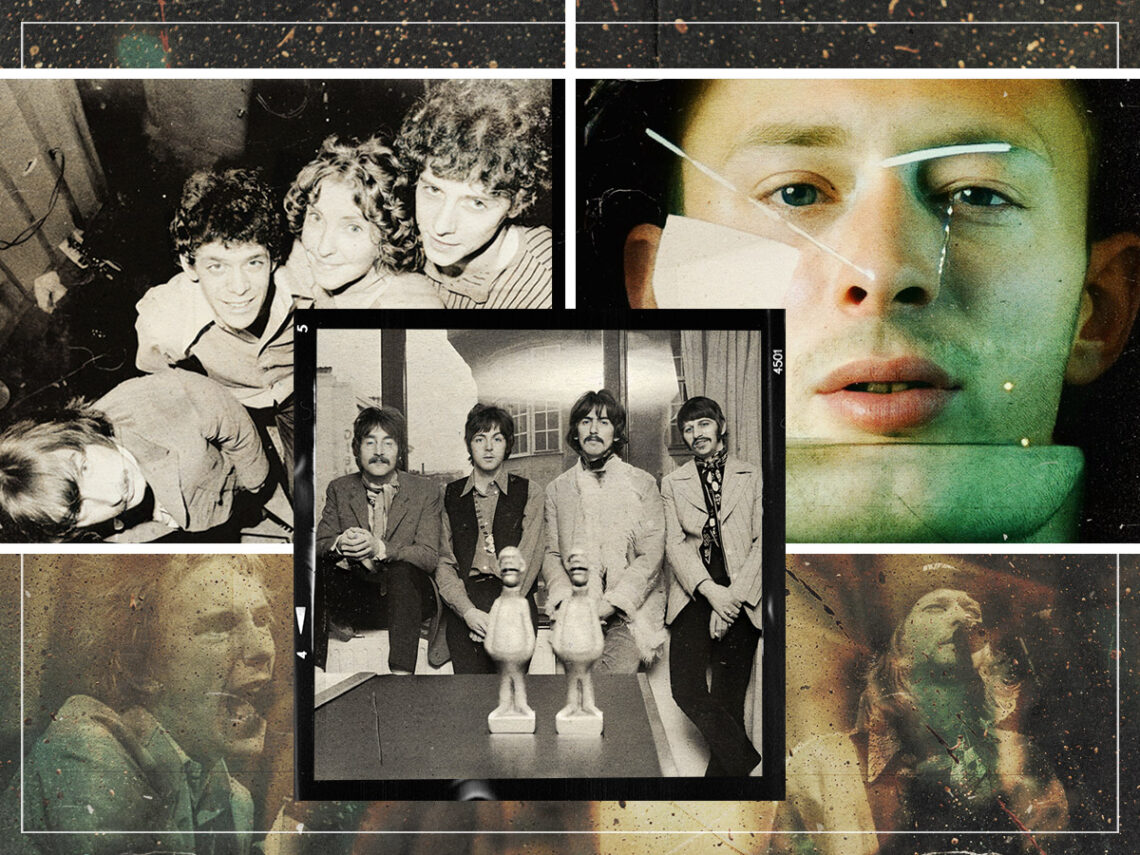
10 songs that changed the landscape of rock music

Rock and roll is still a relatively new genre in the grand scheme of music history. Even though it’s been nearly a century since acts like Chuck Berry and Jerry Lee Lewis got the ball rolling, every subsequent generation has helped push rock into different directions, inventing subgenres and changing the public outlook on what music could be. Although change happens over time, acts like The Beatles and Nirvana turned rock on its head with their tunes.
While none of the artists in question may have been looking to invent a new genre, the next few years of rock would be shaped by the songs they crafted in the studio. Whether it was the construction of the tunes or the wild recording techniques they employed, every track on these records became the blueprint for what rock would become.
Then again, not every song has to be a technical marvel to shape the rock scene. For all of the pristine-sounding records to have come out of rock and roll history, the best that the genre has to offer also comes from songs that are deliberately unsophisticated, having a specific seedy texture that gave way to feral genres like punk and metal later down the line.
Their impact is still felt today, with subsequent generations looking to these tracks as examples of what can be done with a relentless imagination and a knack for pop songwriting. Rock and roll was never about reinventing the wheel, but every listener could feel the earth move a little bit once they put the needle on the vinyl.
10 songs that changed rock music:
10. ‘Paranoid Android’ – Radiohead
In the wake of grunge taking over the airwaves, it seemed like any kind of sophisticated rock and roll had gone out the window. Nirvana had never concerned themselves with anything too complex, and the Britpop invasion ultimately made it a point to keep their songs as simple as possible. Although Radiohead was born somewhere in the middle of both trends, they turned in a 1990s answer to prog rock on OK Computer.
Kicking off the final years of the millennium, Thom Yorke created a cascade of different melodies in three separate movements that felt like an alternative rock concerto on ‘Paranoid Android’. Stemming from an argument he heard while on tour in the US, half of the song is a tender ballad before erupting into hard rock bombast before settling back into an acoustic-tinged dirge.
By the time most fans caught their breath, Radiohead had turned themselves into kings of the rock genre, with everyone from Travis to early Coldplay cribbing notes from this career phase. Then again, with Kid A on the horizon, Radiohead didn’t have time for standard rock and roll anymore. They had conquered one genre…now it was on to the next one.
9. ‘Anarchy in the UK – Sex Pistols
There tends to be a bit of a debate about when punk rock began in earnest. Although acts like The Stooges and The Velvet Underground set the template for what the genre could be with some teeth, the first tracks on The Ramones’ self-titled album introduced the rock scene to something deliberately unsophisticated. If the four fictional brothers from New York began to spread the word, the Sex Pistols turned in punk rock’s clarion call on ‘Anarchy in the UK’.
While it’s no secret that none of the band members was proficient behind their instruments, Johnny Rotten’s non-singing was all they needed to reach the minds of young punks everywhere. Instead of the finely-tuned sounds of acts like The Beatles, Sex Pistols were proud of their illegitimacy as musicians, proudly declaring their dissatisfaction with the society they were brought up in.
Considering their unabashed knack for irreverence, it’s no wonder they would be making tracks like ‘God Save the Queen’ in the coming months, proudly declaring that there was no future left for the England that they knew. Beyond their ideologies, Sex Pistols’ first record provided the perfect message to up-and-coming musicians. If they had the power to become one of the biggest bands in the world, why not you?
8. ‘Black Sabbath’ – Black Sabbath
By British rock standards, the hardest that a band could go in the 1970s was probably Led Zeppelin. Coming from a scene still ensconced in the blues, the most prominent names of the day were all about making songs that took the model of American Delta blues and blew it up to mammoth proportions. Although Black Sabbath was born of a similar ilk, Tony Iommi had a different mindset when creating their first tunes.
Looking to create a different mood than the standard blues tales of heartache, Iommi stumbled across the dreaded tritone when writing their namesake track, creating an unsettling mood when left unresolved. As the rest of the band joined in with Geezer Butler’s lyrics of dread, Sabbath had created the hard rock equivalent of a horror movie, with Ozzy Osbourne crying out in pain about a demon that was coming for his soul.
While most saw Sabbath’s music as scary initially, others found it wildly exciting, eventually picking up guitars and trying their hand at writing the next tune that would scare their contemporaries to death. Metal music may have spread like wildfire shortly after Sabbath’s inception, but no one ever really forgets their first.
7. ‘God’ – John Lennon
For the first few months of the 1970s, it looked like The Beatles were still the delightful Fab Four everyone knew and loved. While they may have gone through a few shakeups, there was no doubt that another great album on the horizon would make everything OK. Although there was apprehension after Paul McCartney released a solo record, we heard about the band’s death as clearly as possible from John Lennon.
After undergoing primal therapy with Yoko Ono, Lennon emerged as a new man willing to share his pain with his audience. Across Plastic Ono Band, Lennon is ruthless, talking about all of the sorrow in the world and building to the momentous occasion at the end of ‘God’. While Lennon talks about the structures of organised religion he was leaving behind, the last few verses left most Beatles fans speechless.
After renouncing every false idol in his life, Lennon declares once and for all that he doesn’t believe in The Beatles, only having the conviction to stand with Yoko and move on with his life. Though most had the vision of The Beatles going on forever, Lennon’s time as the walrus had come and gone. The dream was over, and everyone needed to wake up.
6. ‘I’m Waiting for the Man’ – The Velvet Underground
The rose-coloured glasses version of the 1960s sounds like living in a rock and roll utopia. Compared to the days of the Vietnam War, the outlook of the Woodstock festival was the equivalent of a spiritual awakening for rock fans, finding solace and enlightenment through the roaring sounds of rock and roll. While The Velvet Underground could certainly roar with the best of them, what Lou Reed sang about in ‘I’m Waiting for the Man’ was far more grizzly.
With the relentless backbeat from Maureen Tucker, Reed began to wax poetic about waiting for his dealer on the wrong side of downtown New York City. While there had been casual drug songs long before The Velvets, the sleaziness from Reed’s pen couldn’t be denied, especially when working off the vocals of Nico on the group’s debut album.
In just a few lines, Reed broke down the conventions of what a rock song was supposed to be, giving his fellow artists the freedom to sing about the darker side of life whenever they felt like it. Although The Velvet Underground may not have gotten the credit for being ahead of the curve, anyone who has ever exposed the dark side of their soul in song owes Reed a debt of gratitude for kicking the door down first.
5. ‘Dazed and Confused’ – Led Zeppelin
If you were looking to get big on the British club circuit in the 1960s, chances are you were in a blues band. From the Yardbirds tearing up the circuit to the beginnings of acts like The Who at the start of the decade, every band tended to come from the same 12-bar starting point when approaching their first hits. While Jimmy Page began life similarly, he was looking to take the blues further once assembling Led Zeppelin.
Though the band’s debut album consisted of traditional blues tunes that no British player was a stranger to, ‘Dazed and Confused’ was the first time Zeppelin’s dark magic started to show itself. Based on a folksy tune by Jake Holmes, the descending riff from Page sounds like slowly going down a blazing trail to Hell, all while Robert Plant screams bloody murder about shacking up with a woman that was more than he bargained for.
Stretching well beyond the usual length of a single, Zeppelin’s first masterpiece had all the trademarks of their style, becoming an album artist and taking their listeners on a journey based on how many styles they could take on over any song. Combined with the fury of hard rock and the rich history of rock’s past, Led Zeppelin would become the blueprint for every rock band going forward off the strength of this one song.
4. ‘Good Vibrations’ – The Beach Boys
For the first half of the 1960s, it looked like Brian Wilson had found his niche as one of the kings of California sunshine. Through The Beach Boys, Wilson had found a way to make songs like an assembly line, creating mini symphonies about the wonders of teenage love, whether that revolved around surfing or driving around in a little deuce Coupe. Wilson knew he could go further, and ‘Good Vibrations’ is the sound of him painting his first masterpiece.
Before Pet Sounds had been finalised, Wilson spent the amount of time that usually was reserved for an album on this one single. Operating in different movements, ‘Good Vibrations’ was a trip through cosmic psychedelia, featuring the most avant-garde structures heard in a pop song, from the use of a theremin on the bridge to layering chorale style vocals on top of each other to create a glorious collage of music.
Wilson would continue experimenting with recording techniques for the next few years, pushing his genius to new heights on every song before eventually coming to a halt when trying to make The Beach Boys’ album Smile. Though there may have been a specific formula behind the traditional pop-rock song, anything was possible once Wilson followed his musical heart.
3. ‘Smells Like Teen Spirit’ – Nirvana
The beginning of the 1990s didn’t look very promising for rock audiences. After sitting through the most toothless rock and roll imaginable in the late 1980s, the dying gasps of the hair metal scene started to wear on everyone aching for actual songwriting on the radio. While hair metal may have originated from Los Angeles, rock fans had to look up north for the next major cultural shift.
After becoming darlings of the indie circuit, Nirvana rocketed up the charts with ‘Smells Like Teen Spirit’, bringing the alternative rock movement to the forefront. As opposed to the loud and flashy sounds of acts like Winger, Kurt Cobain was crying out to be entertained by something on MTV, and the audience responded in kind with the same apathetic wail of desperation.
Although Nirvana was given the label as the leaders of the genre, Cobain was never all that comfortable with the title he was given, trying the best he could to distance himself from his most significant success for the rest of the band’s career. Despite not wanting to become a cultural phenomenon, Cobain’s need for change in the rock scene happened to touch rock and roll on a gaping wound.
2. ‘Like a Rolling Stone’ – Bob Dylan
No one should be prepared to become the leader of a generation. Although most people thought that they heard the future the first time they heard Bob Dylan, Dylan himself was just looking to be a humble songwriter, singing his odes to social change for anyone that would hear him. Now that he had the platform to say something, Dylan decided to go in the polar opposite direction than what his audience expected.
Opening with the snare crack of ‘Like A Rolling Stone’, Dylan was breaking free from his folk-tinged past, reinventing himself in the rock genre. While most folk purists called him a sellout at the time, Dylan knew exactly what he was doing, pairing down his esoteric songs about social change with rock instrumentation.
Although the song might have a more polished nature than most Dylan projects, the lyrics can be taken self-referentially, as Dylan speaks about his personal revolution getting out of hand and the need to reinvent himself on his own. There might not have been any clear direction home for Dylan, but any artist who has grappled with their identity after fame has lived the same life that Dylan describes here.
1. ‘A Day in the Life’ – The Beatles
For a very brief period in the mid-1960s, it seemed like a great possibility that The Beatles had officially dried up. Having given up touring, the Fab Four laid low in the bowels of Abbey Road Studios, meticulously working on songs for their next album. Although most of Sgt Pepper was full of surprises, ‘A Day in the Life’ marked a turning point for what rock and roll could mean in a mainstream context.
Not commercial by any stretch, this collaboration between John Lennon and Paul McCartney had all the trappings of high art in a rock context. As Lennon speaks about the listless troubles of the world while reading the paper, McCartney is off in a different dimension, talking about the carefree life that he has going to work and finding himself lost in a dream when he goes upstairs to have a smoke.
Building to a rousing climax with an avant-garde approach to orchestration, ‘A Day in the Life’ was a pivotal moment for what rock and roll could mean in a broader context, with various musicians using the studio like an instrument and creating vast soundscapes that no other rock artist had dreamt of before. The Summer of Love may have started a few weeks before Sgt Pepper’s release, but when those final piano notes hit, it’s as if rock and roll went from black-and-white to colour instantly.

Never Miss A Beat
The Far Out Beatles Newsletter
All the latest stories about The Beatles from the independent voice of culture.
Straight to your inbox.