


10 ‘shocking’ movies condemned by the Catholic Church

Movie censorship has been debated ever since Hollywood hit the big time at the dawn of the 20th century, with Margaret Sanger’s 1917 documentary Birth Control being the first film in America to be banned. The decision about the film, made to educate female audiences about family planning, came after the 1915 landmark decision ‘Mutual Film Corporation v. Industrial Commission of Ohio’.
Ever since, the debate as to what should and should not be censored has raged from decade to decade, with rules easing with the passing of each new year. Still, some films are more offensive to certain groups than others, with the Catholic church being responsible for denouncing countless movies over the years, with The National Legion Of Decency (NLOD) being set up in 1933 to help prevent the wrong films from being shown to pious individuals.
Despite sounding like a made-up group from an episode of South Park, the Legion of Decency, which was sadly later renamed to The National Catholic Office of Motion Pictures, had genuine influence in mid-20th century America, guiding over 50 million people as to what they should and shouldn’t watch. Although the church couldn’t physically ban any given movie, they could condemn a film, making any good Catholic that attended the screening a pretty ‘bad’ one.
The National Catholic Office of Motion Pictures was dissolved in 1980, but this didn’t stop it from condemning countless movies throughout the 20th century. Below, we explore some of their strangest and most shocking condemnations.
10 ‘shocking’ movies condemned by the Catholic Church:
Dawn of the Dead (George Romero, 1978)
Five years before the release of the grisly horror movie Dawn of the Dead in 1978, director George Romero released the genre game-changer Night of the Living Dead, introducing zombies to the fold of cinematic monsters. His follow-up movie continued most of the madness, telling the story of a group of survivors bunkering down in a shopping mall, but despite being a critical and commercial hit, the NLOD weren’t too fond of the flick.
Incredibly violent and experimentally so, Romero’s film uses the human body as a spongy prop that is to be ripped apart, stabbed and exploded. Thinking about it, it’s no wonder why the Catholic church didn’t think it aligned with its values.
The Exorcist (William Friedkin, 1973)
William Friedkin’s 1973 ‘Best Picture’ nominee is one of the most notoriously controversial movies of all time, telling the story of a small girl whose body and mind become possessed by an evil demon, leading two Catholic priests to try and save her from damnation. A highly contentious movie, The Exorcist was banned by the NLOD for its satanic themes and problematic messaging.
Shortly after the release of the movie, there were several reports of people having a spiritual crisis, with multiple reports of people going to priests to say they had lapsed their faith and needed guidance.
The Good, The Bad and the Ugly (Sergio Leone, 1966)
Though the Catholic church admitted that Sergio Leone’s iconic 1966 western, The Good, The Bad and the Ugly, was indeed a good film, it nevertheless condemned the movie for its distasteful themes. Claiming evil wins over good in the movie, the NLOD weren’t fond of this Clint Eastwood-led classic, which is a little odd when considering that his protagonist, who is very much the good guy, ends the film on top.
With prevalent violence and suggestions towards several smutty moments, maybe the Catholic church just didn’t want audiences enjoying one of the greatest movies of the 1960s, hoping they would watch The Sound of Music instead.
The Omen (Richard Donner, 1976)
Much like Friedkin’s The Exorcist, Richard Donner’s The Omen was similarly provocative when it came to religious themes. Telling the story of the mysterious death of an American ambassador and the child thought to be connected to the murder, who possesses some devilish tendencies. Heavily criticised by the church, largely for misrepresenting Christian eschatology, which refers to ideas about death and the afterlife.
Stopping short of unequivocally condemning the movie, the church seemed more bothered with the fact that the film wrongly implies that the prophecy of an Antichrist was present in the biblical Book of Revelation.
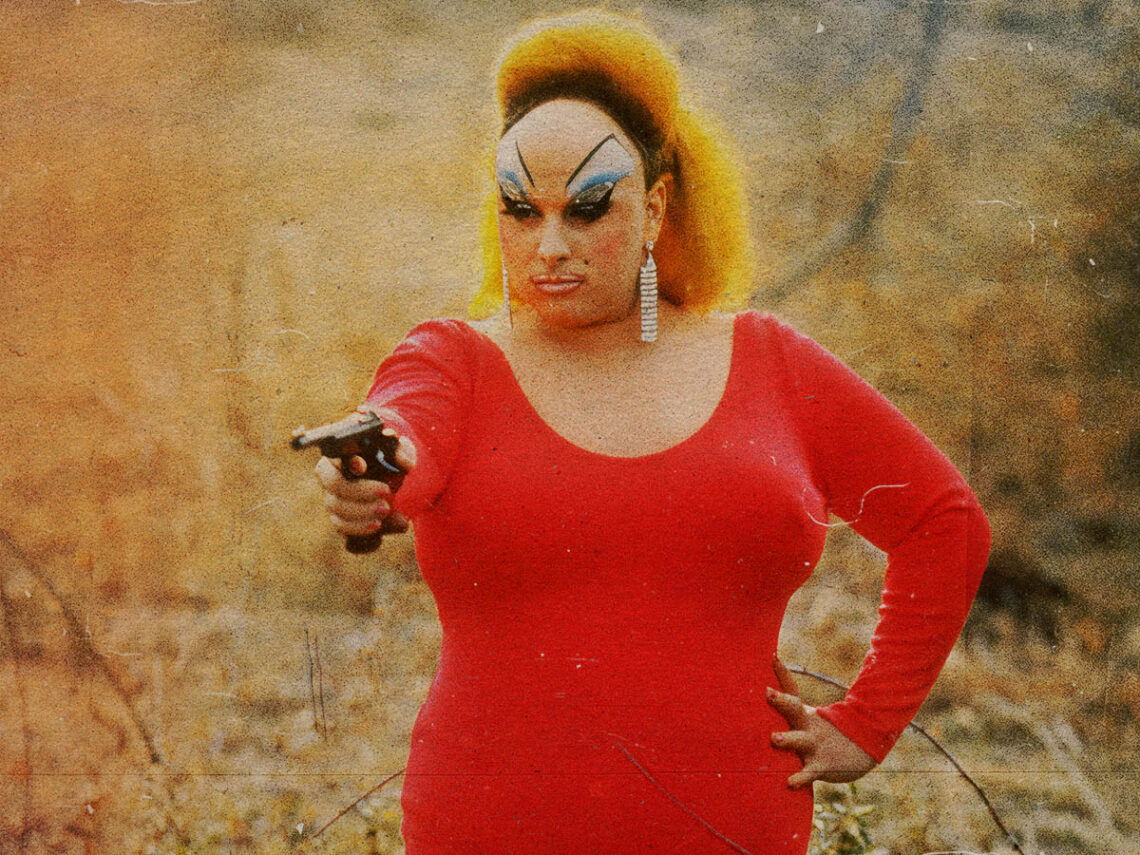
Pink Flamingos (John Waters, 1972)
In the John Waters movie Pink Flamingos, the lead actor Divine eats dog poo on screen for real. With this considered, it’s no real surprise that the Catholic church deemed the film inappropriate for the eyes of its followers, with Waters’ movie doing little else to convince NLOD that it deserved anything less than condemnation. We’re not sure this decision would have bothered Waters either, likely helping with the publicity of the 1972 movie.
If this weren’t enough, the film’s explicit sex scenes would have undoubtedly infuriated the Catholic church, which is, of course, against premarital sex and anything too raunchy when it comes to bedroom intercourse.
Psycho (Alfred Hitchcock, 1960)
Calling the film “morally objectionable in part,” the Catholic church was not huge on Alfred Hitchcock’s iconic 1960 slasher flick Psycho, which was arguably responsible for the horror craze to come in the following decades. Containing several slasher tropes that would soon become mainstays of the genre, Hitchcock’s Psycho would even go on to receive multiple sequels in the 1980s.
Set at the Bates Motel, the story sees a young woman travel to the site only to become embroiled in a sinister murder plot where a creepy killer has her in his sights. Inspiring countless copycats and fellow filmmakers, Psycho is an all-time classic.
Rosemary’s Baby (Roman Polanski, 1968)
It shouldn’t come as much of a surprise that Roman Polanski’s 1968 classic, Rosemary’s Baby, was disliked by the Catholic church, with the story following a young pregnant woman who begins to suspect that the baby in her stomach may not entirely belong to her. Dealing with themes of Catholic faith and demonic worship, Polanski’s film was known to be pretty provocative at the time.
Though, despite denouncing the movie, Rosemary’s Baby became a hit with religious audiences and went on to show Hollywood that the influence of Catholic movie boards, such as NLOD, wasn’t quite as powerful as they once thought.
Scarface (Brian De Palma, 1983)
Criticised for its excessive violence and lack of quality compared to the 1932 original, Brian De Palma’s classic crime thriller Scarface wasn’t beloved by the Catholic church either. Still, we’re not sure what the NLOD were thinking here, in a film about a deplorable mob boss, violence and strong language are to be expected. Perfectly fitting in with the excessive cinematic style of the 1980s, Scarface became a classic of the time, and the opinion of the NLOD simply demonstrated that they were seriously behind the times.
Starring Al Pacino, Michelle Pfeiffer and F. Murray Abraham, the film tells the story of Tony Montana, a Cuban immigrant who takes charge of a drug cartel and slowly but surely crumbles under the weight of his own ego.
Taxi Driver (Martin Scorsese, 1976)
The Martin Scorsese masterpiece, Taxi Driver, is known as one of the greatest movies of all time, telling the story of Travis Bickle (Robert De Niro) a mentally disturbed veteran working as a cab driver in New York where he is sent slowly mad by the state of the world around him. Criticised for its irrational violence and objective stance, the condemnation of the NLOD fell on deaf ears when it came to Cannes voters at least, with the film winning the Palme d’Or at the time.
Also starring the likes of Jodie Foster, Harvey Keitel, Cybill Shepherd and Albert Brooks, Taxi Driver was the first in a long line of successive victories for Scorsese, with New York, New York, The Last Waltz and Raging Bull following soon after.
The Wicker Man (Robin Hardy, 1973)
Robin Hardy’s The Wicker Man is an essential part of the ‘Unholy Trilogy’ that underlines British folk horror, joining Michael Reeves’ Witchfinder General and Piers Haggard’s The Blood on Satan’s Claw. Set on the Hebridean island of Summerisle, the tale follows a policeman who travels to the secluded town to investigate the disappearance of a young girl who has vanished from a pagan community of like-minded folk.
Condemned for its sexual themes and promotion of occultic activity, although the Catholic church hated it at the time, the film was recently screened at Derby Cathedral, meaning that maybe the powers that be eventually favoured cinematic mastery over thinly-constructed morals.
