


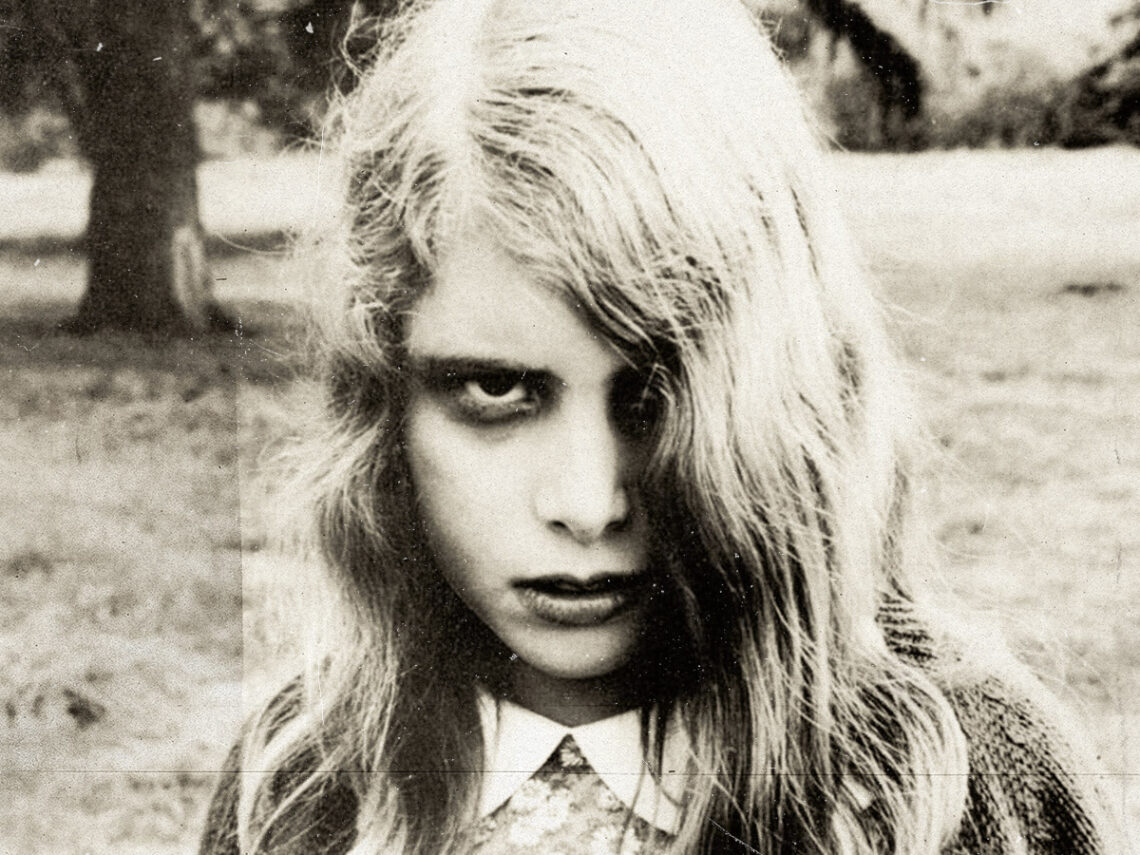
‘Night of the Living Dead’: George A. Romero’s social-political approach to horror filmmaking

Revolutionary horror master George A. Romero’s Night of the Living Dead, released in 1968, complied its narrative and style from a low budget and commentary on revolution and change. The film stars Duane Jones and Judith O’Dea and tells the horrifying story of seven people trapped in a rural farmhouse under assault by a group of flesh-eating, undead ghouls. The film’s praise, which continues after 50 years, derives from its original take on horror narrative conventions that have shaped the survival sub-genre today.
The film’s narrative refuses to follow the order of conventions. Instead, it subverts them using microelements such as character performances and plot events, directed under Romero’s consistent artistic vision. The story has been branded as a nihilistic glimpse into humanity, as executed by the undead ghoulish creatures devouring living humans. This demonstrates an original subversion of the genre convention, as the graphic deaths and aggressive attempts at survival on the characters’ part serve as a critique of 1960s American society. As summarised by director Romero in his statement: “It was 1968, man. Everybody had a ‘message’. The anger and attitude and all that’s there just because it was the sixties”.
One aspect of dissecting Night of the Living Dead is its form, meaning the established pattern of devices as a system of elements. Night of the Living Dead’s imprints derive from its classification as a narrative-driven horror film. As a result, its style is organised under the horror genre codes of suspense and fear of death, stemming from its objective to scare spectators as an emotional response. Romero’s techniques ensure this, such as the mise-en-scène in the setting of the deserted house used for protection from the undead and the props of body parts and guns. What separates Night of the Living Dead from other horror movies that came before is how Romero utilised these codes to execute social commentary. This, in turn, applied the objective of educating spectators as an intellectual response alongside the traditional one of just generating fear.
Night of the Living Dead immediately establishes its own take on a horror-orientated form in the opening sequences of its narrative. Romero provides a brief and concise set-up to his spectators; we are introduced to siblings Barbara and Johnny as they visit their mother’s grave, already introducing ideas of older generations passing away and leaving the younger ones. Their drive to the cemetery is complemented by an unsettling instrumental soundtrack that creates an eerie atmosphere and sets the film’s tone.
This element laces the use of sound with both the functions of expressive and decorative because it conveys a specific mood yet aligns with a horror-based style. Character and story-wise, we are given minimal time to learn too much about either Barbara or Johnny other than their late mother. Any indication of the plot addition of the undead is kept at bay stylistically, such as Johnny turning off a frantic-sounding radio report before any serious signalling can be provided. This generates suspense because the characters Romero has placed us with are unintentionally avoiding something we have reason to believe is dangerous. There is a slight hint of our protagonist in the beginning, as Johnny is quickly killed by the first undead ghoul in the cemetery, leaving us with Barbara, who manages to escape. Therefore we are momentarily aligned with her as an implied and potential protagonist perspective. As previously mentioned, Romero then uses mise-en-scène in the house setting, given to us in a denotative establishing shot when Barabara notices it.
Just when Romero has led us to infer and accept Barbara as our protagonist and the film’s central perspective, we are introduced to Ben, a truck driver who has also moved to the house as a haven from the undead. As a character, Ben, played by Duane Jones, is one of the film’s most powerful magnets for critical discourse and social commentary. Jones’ portrayal as Ben serves as the first black protagonist in horror, contributing to Night of the Living Dead’s groundbreaking and unconventional legacy in cinema. As pioneering and radical as this is, the casting of Ben was completely neglectful of race on Romero’s part, who always made sure to specify that he cast the best audition for the character without any attention to the fact he was a black man.
The script holds no mention of Ben’s race, whether that be a direct reference or covert implications of blackness, conveying the unintentional of one of the film’s most iconic factors. Nonetheless, Jones’ character performance of Ben, constructed from the positive characterisation as a resourceful, courageous and likeable man, breaks away from previous harmful depictions of black horror characters as either alien threats or useless carnage. He eventually rises to the protagonist role, which was previously aligned with Barbara, as his position as an intelligent leader proceeds alongside the narrative as he navigates the group to the goal of survival. This element of survival serves as a thematic concept in Romero’s story, contributing to the positivity of his character and how it broke traditional horror codes in terms of casting. This factor highlights performance as an element of mise-en-scène, blending with experimentation of narrative conventions to elevate Night of the Living Dead’s position as a pioneer in the horror genre.
Romero further cemented his artistic skills in the horror genre using the undead, whose place in Night of the Living Dead had a double meaning of decorative horror villains and a symbolic metaphor for revolutionary political ideas. Interestingly, Romero didn’t initially cite the zombies as the film’s primary hook. He told EW: “I never thought of my guys as zombies, when I made the first film … To me, zombies were still those boys in the Caribbean doing the wetwork for [Bela] Lugosi.” However, in execution, Romero employs the undead to carry the film’s scare factor in a surface-level value, evident throughout the film but most significantly in the infamous feasting sequence. Their initial presence as cannibalistic ghouls who have arisen from their graves to feast on the living is expressive in generating fear as an emotional response. This is aided by mise-en-scène, or technically speaking, a lack of, concerning the makeup.

Due to the low budget, Romero could not provide his locally cast ghouls with extreme makeup and prosthetics to elevate their ghoulish appearance. Instead, the zombies have minimal cosmetics. However, this can be interpreted as adding to the film’s scare factor. It is unsettling to watch figures who still mirror the living humans terrorise and devour them, thus elevating the realistic horror Romero was aiming for. This is known in film scholarship as pragmatic aesthetics, meaning the financial budgets are considered but eventually elevate the artistic merit of a film. Furthermore, movie techniques play a part in this sequence. Most notable is the cinematography, comprised of a classic black-and-white overlay that adds to the film’s ’60s style.
In addition, Romero uses a series of close-ups of the undead and the body parts they consume to achieve emphasis. The props of organs, donated by a local butcher due to the budget, assist in solidifying the horror-driven style of the film. They are decorative since they align with the bloody aesthetics of horror and create unsettlement as an expressive and emotional signifier.
In terms of soundtrack, Romero holds back on any instrumental music. Instead, he laces the scene with an unsettling deep buzzing sound. This creates a dark and chilling atmosphere whilst allowing the spotlight to be placed upon the sounds of the undead’s growls and flesh tearing from bone as it is devoured. This, in turn, elevates the scene’s horror and generates emotions of disgust and shock for the spectators. As Romero cited a goal of creating a sense of social satire, the edited sequence of the undead eating bodies represents revolution and change in society as a thematic concept, illustrating the symbolic functions Romero uses as tools.
The shots of the ghouls eating the flesh and bones of the previously living execute concepts of compromising humanity and civilisation as the undead devour a different group of people, reflecting the social tensions that were an underbelly in 1960s America. Overall, the horror elements of Night of the Living Dead hold more profound and symbolic attitudes for spectators to critically reflect on alongside reactions of disgust and fear, as the villains and deaths serve as catalysts for both terror and critical discussion.
One other plot event which derives evaluative discourse towards the film is its ending, an unconventional choice in horror films where police, unfortunately, kill the hero Ben after surviving the undead’s attack. This part of the movie is a significant element of Night of the Living Dead’s position in the hybrid of film criticism and social conversation. The breaking from horror norms in having the protagonist die at the end demonstrates Romero’s experimentation as a horror filmmaker. Some would regard killing Ben off as a bold choice in writing and storytelling, especially considering the thematic values of survival dictate narrative events, causing frustration and shock in spectators since Ben fought smartly and hard to live for most of the film. The ending leaves spectators with a nihilistic and hopeless perspective as an overall emotional response to the film. This haunting closing assisted in Night of the Living Dead’s cementation in classic and superior horror filmmaking.
Contextual elevation to the film’s ending arrives with the knowledge that the night Romero completed the film, Civil Rights activist Martin Luther King Junior was assassinated, with the director hearing the news on the radio as he drove the footage to studios. This aligned his film with a broader political backdrop as the ending matched current and heated historical events.
Overall, Romero’s Night of the Living Dead earned praise from critics and horror fans because it created and solidified the zombie survival sub-genre conventions using its narrative and stylistic choices as tools for emotional responses. The film is one of the first and most identifiable executions of social commentary and satire under the horror classification. With political commentary wielding itself in several successful horror stories, such as Brian Yuza’s Society or Jordan Peele’s critically acclaimed Get Out, Night of the Living Dead made use of its visuals and narrative to comment on American society. It’s the core of the love and uses horror finds within the zombie subgenre that has followed its release over five decades ago.
