


10 scenes that absolutely ruined TV shows

It takes a lot of effort from a huge number of people to create a successful TV show, but it becomes increasingly difficult to sustain it over a number of years.
The very best episodic offerings maintain an impeccably high level of quality from start to finish, but even some of the finest to have ever hit the small screen have experienced more than a few peaks and troughs along the way.
One of the worst things that can happen to any once-mighty series is carrying on for far too long, matters that can often be exacerbated by a single scene cratering audience goodwill and creating a disconnect between creatives and consumers that can never be repaired.
While the following ten scenes didn’t instantly kill the shows in question, they nonetheless did a sterling job of instigating their downfalls, with all of them failing to recapture their previous heights in the episodes to come.
10 scenes that ruined TV shows:
10. Jumping the shark (Happy Days, ‘Hollywood: Part 3’, 1977)
Where better to start than a scene so infamous it coined a phrase that quickly entered the cultural lexicon and has refused to leave ever since? Indiana Jones may have done a sterling job of popularising ‘nuking the fridge’, but nothing will ever beat Happy Days literally jumping the shark.
The popular series was hardly lauded for its realism and grounded aesthetic, but audiences everywhere knew it had reached the point of no return when Henry Winkler’s Fonz strapped on a pair of skis, took to the water while still wearing his trusty leather jacket, and leapt clean over an aquatic predator.
The coolest cat on the show was suddenly the face of a moment forever remembered in the annals of small screen history, one that also became a byword for any long-running series that crosses a line from which it can never come back from.
9. There’s a prison break (Prison Break, ‘Flight’, 2006)
Not every hit series needs to be expanded into multiple seasons, and rarely has that been proven truer during TV‘s current ‘Golden Age’ than with Prison Break, which lost every single ounce of its momentum after the first season’s finale.
The initial 22-episode run deservedly snaffled a Golden Globe nomination for ‘Best Television Series – Drama’ for a propulsive yarn driven entirely by the convoluted plan cooked up by Wentworth Miller’s Michael Scofield to get his innocent brother free from incarceration. Once it happened, there was nowhere left to go.
That didn’t prevent Prison Break from carrying on for another three seasons, a made-for-television movie and a miniseries revival, but from the second the main character accomplished his ultimate goal, there was no point in carrying on, something that was reflected in the noticeable dip in quality.
8. Spike goes too far (Buffy the Vampire Slayer, ‘Seeing Red’, 2002)
Doubling down and going two-for-one on sending many Buffy the Vampire Slayer fans past breaking point and into the realms of horror, creator Joss Whedon did the dirty on a pair of major characters in the space of one episode.
The scene where James Marsters’ Spike forces himself onto Sarah Michelle Gellar’s title hero was uncomfortable then and even more queasy now, given the stories to have emerged of Whedon’s conduct in the aftermath, making the popular vampire an irredeemable and lecherous goon.
Amber Benson’s Tara was then killed off in the very same instalment to lead to outcries for the death of an openly LGBTQ+ character, eroding the last vestiges of goodwill and investment Buffy continued to wield over its formerly captive audience.
7. Sibling love (Dexter, ‘This Is the Way the World Ends’, 2011)
For a while, Dexter was one of the finest TV shows on offer, despite being one of many that carried on for a season or two longer than it reasonably should have, with the season 6 finale standing out as a disastrous move.
The serial killer thriller had been in danger of going off the rails many times before, but when Jennifer Carpenter’s Debra decides to profess her undying love for Michael C. Hall’s title character despite the fact they’d been raised as adopted siblings, it was cringeworthy to the point of unsettling.
On the way to tell her brother/co-worker/object of affection of her unrequited feelings, she catches him in the act of murder, which should have been a revelation that reverberated throughout the rest of Dexter. Instead, it was overshadowed by the unsavoury undertones, something season 7 never managed to atone for.
6. The cliffhanger (The Walking Dead, ‘Last Day on Earth’, 2016)
The smash hit zombie thriller was beginning to creak long before the season 6 finale, but the cliffhanger that wrapped up its sixth run made a mockery of the people who’d stuck with the show throughout its many ups and downs.
Jeffrey Dean Morgan’s Negan announces his arrival on the scene by bashing the brains out of a key character with his trusty baseball bat, but who? It was something The Walking Dead didn’t plan on answering until season seven premiered almost seven months later.
It turned out to be not just Michael Cudlitz’s Abraham but Steven Yeun’s Glenn, too, who’d already been given a fake-out death earlier in the sixth season, turning what should have been a monumental moment into gimmickry that alienated a huge amount of viewers.
5. Jack’s tattoos (Lost, ‘Stranger in a Strange Land’, 2007)
This was the exact moment Damon Lindelof decided that Lost couldn’t carry on its fantasy without having a definitive ending in mind, and it’s easy to see why.
Piling mysteries on top of questions and showering them in enigmas had been the show’s stock-in-trade since the very beginning, but giving an entire backstory to the tattoos sported by Matthew Fox’s Jack was the straw that didn’t necessarily break the camel’s back, but caused a compound fracture that eventually became crippling.
Nobody cared, and it would have saved Lost a lot of hassle had it either bothered to cover up Fox’s very real ink or avoided sinking deeper into the mire with a convoluted and exposition-loaded segue that answered questions not a single soul was asking.
4. Goodbye, Michael (The Office, ‘Goodbye, Michael’, 2011)
If ever there was a time for a popular show to draw to a close, then the exit of its main character and the driving force would surely be it, but The Office continued to monotonously trundle along despite the gaping chasm created by the absence of Steve Carell.
He’d won a Golden Globe from six nominations and been shortlisted for nine Primetime Emmys as the star and co-producer of the workplace favourite, but the powers that be decided the show must go on without Michael Scott, which was the wrong call.
The final two seasons were huge downgrades from their predecessors, and while the rest of the top-notch ensemble did the best they could, the lack of Dunder Mifflin’s chaotic figurehead created a vacuum that proved impossible to fill.
3. It was all a dream (Dallas, ‘Blast From the Past’, 1986)
One of the easiest ways for a series to make a complete mockery of an audience is to tell them everything they’d been watching weekly for the better part of a year doesn’t matter in the slightest and is completely irrelevant, a setback that Dallas discovered first-hand.
The identity of the person who shot J.R. Ewing was one of the most iconic whodunnits in television history, which ended up being parodied multiple times. Hoping to recapture that lightning in a bottle, the creative team decided they’d go for an even bigger twist, which blew up in their faces.
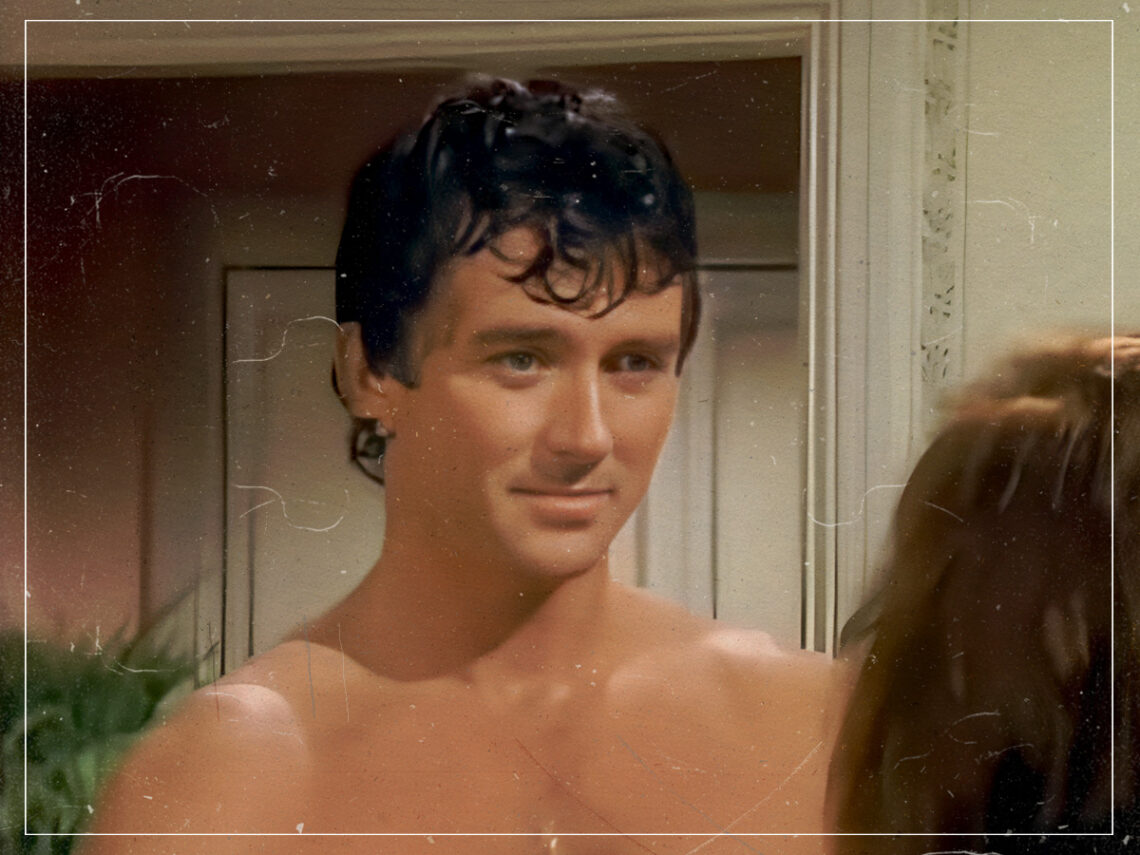
It was every bit as unnecessary as it was unearned, with Bobby Ewing dying in the season 8 finale, causing the principal characters to mourn him throughout the ninth. Adding insult to a deadly injury, his ex-wife Pam suddenly finds him in the shower to turn the preceding 30 episodes into an extended dream sequence that unfolded over eight months in front of unwitting viewers who couldn’t believe they’d wasted so much time on nothing.
2. Armin Tamzarian (The Simpsons, ‘The Principal and the Pauper’, 1997)
During its peak, The Simpsons was era-defining television, with Springfield’s first family consistently knocking out of the park every single week.
All good things must come to an end eventually, but the beginning of the titular family’s fall from grace could reasonably be pinpointed as ‘The Principal and the Pauper’, which was such a bungled enterprise creator Matt Groening admitted it was “a mistake, we’ll never speak of this matter again.”
It was too late, though, with fans enraged at the cheap twist that revealed Seymour Skinner as having assumed the identity of another man in Vietnam. The Simpsons tried to gloss over it from that point onwards, but it was the equivalent of a torpedo to the show’s previously spotless reputation.
1. Ed Sheeran (Game of Thrones, ‘Dragonstone’, 2017)
The eighth and final season was when things really went south, to the extent that petitions were launched and signed by tens of thousands in an attempt to pretend it never happened and remake the whole thing, but the presence of Ed Sheeran was the first significant crack in Game of Thrones‘ armour.
Up until that point, the HBO fantasy had been nigh-on unimpeachable as one of modern television’s true greats, and while there had been occasional cameos from famous faces and well-known names, the attention or focus was never placed directly upon them.
Enter Sheeran, who shattered the notion of immersion and suspension of disbelief by showing up what was basically himself, bursting into song for no other reason than shits and giggles. Running out of George R.R. Martin’s source material was the death blow, but this glaring example of celebrity hagiography was the first sign that all was not rosy in Westeros.
