


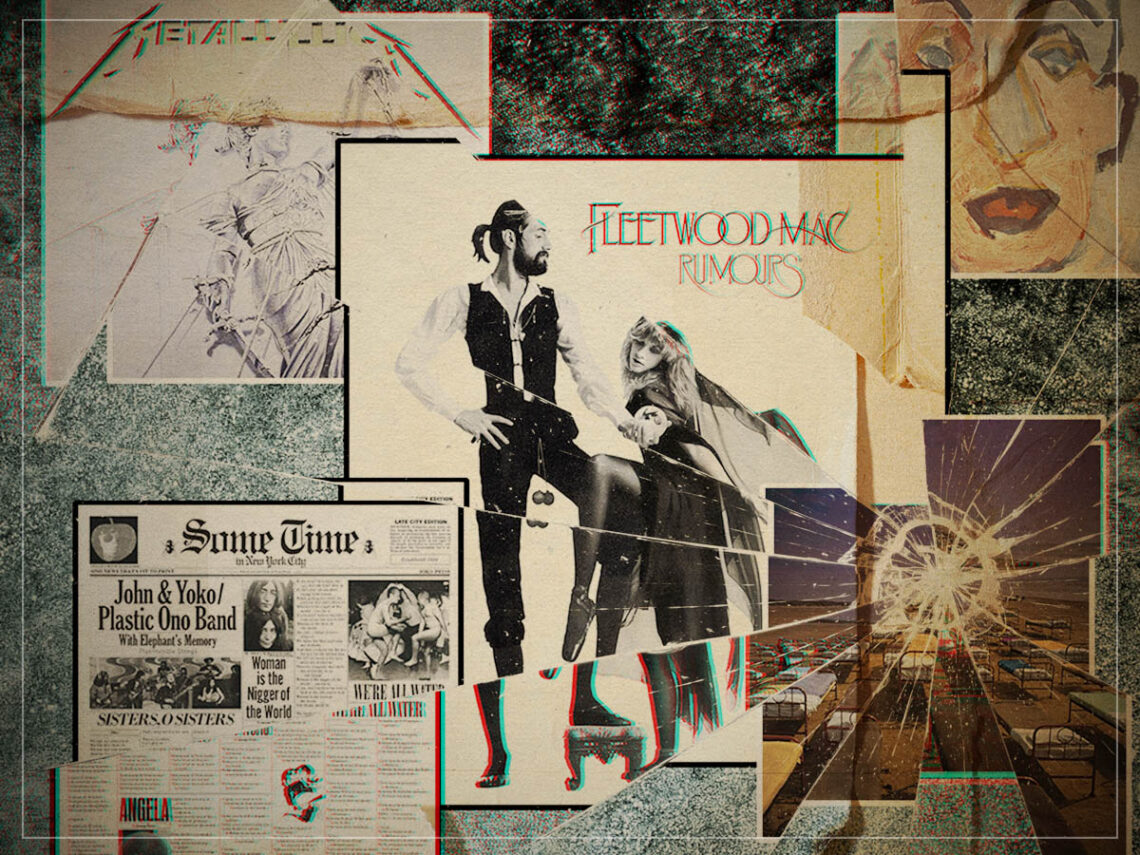
10 musicians who sabotaged their own material

Every artist wants to put their best foot forward when making an album. Even though they can only be themselves when making their tunes, there’s usually that ex-factor that comes into play whenever they release a masterpiece. Although many acts like Metallica can claim to have fantastic music in their back catalogue, there are just as many times when their ambitions can backfire on them.
But that doesn’t mean that everything on a dud totally misses the mark. There are a lot of moments on albums like this that could be viewed as classics by certain people, but the more you look into it, the more there are cracks in the armour at the heart of the idea rather than the window dressing surrounding everything. And that usually has more to do with the production than the actual music.
Even though an artist may have the right idea, they might not have the right people around them to make it a reality, and the producers behind them never seem to click. The songs were already ready to go, but if it’s all in service to a production that sounds like trash, there’s no point in making any progress when you know it’s going to sound terrible.
More than anything, though, the main problem is that these choices ended up disrupting the album from being something that people want to revisit to a record that should never be heard from again. It’s easy to appreciate the attempt, but when there’s this much anticipation, it’s all the more disappointing, and as anyone who has been chewed out by their parents, disappointment is always worse.
10 musicians who sabotaged their own material:
Mardi Gras – Creedence Clearwater Revival

Before we get into this one, let’s cut through the BS here: John Fogerty IS Creedence Clearwater Revival. As much as the band were a united front throughout their time together, there was always an underlying sense that they would have fallen apart had Fogerty not been there to write the tunes, sing them, and arrange most of them with the rest of the group. It makes sense why everyone would start getting treated as backing musicians, but leaving them out to dry on Mardi Gras might not have been the best foot forward, either.
While it was clear that the roots rock icons were going to be breaking up fairly soon, Fogerty’s decision to throw his bandmates into the deep end and have them write their own songs was a recipe for disaster. The frontman already sounded like he was checked out on tunes like ‘Looking for a Reason’, but when paired next to what the other band has to offer, you would swear that Fogerty was the rough-and-tumble answer to John Lennon.
Outside of the squawkiness of Stu Cook on ‘Door to Door’, Doug Clifford isn’t much better, being barely out of his 20s and still sounding like an old man when croaking out ‘Tearing Up the Country’. There are a lot of moments when Fogerty could have asserted power, but Mardi Gras feels like him raising the middle finger to the suits that made him do this, the fans who wanted him to stay the same, and his bandmates arguing with him all at once.
Self Portrait – Bob Dylan

There was no way to physically escape Bob Dylan by the time the 1970s began. The 1960s already heralded him as one of the greatest songwriters of his generation, but since the rest of the world had seen him go electric, he was practically a shining god towering above everyone else whenever he made a new record. Anyone in that position needs to shake off that kind of persona, and Dylan tested that theory by going against the grain as quickly as possible on Self Portrait.
Since his stabs at country weren’t earning him enough funny looks, this was designed to kill Dylan’s career in one go, complete with obscure covers and him remaking some of his old tunes for the hell of it. The whole thing feels more like listening in on a finely tuned jam session than a proper album, but even if critics were befuddled at the time, the fact that the album managed to be one of the beloved deep cuts of Dylan’s career really shows the kind of artist that he was in the eyes of the public.
He could make music that was intended to be the worst thing anyone had ever heard, and yet he still managed to sound like one of the most important people in the room. It’s one thing to be a legend in one’s field, but there’s a certain creative ascension that occurs when an artist intentionally fails and gets a round of applause for the hell of it.
Reanimation – Linkin Park

The whole concept of remix albums has always been incredibly hit or miss, depending on the artist. Everyone knows when they have a classic on their hands, so what’s the point of taking a tune that everyone knows and loves out of the can and messing with it for the hell of it? Granted, it can make for some decent material every now and again, but if Linkin Park were the exceptions to the nu-metal trend, Reanimation felt like their attempt to get back into a style that was already two years out of date.
But does that make it a bad album? Hell no. There is no way that any band that is cool enough to put a rapper like Black Thought on a metal beat doesn’t have strong creative minds in their ranks, but the metal acts that they bring in to cover their material feels like a parody of something that was meant to be taken deadly serious, like getting Staind to guest on a new version of ‘Crawling’. Because, of course, of all the tunes on the record, that one somehow needed to be more whiney.
Then again, as slapdash as Reanimation can be in the context of Hybrid Theory, it does hold a certain importance in rock and hip-hop history. It paved the way for Linkin Park’s eventual collaboration with Jay-Z, and for that, it at least deserves a casual mention alongside their catalogue, even if it induces cringe quite readily.
Encore – Eminem

The enemy of every artist in the modern age is album leaks. Someone can spend years trying to settle on the right track order, assemble the right songs, or get the right vocal take down, but the minute someone snatches their material and uploads it, all of that hard work may as well have been for nothing. It’s not exactly a fun problem to have, but for someone known to come out swinging, Eminem reacted to Encore like a kid who got his feelings hurt on the playground.
Since the album was meant to be the spiritual successor to The Eminem Show, hearing Mr Mathers get nastier could have been interesting. But when a couple of tunes were leaked early, Eminem figured the next best thing would be to come out with new songs, and coupled with the fact that he was blitzed out of his mind on pills, that meant making the kind of tunes that had even his biggest fans rolling their eyes, like the hook to ‘Big Weenie’ or repeating the phrase about a baby’s head popping off in the first tune.
But especially for an era like the 2000s, this kind of leak should have been far more manageable than this. Not everyone was as chronically online as people seem to be today, but choosing to put leakers in their place by making songs intended to spite the audience made everyone realise how far gone the supposed greatest rapper of all time was at this point in his career.
Chaos and Disorder – Prince

There aren’t many other people that can get artists fuming like record labels. Whether it’s the constant cycle of album and tour or insisting that there be no breaks in between recording albums, it’s easy to see the biggest suits in the world as the kind of people who would gladly milk any cash cow for all they’re worth. But Prince had the exact opposite problem, so how do you manage to get out of a contract for five albums? You hit the speedrun option and pump out any album you can.
Although ‘The Purple One’ had a wealth of material by this point and wanted to release it how he saw fit, Chaos and Disorder was thrown together to give Warner Bros something to work with as he dug into the vaults. While no one might have been asking for Prince to show off his alternative rock skills, he actually does surprisingly well on the majority of the record, even turning some tunes like ‘Dinner With Delores’ into one of the finest songs he spat out in the 1990s.
Prince may have hated this album and wanted to make something intentionally off-brand, but the whole thing ends up looking like a strange flex, regardless. There are many times when people try to screw with their label, but how is it that one of the biggest names in the music world actually managed to make an album that sounds this good when phoning it in?
Vitalogy – Pearl Jam

Success may have been one of the worst things that could have happened to Pearl Jam. The idea of selling millions of records might be enticing, but when it all happens to you at once, there’s a point where you want all of it to end, if only so you can catch a breath for a second. There were no breaks for Eddie Vedder, though, so if he couldn’t change people’s perception of him, he could at least change the music he was making.
And while Vitalogy does have a lot of the same tropes that many Pearl Jam albums were supposed to have, it’s definitely an acquired taste in some areas. Whereas an album like The Beatles’ White Album had ‘Revolution 9’ as a way to release all of the tension in the studio, that brand of song seems to happen every few tracks, whether that’s the band screwing around with a jam on ‘Pry To’ or Vedder breaking out the accordion and getting existential on the track ‘Bugs’.
Which is a shame, because the other half of the record includes some of the greatest moments of the band’s middle period, whether that’s them making some of their most striking ballads like ‘Nothingman’ or turning in the most aggressive music of their career on tracks like ‘Satan’s Bed’ or ‘Last Exit’. It might sound like an elongated therapy session at points, but the most important part of therapy is learning something about yourself, and by the end of the record, the band seemed more energised than ever before.
Some Time in New York City – John Lennon

There are still some delusional fans of The Beatles that swear up and down that Yoko Ono was solely responsible for them breaking up. The band were nothing more than a group of musical brothers, and the minute that Lennon brought a woman to the session, supposedly the boys’ club was invaded and everything went to shit. Casual misogyny aside, Ono was far from the same flavour of artist as John Lennon was, and their joint albums were always going to be an acquired taste.
Although there’s a good chance Lennon could have never made Plastic Ono Band or Imagine without Ono’s help, Some Time in New York City is when their partnership reached an impasse. The idea of them rallying against different corrupt parts of politics has the seeds of a good idea, but since they didn’t have that much to work with, the whole thing feels like a mess as they try to shoehorn each other’s styles into one coherent whole.
And for everyone complaining that Ono’s songs drag the record down, hers are actually fairly solid compared to Lennon, who puts staples like ‘New York City’ into tunes that feel half-finished like ‘John Sinclair’ or ‘Attica State’. There’s no stopping two artists in love, but it’s understandable why the pair found each other to be destructive and parted ways shortly after the album was completed.
A Momentary Lapse of Reason – Pink Floyd

There was no reason to think that Pink Floyd couldn’t carry on without Roger Waters. Despite his insistence that he was God’s gift to the band and owned the right to use the name, David Gilmour was as integral to those classic albums as he was, and having him continue the group’s legacy did at least show some promise. But whereas Gilmour was a great song-based artist, there was hardly any of those spellbinding moments his first time around.
While a lot of A Momentary Lapse of Reason was probably inviting on first listen back in 1987, the dated elements of the mix do absolutely nothing for the songs. A track like ‘Learning to Fly’ has the potential to be something great, but when it’s paired next to the layers of drum machines, it makes the whole thing sound like a contemporary soft rock band from the time like Air Supply.
Granted, the band did at least correct their mistake in some ways, with a handful of the tracks sounding a whole lot better when they performed them live on the accompanying tour. You can hear them stretch themselves out a bit more, but the fact that they kept everything restrained throughout the record makes them sound like they played everything too safe. Hell, they were all tied up in lawsuits with Waters at the time, so the fact that they made an album is practically a miracle.
And Justice for All – Metallica

Being in a band like Metallica wasn’t for the faint of heart back in the 1980s. The thrash legends were known to be absolutely merciless on anyone who came across their path, and if you considered yourself to be a fan of acts like Van Halen and Poison, it was clear that you would be leaving with a musical beating the minute Master of Puppets came out. Although And Justice For All carried on their habit of long songs that took people on a journey, the mix also showed everyone how petty a bunch of metal kids can be.
Because as much as they were hurting over Cliff Burton’s death, their decision to turn down Jason Newsted’s bass on the record is one of the worst calls any group could have made. Since there’s virtually no body to the sound aside from James Hetfield’s guitar tone, the entire record feels like one of the most finely-produced demos that anyone has ever heard, which must have stung for Newsted knowing that one of his riffs, ‘Blackened’, would kick off the record.
While it may have been understandable for them to let out all of their aggression on the new guy, letting it subconsciously affect the music was never going to work. It’s nice to have some room to grow with a new person in the mix, but the stark difference between this and The Black Album in terms of production value alone feels like night and day.
Rumours – Fleetwood Mac

Now this one might need a bit of explaining. Make no mistake, Rumours is one of the finest albums of the 1970s, and it’s more than worthy of being treated as a masterpiece among every avid music fan. But this list is about bands sabotaging themselves, and even if the byproduct was fantastic, the real flaw Fleetwood Mac made here is editing out what could have been a spotless tracklist.
Because there are a handful of songs that don’t seem to fit in with the record the way the rest do. Some tunes were dug out of storage to fill out the track listing, but that meant getting rid of Stevie Nicks’s ‘Silver Springs’ on the track order. A lot of tunes might have to get left on the cutting room floor on even the best albums, but not hearing Nicks’s final song about the fallout between her and Lindsey Buckingham makes it feel like something’s missing.
For instance, people often equate Rumours to a musical soap opera, and if we’re using those tropes, this is like saving the bombshell moment of the episode for a deleted scene. The album is still wildly entertaining and more than a little bit juicy in terms of internal band gossip, but there was no reason for them to cut out one of the crucial pieces of the story.

Never Miss A Tale
The Far Out Bob Dylan Newsletter
All the latest stories about Bob Dylan from the independent voice of culture.
Straight to your inbox.