


10 movies that killed their studios

Not every movie is guaranteed to become a success, with box office bombs and cataclysmic flops having been part and parcel of the industry since the advent of the moving image.
However, there’s a difference between a production losing a not-insignificant amount of money and embarking on such a disastrous theatrical run that it creates a domino effect culminating in the bankruptcy, folding, closure, or abandonment of an entire studio.
It might stand to reason that only truly terrible films have the potential to do such a thing, but that’s not entirely true. In fact, one stone-cold classic that millions of people revisit each and every year without fail sent the company that footed the bill into financial ruin.
Of course, some of the other nine titles comprising the upcoming ten are so bad maybe they deserved to scupper the people who decided they were worth such an exorbitant investment, but the point is that not every studio killer is created equal.
10 movies that killed studios:
10. Bangkok Dangerous (Pang Brothers, 2008)
Turgid Nicolas Cage vehicle Bangkok Dangerous may have topped the box office in the United States, but it did so with the lowest-grossing opening weekend for any number one movie in five years. By the end of its run, it failed to recoup the $45million budget and hammered the final nail into the coffin of Virtual Studios.
The company had only been founded in 2005, and during that time, it lent its name to some stellar productions, including V for Vendetta, Blood Diamond, 300, and The Assassination of Jesse James by the Coward Robert Ford, but it was folded less than a year after Bangkok Dangerous notched heavy losses.
The Pang Brothers’ remake of their own Thai original underperformed to such an extent that no further projects were announced from Virtual Studios before the company folded and closed its doors in 2009 after figurehead Benjamin Waisbren departed to pursue other ventures.
9. Looney Tunes: Back in Action (Joe Dante, 2003)
Warner Bros Feature Animation launched in 1990 as a standalone banner hoping to piggyback the animated renaissance that Disney was about to take to the next level through the likes of Beauty and the Beast, Aladdin, and The Lion King, but some of the most iconic cartoon characters in history served as its ultimate downfall.
Looney Tunes: Back in Action was intended to be the Space Jam of a new generation, with Joe Dante calling the shots on another blockbuster hybrid of live-action and traditional animated techniques. Instead, it endures as both a colossal flop and the outfit’s last-ever motion picture.
The following year, Warner Bros Feature Animation was folded and absorbed into Warner Bros. Animation, exiling the Looney Tunes from the big screen for almost two decades until they returned in the nauseating Space Jam: A New Legacy.
8. Raise the Titanic (Jerry Jameson, 1980)
James Cameron outlined that expensive movies revolving around one of history’s most famous disasters were moneymaking machines when handled correctly, but that most definitely didn’t apply to Jerry Jameson’s adaptation of Clive Cussler’s novel.
Producer Lew Grade admitted “it would have been cheaper to lower the Atlantic” after his production company ITC Entertainment ploughed an estimated $40m into Raising the Titanic, with a painstakingly accurate scale model of the titular ship costing $7m on its own.
That was about as much money as the end product could earn at the box office, though, with ITC ultimately forced to sell off its subsidiary Associated Film Distribution. The following year would mark Grade’s final year of involvement with the film industry altogether, with ITC at least managing to hold on until 1998 before going under.
7. Titan A.E. (Don Bluth and Gary Goldman, 2000)
The early 2000s was a strange time for animation, with the advent of Pixar’s groundbreaking computer-generated technology increasingly rendered traditional hand-drawn features obsolete, leaving the unfortunate Titan A.E. with nowhere to go but down.
Fox Animation Studios had only erupted into existence in 1994, but it was officially axed the week after Titan A.E. released in cinemas, while the year before its abandonment, the company had laid off 300 of its 380 full-time employees.
After the sci-fi adventure posted a loss estimated to be as high as $100m for parent company 20th Century Fox, the company was shut down, and any in-development projects – which included Barlowe’s Inferno and The Little Beauty King – were cast onto the cinematic scrapheap, never to be seen or heard from again.
6. The Fall of the Roman Empire (Anthony Mann, 1964)
Joseph L. Mankiewicz’s Cleopatra had come mighty close to bankrupting 20th Century Fox after becoming the most expensive movie ever made at the time, but it eventually turned a profit through a stellar box office run, home video sales, and TV syndication.
The Fall of the Roman Empire wasn’t quite so fortunate, with Anthony Mann’s historical epic attempting to play Cleopatra at its own game by recreating the Roman Forum in a 92,000 square metre set that was the single largest the industry had ever seen.
Reactions from critics and audiences were strong, even if nowhere near enough paying customers showed up to put their money where their mouths were. The Fall of the Roman Empire could only claw back a quarter of its budget, and just three months after its release, Samuel Bronston Productions declared bankruptcy and ceased to exist.
5. Final Fantasy: The Spirits Within (Hironobu Sakaguchi, 2001)
The first-ever photorealistic computer-animated feature, Final Fantasy: The Spirits Within had much greater designs than simply turning the popular video game franchise into a viable big-screen brand.
Ming-Na Wen’s Aki Ross was even intended to become the world’s first digital actor, who could be integrated into live-action productions to carve out a career of her own, with the hype machine even conspiring to have her model in a bikini on the cover of Maxim, where she became the first fictional character to make the ‘Hot 100’ list of the world’s most desirable women.
Of course, Ross’ would-be career never took off when The Spirits Within tanked thunderously, going down as one of the biggest money-losing mishaps of all time in the process, before the plug was pulled on Square Pictures in January 2002, just six months after the massively ambitious misfire was released.
4. Cutthroat Island (Renny Harlin, 1995)
No offence to Matthew Modine, but he only ended up starring in Cutthroat Island because nobody else wanted to, which was much more of a curse than a blessing when the swashbuckling stinker set a world record for losing more money than any other movie had ever managed previously.
Just about squeaking past $10m in worldwide ticket sales, Michael Douglas was signed to star opposite Geena Davis, but after he dropped out and Tom Cruise, Keanu Reeves, Russell Crowe, Liam Neeson, Jeff Bridges, Ralph Fiennes, Charlie Sheen, Michael Keaton, Tim Robbins, Daniel Day-Lewis and Gabriel Byrne all reportedly declined an offer to replace him, Modine was in.
Cutthroat Island wasn’t single-handedly responsible for the bankruptcy of Carolco Pictures after a successful purveyor of genre fare that yielded the likes of the Rambo franchise, Total Recall, Terminator 2: Judgement Day, Cliffhanger, and Stargate, but losing in excess of $100m accelerate its decline significantly to leave Renny Harlin’s pirate caper as its ignominious final film.
3. Battlefield Earth (Roger Christian, 2000)
John Travolta originally sought Quentin Tarantino to direct his Scientology-tastic passion project but ended up settling on the guy who shot the second unit on The Phantom Menace instead. The result was one of the worst movies ever made, as well as a studio-killer.
Battlefield Earth may have splattered on impact at the box office, but Franchise Pictures kept on trucking for another seven years until a lawsuit stemming from the L. Ron Hubbard adaptation blew up in the faces of its unscrupulous executives and left the company with no other option but to declare bankruptcy.
The bean counters at Franchise claimed the film cost $75m, but bank records revealed it was drastically less expensive at $45m. Co-financiers Intertainment AG sued over what it justifiably called “grossly fraudulent and inflated budgets” and was awarded $121.7m in damages to send the Franchise into oblivion.
2. Heaven’s Gate (Michael Cimino, 1980)
Heaven’s Gate didn’t just hasten the demise of United Artists; it drew a line under one of the most important periods in American cinema by becoming such a fiscal nightmare that studios were less inclined than ever to hand creative freedom and expansive budgets to auteurs.
Michael Cimino was vastly over-schedule, wildly over budget, and spent almost six times more on the production than was initially agreed, an investment that never stood a chance of being repaid when Heaven’s Gate limped to an embarrassing $3.5m tally at the box office.
After taking such a monumental hit in the pocket, parent company Transamerica got out of the filmmaking business entirely, with United Artists auctioned off to MGM and effectively declared dead as an independent haven for cinema.
1. It’s a Wonderful Life (Frank Capra, 1946)
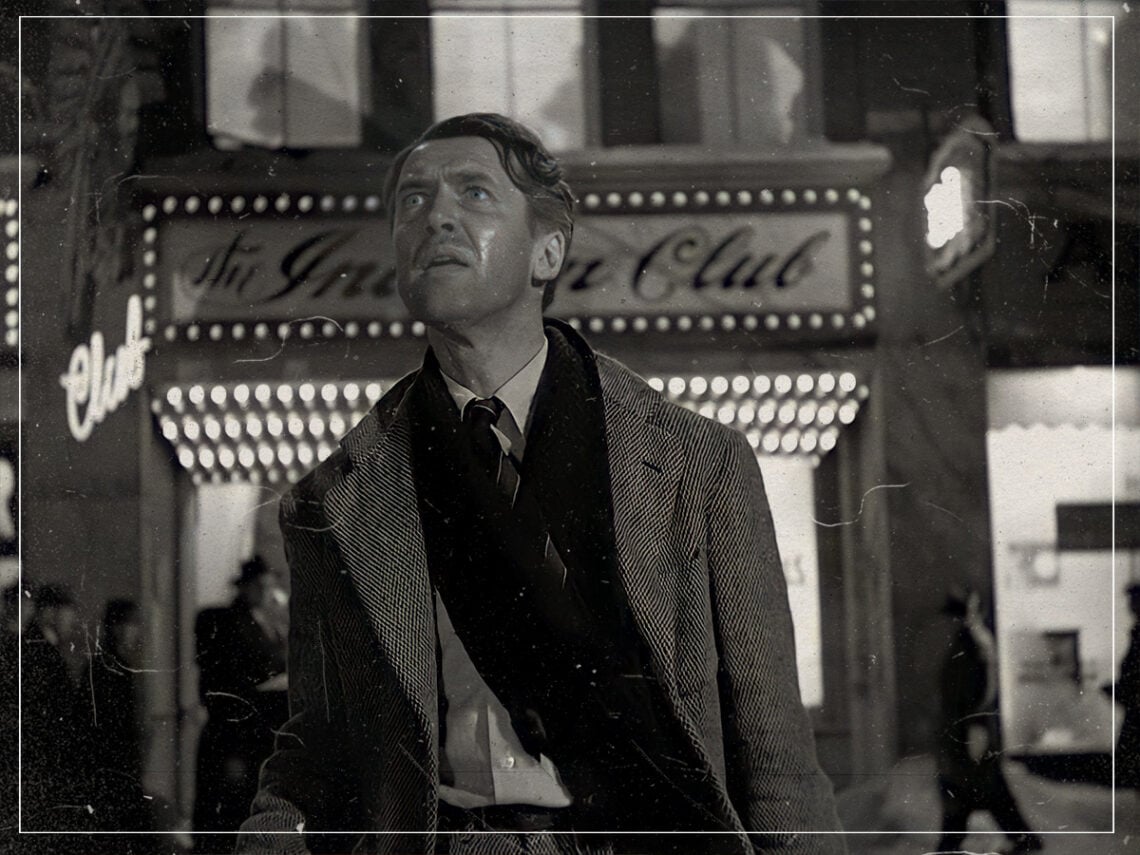
Poor Liberty Films never got the chance to witness It’s a Wonderful Life becoming regarded as a classic and becoming a staple of the Christmastime viewing calendar after the production company was foreclosed by the bank the very next year.
With very few options on the table, the banner was sold off to Paramount, who were at least gracious enough to compensate partners Frank Capra, William Wyler, and George Stevens company stock and a five-picture contract apiece.
Even then, Paramount didn’t do much with the film until its copyright expired and it entered the public domain in 1974, at which point it became the universally-beloved favourite it’s been recognised as ever since. As it turned out, not even one of the finest features of all time is immune from dragging a studio down into the financial gutter.
