


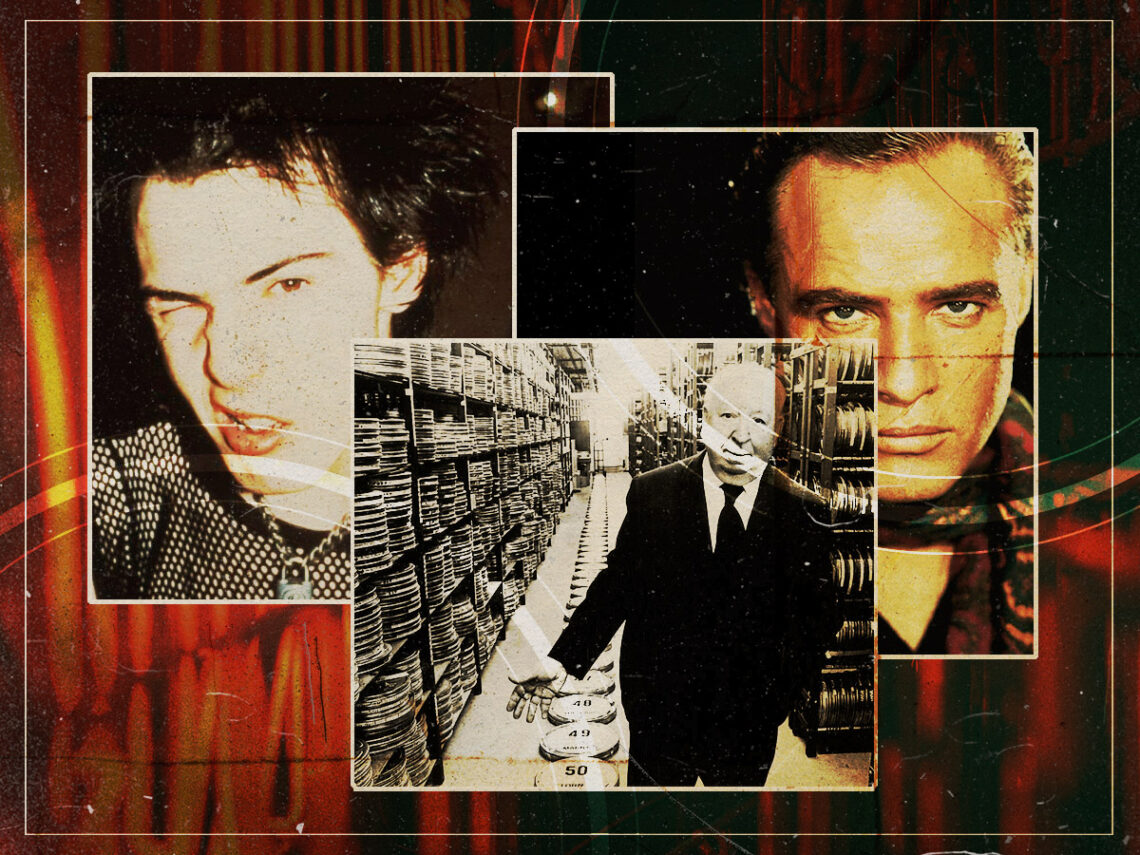
10 movies that started shooting but never finished

Plenty of movies have been abandoned during pre-production, more than a few have been killed and reborn several times over, and some are even completed and then locked away in a vault somewhere, but those that start production but never finish tend to be the rarest of all.
There are any number of reasons why a film would gather together a cast and crew for their latest gig only to be forced to pack up and go home long before the finish line is in sight, but it’s something that doesn’t happen all that often, especially when the industry has a way of dragging just about anything into cinemas in one way or another.
If Terry Gilliam’s The Man Who Killed Don Quixote can emerge from the rubble, then there’s hope for just about anyone. On the other hand, Jerry Lewis’ The Day the Clown Cried was deemed unsuitable for the general public, and seeing as it’s about a clown in a concentration camp, it’s easy to see why.
Warner Bros spent a huge amount of money on Batgirl and then decided it was better served off as a tax write-off, too, which indicates that no film is truly safe from the prying eyes of the studio. That being said, the following ten were all allowed to call action and trundled on for a while, even if they didn’t get too far down the line.
10 movies that were never completed:
10. Wake (John Pogue, 2015)
Action thrillers became the bread and butter of Bruce Willis in the years before his retirement, and as prolific as he became during that period, his filmography was left one short after John Pogue’s Wake was abandoned two weeks into principal photography.
The Die Hard icon was set to play against type as Red Forrester, a sociopath who returns to his isolated island home to attend his brother’s wake before an unexplained attack on the clan forces him to defend the very family who’d excommunicated him from their inner circle decades previously.
It was hardly a movie with the potential to change the world, then, and Wake ground to a halt when production company Benaroya Pictures began experiencing financial difficulties. The shutdown was only expected to last several weeks, but when Willis and Pogue both jumped ship, the film was put out of its misery.
9. Revenge of the Nerds (Kyle Newman, 2007)
Smash hit comedy Revenge of the Nerds has hardly aged gracefully when many of its most talked-about scenes hardly pass muster through a modern lens, so it was somewhat inevitable that a remake would end up happening eventually.
Kyle Newman was on board to helm a new generation of gross-out geeks with Adam Brody leading the ensemble, while shooting took place in Atlanta in various locations including Emory University, which proved to be the straw that broke the movie’s back.
After perusing the script, the educational institution revoked Revenge of the Nerds‘ filming privileges, while studio dissatisfaction with Newman’s work behind the camera failed to convince 20th Century Fox that he was the man for the job. With two weeks in the can, the remake was mothballed and cast onto the scrap heap, with development hell remaining its home ever since.
8. Divine Rapture (Thom Eberhardt, 1995)
Despite boasting a star-studded cast that featured Marlon Brando and Johnny Depp, Divine Rapture was ultimately cratered by financial mismanagement, although the former did at least end up getting compensated for his short-lived involvement.
Ever the shrewd operator, Brando’s contract stipulated that he receive 25% of his $4million salary upfront, so he did alright out of the unscrupulous methods that saw shooting suspended when it transpired the escrow account of the production company helping to foot the bill didn’t even exist.
Only 24 minutes of footage had been captured, but a proof-of-concept short and documentary Ballybrando did emerge in the aftermath of Divine Rapture‘s implosion. 13 days after cameras started rolling, the 1950s-set drama was forced to pack it in, never to be resumed.
7. 10 Things I Hate About Life (Gil Junger, 2012)
Gil Junger’s 10 Things I Hate About You channelled William Shakespeare to craft a teen comedy with a legacy that spans generations, so it stood to reason that a spiritual sequel hailing from the same director stood a decent chance of finding success.
Production kicked off in December 2012 and carried on for two months before things started spiralling out of control. Producer Gary Smith exited his role as head of production company Intandem Films to hit the pause button on 10 Things I Hate About Life, before star Evan Rachel Wood’s pregnancy necessitated a further sabbatical.
The film was eying late 2013 to resume shooting, but Wood declined to return, which saw her slapped with a $30m breach of contract lawsuit by the producers. She responded by claiming money due per the terms of her deal had never materialised in the first place, and the ongoing litigation left 10 Things I Hate About Life to be torpedoed permanently.
6. Broadway Brawler (Lee Grant and Dennis Dugan, 1997)
Inadvertently outlining himself as a bad luck charm, the aforementioned Wake wasn’t even the first time Bruce Willis had headlined a movie that started shooting but never finished, with the ice hockey drama Broadway Brawler suffering a similar fate two decades earlier.
As well as playing retired pro Eddie Kapinsky opposite Maura Tierney’s love interest in what was being billed as the sport’s potential answer to Jerry Maguire, Willis was also a producer on the project. His reputation may have taken a battering, but Disney did very well out of it in the end.
20 days into shooting, the hostile atmosphere – which reportedly saw Willis openly denigrate the skills of many involved, several of whom were subsequently fired – saw Broadway Brawler put out of its misery. Instead of being sued, Willis agreed to sign a three-picture deal with Disney on a reduced salary that would offset the losses incurred, which saw the Mouse House laughing all the way to the bank when those movies turned out to be Armageddon, The Sixth Sense, and The Kid.
5. Who Killed Bambi? (Russ Meyer, 1978)
If ever there was a potent combination in B-tier cinema waiting to happen in the late 1970s, it was the prospective partnership of cleavage-obsessed exploitation favourite Russ Meyer and punk figureheads Sex Pistols, although it sadly never came to pass.
Malcolm McLaren – who co-wrote the screenplay alongside Roger Ebert of all people – envisioned Who Killed Bambi? as a way to help the band break into the American market, and enlisting a titan of genre fare like Meyer was an intriguing way of going about it.
In typical fashion, the director informed Ebert that “I’ve got a couple of big-titted London girls already in mind” to fill out the cast before 20th Century Fox withdrew from the production and everything fell apart. As if Meyer, Ebert, and the Sex Pistols weren’t a bizarre enough combination, it was reported at the time that Grace Kelly was instrumental in having the plug pulled due to her disdain for the filmmaker and status as a major stockholder in Fox.
4. I, Claudius (Josef von Sternberg, 1937)
A litany of legends tried their best to make I, Claudius happen, but by the time the historical drama was finally rendered obsolete, it was beginning to look an awful lot like the film was cursed by failure from the start.
Josef von Sternberg was directing an adaptation that condensed Robert Graves’ titular novel and follow-up Claudius the God into one film, with the author on screenplay duties. Oscar winner Charles Laughton was cast in the lead with support coming from Oscar nominees Flora Robson and Merle Oberon, but it all went wrong when cameras started rolling.
There were arguments between producer Alexander Korda and Laughton over his performance amidst rumours of budgetary overruns before Oberon being injured in a car crash served as the catalyst for production company London Films cutting its losses and seeking an insurance settlement to recoup some of the money it funnelled into the feature to no avail.
3. Jackpot (Terence Young, 1975)
Terence Young’s most famous contributions to cinema came when he kicked off the James Bond franchise by directing Dr. No, From Russia with Love, and Thunderball, only for his attempts to mount a star-studded drama a decade later to fall miserably flat.
Plans were in place to shoot on location in Italy, with Richard Burton starring alongside James Coburn and Charlotte Rampling in a thriller, even if nobody seemed sure what Jackpot would actually be about. Reports varied that Burton was playing a paralysed actor, a down-on-his-luck thespian who suddenly wins a major award, or a performer who fakes a terminal illness to receive insurance money.
Either way, Burton was set to play an actor, and Jackpot never finished filming. Eventually, a lack of funding saw the movie wither away and die, although Young maintained that he would have been able to drag it across the finish line were he able to corral his three leads together for more than one week at a time.
2. Number 13 (Alfred Hitchcock, 1922)
Once he became one of the most renowned and respected directors in the industry, Alfred Hitchcock didn’t have to worry about starting work on a film that was never finished, which sadly wasn’t the case in the early 1920s when he called action on Number 13.
With a handful of scenes in the can, the money suddenly ran out, leaving the ‘Master of Suspense’ up shit creek without a paddle. Hitchcock described what should have been his feature debut as “a somewhat chastening experience,” and in a hammer blow to devotees of his legendary legacy, Number 13 has been lost forever.
On the plus side, it did mark his first encounter with Clare Greet, who tried her best to save the movie by contributing some of her own money to the production. It was all in vain, but she did go on to become a regular part of Hitchcock’s repertory by appearing in a further five of his films.
1. It’s All True (Orson Welles, 1942)
Whereas the majority of movies on this list were abandoned with a couple of weeks of shooting behind them, in typical Orson Welles fashion, he spent five months filming It’s All True before it was taken away from him.
Telling three stories of Latin America – ‘My Friend Bonito’, ‘Carnaval’, and ‘Jangadeiros’ – Welles travelled the continent and pitched up in several different countries, but a restructuring of RKO Pictures saw it killed for good, with the filmmaker referring to the abandoned project as “a tax write-off” on the company’s behalf.
He did manage to repurpose some of the footage he’d shot for It’s All True into various other productions so it wasn’t an entirely wasted endeavour, nor was it the first or last feature Welles ended up toying with that ended up being canned long before it even had the chance to reach cinemas.
