


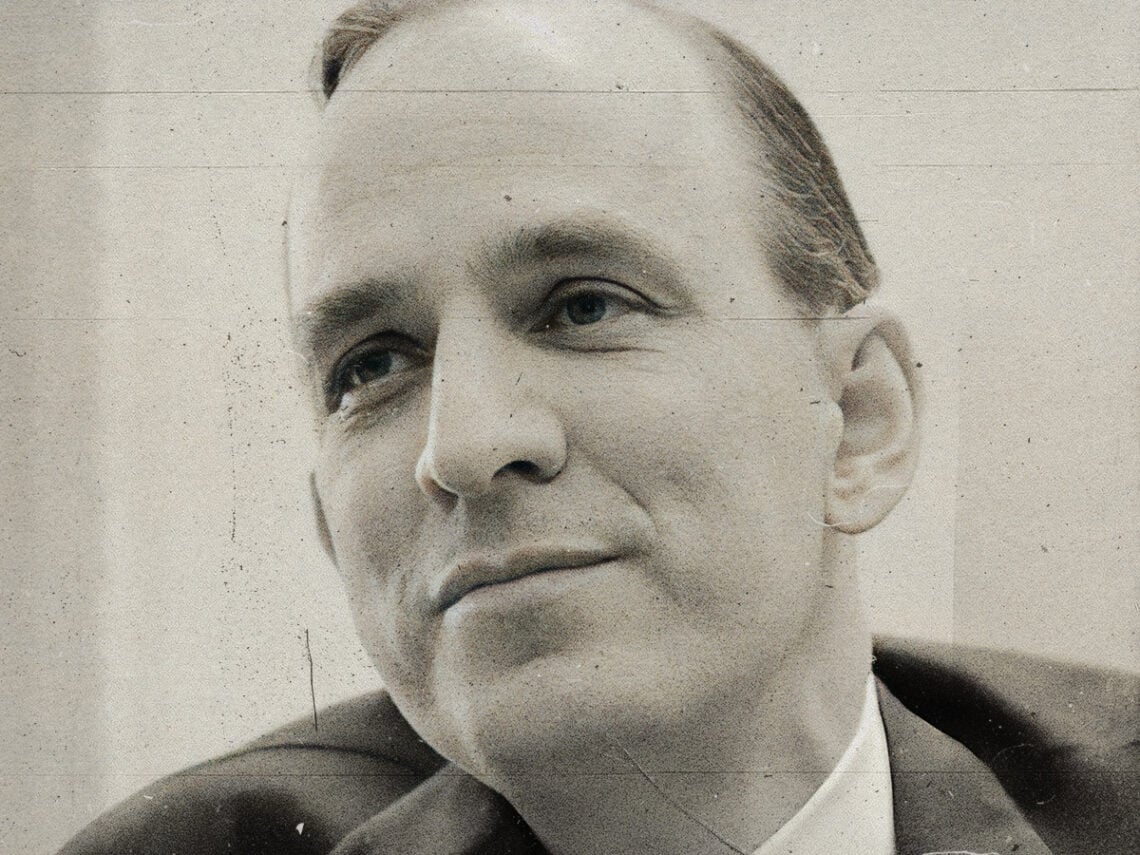
10 movies influenced by the mastery of Ingmar Bergman

Of all of the contributions to European cinema, perhaps the most influential and highly revered is the Swedish auteur Ingmar Bergman. In a career spanning over 40 years, his directorial efforts shone a light on Scandinavian culture, whether it was a trippy and allegorical depiction of medieval Sweden or a surgical dissection of contemporary marriage.
Often considered one of the greatest filmmakers of all time, his legacy has reached filmmakers from all corners of the globe. “What was most inspiring all along,” said acclaimed director Martin Scorsese in the 2013 documentary Trespassing Bergman, “was the constant spiritual debate. The transcendent debate.”
Running through all of Berman’s films was a palpable sense of a deeper meaning, a comment or question posed by the director on the very nature of existence and humanity’s place in the wider universe. As Scorsese adds, “Each one of his pictures was like a conversation with himself.” More than any director, it was Bergman who used the medium of cinema to interrogate ‘the bigger picture’.
From his wonderfully unique presentation of characters and dialogue to his carefully considered framing and composition, the Swedish maestro utilised images and sound like no other. With his first films dating back to the 1940s, it’s no surprise that Scorsese, and other directors whom we now consider to be titans of the industry, were channelling an element of Bergman’s filmmaking in their own pictures.
10 movies influenced by Ingmar Bergman:
10. The Last House on the Left (Wes Craven, 1972)
Ingmar Bergman wasn’t exactly known for his contributions to the horror genre; in fact, he never truly entered the genre, aside from his eerie 1957 film The Seventh Seal and the mysterious thriller Persona from 1966. Still, American horror pioneer Wes Craven saw Bergman as a key source of inspiration, using his style for his iconic 1972 film The Last House on the Left, which told the story of two teenage girls who a group of madmen brutally tortures.
Indeed, it was Bergman who introduced him to arthouse cinema in general, inspiring him to take up the filmmaking craft, with The Last House on the Left itself being a loose remake of 1960’s The Virgin Spring.
9. The Squid and the Whale (Noah Baumbach, 2005)
Ingmar Bergman’s work may seem overly serious, thanks to films like Persona, Fanny and Alexander and The Magician, but the filmmaker also has a wicked sense of humour that blends comedy and tragedy. The same can be said for the American indie filmmaker Noah Baumbach, who launched to popularity off the back of the mumblecore movement, shining in the critical sphere after the 2005 movie The Squid and the Whale.
Just as Bergman used autobiographical elements in his feature films, Baumbach did the same for The Squid and the Whale, telling the story of a young boy coping with his parent’s divorce with dashings of comedy and plenty of dark tragedy.
8. About Schmidt (Alexander Payne, 2002)
The American filmmaker Alexander Payne is too often forgotten in contemporary cinema, having helped to formulate the independent film scene at the start of the new millennium. After helming his 1999 breakthrough movie Election, Payne went on to direct Jack Nicholson in the 2002 film About Schmidt, a drama about a recently retired man who sets out on a journey to reconnect with his estranged daughter.
Nicholson’s character of Schmidt shares many similarities with Bergman’s protagonist in 1957’s Wild Strawberries, the tale of a man on another journey of self-discovery whose inability to properly project his emotions has left him stilted and lonely.
7. Fight Club (David Fincher, 1999)
David Fincher, a kingpin of contemporary cinema, hit the ball out of the park in 1999 with Fight Club, a movie that, on the surface, appears worlds apart from Bergman’s introspective work. Yet, consider the surreal mind games and identity crises that both Tyler Durden and Edward Norton’s unnamed protagonist experience – you’re not a million miles away from Persona‘s psychological twists and turns.
Bergman’s exploration of a character living a dual life is mirrored in the form of the rebellious Tyler, who acts out the Narrator’s subconscious desires – an absolute allusion to the Swedish master’s work. Despite their vastly different settings of the 1960s Swedish coast and 1990s grungy New York, their explorations into the nature of duality and the self align very closely indeed.
6. 8½ (Federico Fellini, 1963)
Often regarded as one of the greatest films of all time, Federico Fellini’s autobiographical 8½ was a turning point in his career. Not unlike Bergman’s cinematic introspection in 1961’s Through a Glass Darkly, Fellini’s film delves into the inner psyche of a creatively stalled film director.
Both works underscored the anxiety and confusion intrinsic to the creative process, employing surrealist elements to navigate the depths of the human mind. While 8½ is certainly a more celebratory examination of an artistic struggle compared to Bergman’s darker approach, both films encapsulate the very nature of the creative process – and the toll it exacts.
5. The Ice Storm (Ang Lee, 1997)
Ang Lee isn’t the first filmmaker you’d tend to think of when considering directors influenced by Ingmar Bergman, with little of the Swedish maestro’s deft touch being seen in 2000’s Crouching Tiger, Hidden Dragon or 2003’s Hulk. Yet, go back to Lee’s formative years and Bergman’s touch is self-evident, particularly in his 1997 movie The Ice Storm, a small-time American drama that follows the lives of middle-class families steadily collapsing into turmoil.
Speaking about how Bergman has informed his career, Lee told the BFI: “Persona is one of my favourites. The first time I saw Ingmar Bergman’s movies I was aware that I was watching an art film…I was electrified; it was a life-changing experience. It really hit me hard – how can anybody ask the question ‘Where is God?’ in such a beautiful way? It was a stunning experience”.
4. The Conversation (Francis Ford Coppola, 1974)
Francis Ford Coppola was cooking with gas at the start of the 1970s, helming some of the greatest movies of the 20th century in the space of about seven years. First came the indelible American masterpiece The Godfather in 1972, but just two years later, he would helm one of his most underrated flicks, 1974’s The Conversation, the story of Gene Hackman’s Harry Caul, a secretive surveillance expert who is forced to question his conscience.
Inserting his own human experience, just like Bergman did with his films, in The Conversation, Coppola peels back the layers of his central character, analysing the oppressive forces that are informing his decisions, not unlike how the Swedish filmmaker picked apart his protagonist in Wild Strawberries.
3. Raging Bull (Martin Scorsese, 1980)
Martin Scorsese’s gut-wrenching portrait of boxer Jake LaMotta might not immediately scream Bergman influence. However, delve deeper, and you’ll see similarities with Bergman’s Through a Glass Darkly, particularly in their character studies of individuals in self-destructive spirals. Both films showcase protagonists tormented by their inner demons, grappling with issues of self-worth and personal failure.
Through his intimate exploration of LaMotta’s life, the Italian-American director holds up a mirror to the human condition and the darker elements of the psyche. This same introspective, unflinching approach that the Italian American director deploys in Raging Bull is something he shares with the Swede.
2. Mulholland Drive (David Lynch, 2001)
Bergman, Fellini and Jean-Luc Goddard were David Lynch’s “heroes”. You’d be hard-pressed to find a Lynch film that doesn’t wear its Bergman influences on its sleeve, but this 2001 classic about the interweaving and hypnotic lives of two women is probably the most profoundly inspired.
Following a mysterious car crash, an amnesiac woman named Rita wonders a surrealistic version of Los Angeles and tries to piece back together her identity with the help of a Midwestern wannabe actor. Once again, Persona rears its beguiling head in the world of contemporary cinema, and Lynch proudly leans into the Swedish director’s obsession with the fragility of ego.
1. 3 Women (Robert Altman, 1977)
Robert Altman famously wrote the script for this movie immediately following a dream — right from the get-go, the American director was harnessing the power of the subconscious as Bergman did throughout his career. Of all of Altman’s films, this one is the most ethereal and allegorical, and the strands of Bergman are as clear as day.
Following, as the name suggests, three women, Altman’s film dives deep into the realm of identity. With its rich dream-like atmosphere, multiple layers of meaning and emphasis on multifaceted personalities, it’s impossible not to see the direct influence of Bergman’s 1966 timeless masterpiece, Persona.
