


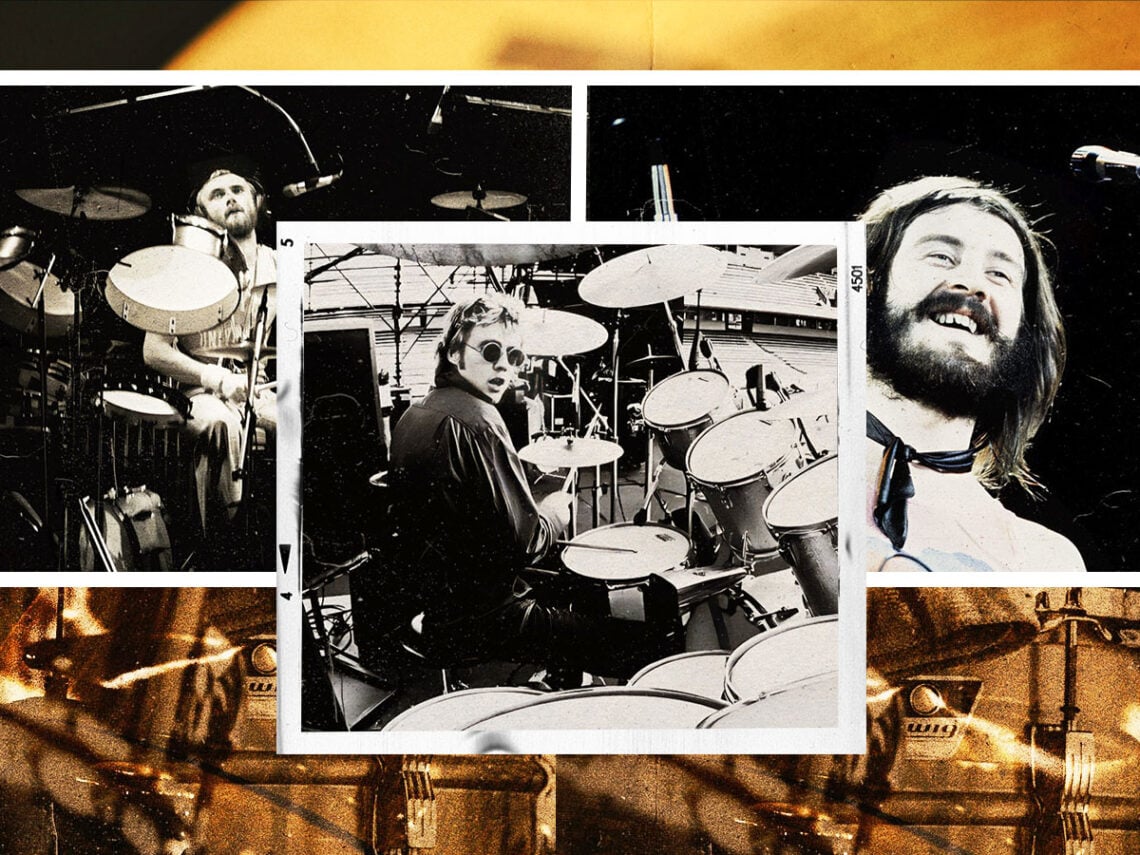
10 iconic songs that were written by drummers

Often undervalued, drummers form the cornerstone of a band’s ensemble. Their role serves as the rhythmic linchpin that upholds the entire musical structure. At the same time, however, it’s probably the biggest part of a band that people understand the least. What makes a good drummer, aside from knowing how to sit behind a kit? According to Arctic Monkeys’ esteemed drummer Matt Helders, simply playing drums does not equal mastery; it’s the execution that counts. A good drummer has the power to transcend music to a whole new level, adding magic to a song that wouldn’t otherwise be possible from the sole efforts of the bassist, guitarist, or, indeed, even the vocalist.
Some of the best drummers of all time are the ones who take their craft to a new level, becoming not only the glue that holds the operation together but a real driving force in the band’s direction and overall sound. A genuinely exceptional drummer propels a band to a realm of sheer marvel, blessing its music with both the rhythm of essential groove and with the je ne sais quoi that leaves other musical players wondering what the secret ingredient is.
The ongoing debate about the greatest drummers in history is a consistently heated topic that sparks discussions among fans, critics, and fellow drummers alike. Consider the varying styles of drumming exemplified by figures such as John Bonham, Neil Peart, Joey Jordison, and Ginger Baker: it becomes clear that success takes place when a drummer seamlessly weaves their individuality into their rhythms.
At the same time, drummers often contribute much more than just a simple rhythm. In conversation, the greatest lyricists of all time are often linked with the likes of Bob Dylan, Kurt Cobain, John Lennon, David Bowie, and so on – all primary songwriters and all effective frontmen. Beneath the layers of the obvious facade, however, there lies a hefty list of unsung drumming heroes who also contributed some of the greatest hits of all time.
10 songs written by drummers:
10. ‘Radio Ga Ga’ – Queen
While the awareness of Roger Taylor‘s songwriting contributions significantly heightened following the release of the biopic Bohemian Rhapsody, the Queen drummer has been involved in writing and co-writing some of the band’s most prominent hits.
‘Radio Ga Ga’ was released in 1984 as a part of the album The Works. The song was written by Taylor and became one of Queen’s biggest hits, both in terms of chart success and its message about the changing landscape of media and entertainment. In true Queen fashion, the song’s title is a play on the term “radio gag”, suggesting the feeling that radio was losing its impact and becoming repetitive or mundane.
During the 1991 release of the album Innuendo, Taylor also played a substantial role in the songwriting process, crafting noteworthy tracks such as the title song and ‘These Are the Days of Our Lives’. His drumming talents alone have garnered the attention of many, including the likes of the late Taylor Hawkins, who cites a live version of ‘Keep Yourself Alive’ as the first thing that really made him want to become a drummer.
9. ‘Everybody Hurts’ – R.E.M
While most of this song was written by R.E.M drummer Bill Berry, he did not actually play on it, and instead, a drum machine took care of that.
Guitarist Peter Buck described how the track came together, saying: “Bill brought [the song] in, and it was a one-minute long country-and-western song. It didn’t have a chorus or a bridge. It had the verse… it kind of went around and around, and he was strumming it. We went through about four different ideas and how to approach it and eventually came to that Stax, Otis Redding, ‘Pain in My Heart’ kind of vibe”.
The band’s bass player, Mike Mills, claims he bought the drum machine that you can hear on the track for $20, but that made it perfect for the song’s “metronome-ish feel”. He added: “Mike [Stipe] and I cut it live with this dumb drum machine, which is just as wooden as you can get. We wanted to get this flow around that: human and non-human at the same time.”
8. ‘Rock the Casbah’ – The Clash
Crafted by Topper Headon, The Clash‘s ‘Rock the Casbah’ was built around a piano melody he had been experimenting with. While alone in the studio, separate from his fellow bandmates, Headon progressively laid down the drum, piano, and bass segments, handling the majority of the song’s musical elements himself.
This origin sets the song apart from most other Clash compositions, as the majority usually sprung from the collaborative songwriting efforts of Joe Strummer and Mick Jones. When the rest of the Clash members entered the studio to listen to Headon’s recording, they were impressed by his creation, perceiving that the instrumental foundation was essentially intact. Subsequently, minimal enhancements were introduced, such as additional guitar and percussion elements.
Despite becoming one of the band’s biggest songs, Strummer didn’t share the same enthusiasm towards Headon’s lyrics at first. According to the band’s guitar technician Digby Cleaver, “Strummer just took one look at these words and said, ‘How incredibly interesting!’, screwed the piece of paper into a ball and chucked it backwards over his head.”
7. ‘Blitzkrieg Pop’ – Ramones
Often used as a rallying cry at sporting events, the Ramones‘ ‘Blitzkrieg Pop’ was written by Tommy Ramone and originally called ‘Animal Hop’. In contrast to many of the Ramones’ initial creations, the song’s precise significance and theme remain somewhat ambiguous and enigmatic.
According to Ramone, however, it recounts the narrative of a youthful audience participating in a rock concert. The term “Blitzkrieg” alludes to the rapid military strategy employed by the Germans during World War II, translating to “lightning war”.
When writing the song, Ramone initially wanted a chant as powerful as the start of Bay City Rollers’ hit ‘Saturday Night’. The famous lyrics, “Hey ho, let’s go!” drew inspiration from the phrase “High, low, tipsy toe” in Rufus Thomas’ 1963 track ‘Walking the Dog’. This influence was particularly shaped by the Rolling Stones’ rendition of the song: the band found amusement in mimicking Mick Jagger’s rendition of the line, as they believed it resembled “hey ho”. Interestingly, Ramone later revealed that he conceived the chant while strolling home from the grocery store, carrying a bag of groceries.
6. ‘Hotel California’ – Eagles
Penned by Don Felder, Glenn Frey, and Don Henley, the true messaging behind this particular Eagles hit remained a mystery for many years. Later, however, Henley confirmed that it’s really about “the excesses of American culture and certain girls we knew. But it was also about the uneasy balance between art and commerce”.
When it came time to writing a new batch of songs for a new album, the band discovered one of Felder’s demos. Recorded in Malibu, the demo became the foundational chord sequence of ‘Hotel California’. As Henley later recalled, “The music to me reminded me of something between Spanish music and reggae music. And that one really jumped out at me, so I said to Glenn that we should probably work on that.”
Perhaps what makes the song resonate with so many is the fact that it was approached with the intention of being a visceral experience. “When we try to write lyrics, we try to write lyrics that touch multiple senses, things you can see, smell, taste, hear,” Felder said. “’I heard the mission bell,’ you know, or ‘the warm smell of colitas’, talking about being able to relate something through your sense of smell. Just those sort of things. So that’s kind of where ‘colitas’ came from.”
5. ‘In The Air Tonight’ – Phil Collins
Numerous artists find themselves tethered to a particular song, and Phil Collins is no exception to this phenomenon. Eventually, a creation evolves from being solely attributed to the artist who birthed it and transforms into an integral component of the shared cultural repertoire. Collins’ monumental pop track, ‘In The Air Tonight’, stands as a prime example of a composition that has outgrown its creator.
Following his triumphant role as a frontman, Collins embarked on a solo journey in 1980 and introduced himself through this inaugural single. This composition swiftly gained international prominence, propelling him to stardom in his own right.
However, ‘In The Air Tonight’ serves as a poignant reminder of a sombre chapter in Collins’ life, occurring in the aftermath of his devastating divorce from his first spouse. When he crafted this track, his emotional state was marred by solitude, and he turned to music as a cathartic outlet.
4. ‘Master of Puppets’ – Metallica
As the primary instigator and driving force behind the preeminent metal band of all time, Lars Ulrich stands indisputably as one of the most influential drummers and songwriters in history. While there have been critiques of his drumming prowess over the years, he remains a central figure in composing the majority of Metallica‘s catalogue alongside James Hetfield, ultimately forging the genre’s most monumental hits.
Amidst a wealth of riffs from Hetfield and Kirk Hammett and fragments of potential compositions, it was predominantly Lars who adeptly assembled these elements into coherent songs. While Metallica is often linked with Hetfield’s vocals, riffs, and intense downpicking, their current stature owes significantly to Lars’ creative contributions to songwriting.
It takes a lot of talent to create something as culturally prominent as ‘Master of Puppets’. The song, as Hetfield explained, “deals pretty much with drugs. How things get switched around, instead of you controlling what you’re taking and doing, it’s drugs controlling you.”
3. ‘The Heretic Anthem’ – Slipknot
‘The Heretic Anthem’, released under the title ‘Heretic Song’, emerged as a promotional single from Slipknot’s second album, Iowa. The track’s genesis stems from the band’s experiences with record labels that initially displayed no inclination to enter a recording contract with them.
Written collaboratively with Joey Jordison, Paul Gray, and Corey Taylor, the song is characterised by its heavy guitar riffs, pounding percussion, and Taylor’s powerful vocal delivery. The song showcases the band’s signature blend of nu-metal and alternative metal elements, with intense dynamics and shifts in tempo. The lyrics reflect their frustrated attitude, with the lines, “I bleed for this and I bleed for you /Still you look at my face like I’m somebody new /Toy, nobody wants anything I’ve got /Which is fine because you’re made of everything I’m not”.
2. ‘Moby Dick’ – Led Zeppelin
‘Moby Dick’ materialised following Led Zeppelin guitarist Jimmy Page’s discovery of drummer John Bonham’s studio jamming and improvisation. Page recorded segments of Bonham’s solos and subsequently assembled them into the final composition. Insights from studio outtakes of the Led Zeppelin II sessions indicate that the recorded drum solo was distilled from a more extensive rendition.
The origins of the guitar riff can be traced to the BBC unused session track titled ‘The Girl I Love She Got Long Black Wavy Hair’, which was captured during the summer of 1969. The riff also bears a resemblance to Bobby Parker’s 1961 chart-topping single, ‘Watch Your Step’. However, the progression differs in key and tempo.
The track was built around Bonham’s mighty drum solo, and during concerts, it allowed him to show off his excellence to a live audience. Once, during a performance at the Royal Albert Hall, Bonham played an extended 15-minute version of the monster hit.
1. ‘Scars’ – Rush
Neil Peart wrote ‘Scars’ to reflect a certain period in life that leaves a mark on you. Featured on Rush’s album Presto, the song incorporates an intricate drum arrangement, integrating both acoustic and electronic drum elements. This intricate pattern drew inspiration from a tribal rhythm Peart encountered during a bicycle expedition across Africa. He seamlessly integrated this rhythm into his live drum solos, enhancing the song’s dynamic. The track also employs a sequencer, a device frequently misconstrued for a bass guitar.
Even though the band’s guitarist, Alex Lifeson, didn’t particularly rate the album after its release, Peart felt connected to its profound themes, stating its influence as a testament to the power of music in mirroring real life.
“I think it’s part of everyone’s experience that a certain record reflects a certain period of their life, and that’s a pleasurable scar, you know, there’s a mark left on you, a psychological fingerprint left by a very positive experience,” Peart said, adding, “And music is an easy one, but it translates to so many other parts of life where it’s a given that, for instance, the sense of smell is one of the strongest forces in your memory, where a given smell will suddenly conjure up a whole time of your life, and again, it triggers another scar, it triggers another psychological imprint that was left by a pleasurable thing.”
