


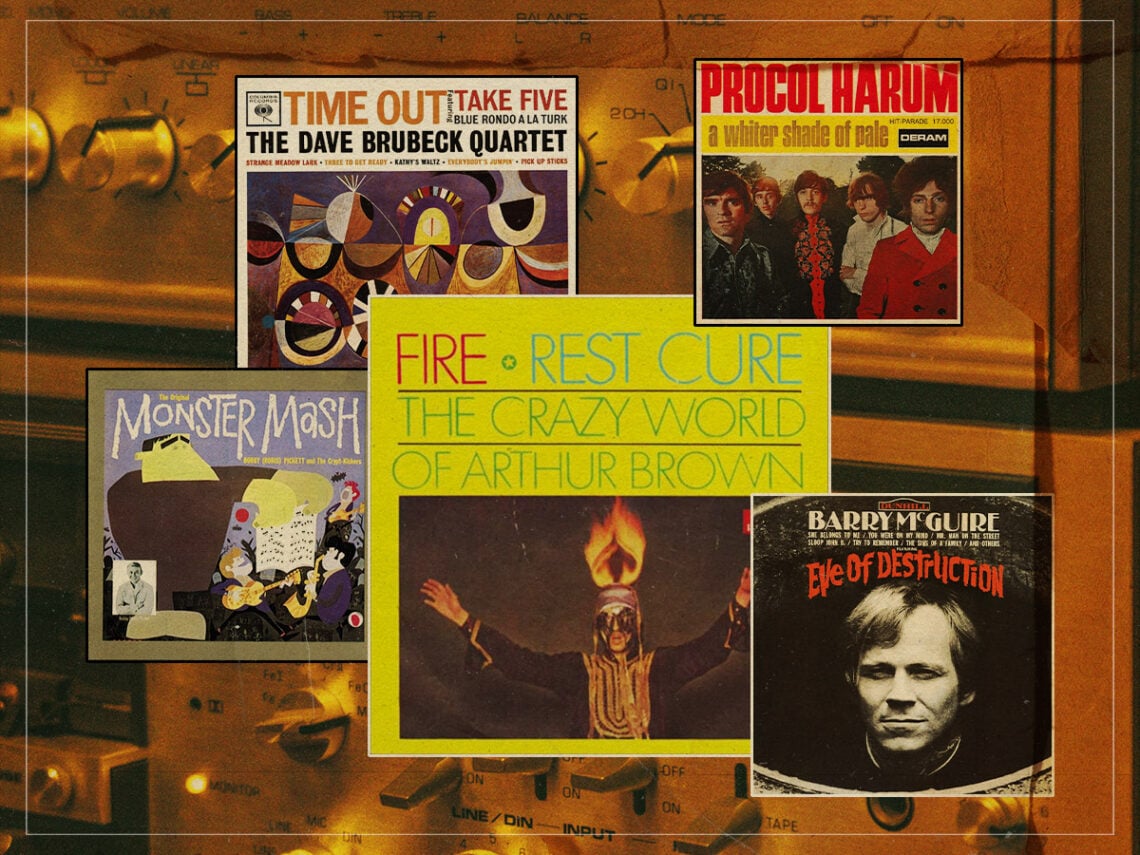
10 greatest one-hit wonders from the 1960s

The 1960s were a time of radical change in basically every aspect of human society, and that was no different when it came to music. While the idea of a pop music industry had begun the decade before, the 1960s was when it was basically decided whether pop music would be a fad or an art form, which led to a very interesting array of music being released.
On the one hand, you had some of the greatest songs ever to grace pop music. The kind of stuff that certified it as a real art form that we still celebrate to this day: The Beatles, The Rolling Stones, Aretha Franklin, you get the picture.
On the other hand, you have some of the absolute worst pieces of cobbled-together trash to ever waft into existence. Naked exercises in craven money-grabbing that even most TikTok influencers would call a little crass.
With this list of artists who had one major hit on the Billboard Hot 100 and then nothing more, we get something interesting. We get the genuine, capital A Artists who were lucky enough to have one hit but not lucky enough to continue their hot streak. However, we also have the moments where those corporate attempts to cash in on trends went full circle and produced moments of kitschy genius. With that in mind, we present to you our list.
10 of the finest one-hit wonders of the 1960s:
‘Eve of Destruction’ – Barry McGuire

We begin with a reminder that the world has always been ending and probably always will be. At the time of writing, the world feels like a particularly frightening place to be. However, one must always remember that entire swathes of the 1960s were conducted under the belief that at any moment, a hellfire of nuclear weapons could drop on our heads and end everything. This was the atmosphere that Barry McGuire’s ‘Eve of Destruction’ tapped into upon its release in 1965.
The song is a relic of a time when a genuinely angry protest song could still be a mainstream hit, and this track is apoplectic. McGuire’s sandpaper vocal conveys a feeling of hopeless anger that I’m sure we’re all extremely familiar with in 2025. Yet, just as people lived through those petrifying times in the 1960s, with the right mix of hope and action, we could yet live through times like these too.
‘Green Tambourine’ – The Lemon Pipers

The hippy dream is looked down upon these days, and for good reason. It became pretty clear that most people involved in it the moment it hit the mainstream were in it solely for the “grass and ass” of it all. However, there was a razor-sharp social conscience that the peace and love crowd kept at their core until squares started wearing store-bought tie-dye and listening to Sha-Na-Na. Weirdly enough, the best example of this came from the sole hit from Ohio-based also-rans, The Lemon Pipers.
Among the blasts of distorted guitar and chiming sitar riffs, ‘Green Tambourine’ tells a simple, yet distressingly recognisable story. That of a man that songwriter Paul Leka and his writing partner Shelley Pinz used to see outside their office at the Brill Building. He used to panhandle, with the coins he’d get in return going into a tambourine he was holding. Despite the band wanting to record a song of their own, this became one of the biggest hits of 1967, and the only hit of their career.
‘Fire’ – The Crazy World of Arthur Brown

“I AM THE GOD OF HELL-FIYAH!” Sorry, just had to get one of the best opening lines in the history of pop music out of the way first. After all, it’s difficult not to have anything else come to mind when thinking about this absolute lightning bolt of a record, decades ahead of its time in subject matter, presentation and sheer heaviness. While Screaming Lord Sutch may have invented the concept of shock-rock a few years earlier, Arthur Brown perfected it.
There are many acts so good that you can’t fathom why they didn’t have a follow-up hit after their mainstream breakthrough. As great as they are, The Crazy World of Arthur Brown aren’t one of them. It’s a miracle this song got so big upon release in 1968, and then anything that matched it for sheer bonkersness would be too much for the mainstream public. Not bonkers enough, and then the crowd who latched onto their sheer weirdness would be disappointed. Ah well. We’ve still got ‘Fire’ and that’s more than enough.
‘Spirit in the Sky’ – Norman Greenbaum

Fun fact, there were several parts of the hippy movement which were very thinly veiled attempts to get the youth of the day hooked on God. Whether they were genuine attempts by right-thinking religious youths to get other young people invested in helping their community, or conniving suits trying to con people into going back to church, there was a heavy spiritual theme to a lot of the hippy movement. This is best summed up by Norman Greenbaum’s deathless banger ‘Spirit in the Sky’.
Inspired by Porter Wagoner singing a gospel number on TV, Greenbaum decided to try his hand at a gospel track himself. Despite getting a few of the basic facts about Christianity wrong (Greenbaum was, after all, Jewish), it was very clear that he’d written a copper-bottomed hit. After shopping it around as a folk number, producer Erik Jacobsen radically reworked it into the proto-glam bop we know and love today.
‘Telstar’ – The Tornadoes

Hoo-boy. Joe Meek is a very difficult character to talk about these days. Yet, despite the horrific crime he committed, he’s still one of the most influential record producers and songwriters of his generation, and ‘Telstar’ is a miracle. A song that would sound futuristic in 1992, and was released 30 years previously in 1962. It’s still arguably the go-to example of a novelty hit secretly paving the way for the future without anyone realising it at the time.
After all, ‘Telstar’ was all but written to cash in on the science-fiction craze sparked by the space race of the late 1950s and early 1960s. Yet Meek, rather than put together some campy artefact of the time, crafted a song that, even without lyrics, and only the slightest hint of a human voice, sounded as much like the future as anyone would make for the rest of the decade. Something to remember alongside everything else, perhaps.
‘Louie Louie’ – The Kingsmen

Bubblegum pop at its absolute finest, yet also so ragged and raw that it invented alternative rock. ‘Louie Louie’ was a standard long before The Kingsmen recorded their definitive take on the track, but it turned out all that was needed to turn Richard Berry’s 1955 R&B curio into one of the most unforgettable songs in rock history was two things. One, a band like The Kingsmen, who seem to have been introduced to their instruments via a blind date an hour before their recording time began. Two, a singer like Jack Ely, who only knows vowels and even then, only by reputation.
Seriously, it makes sense that the urban legend of the lyrics to ‘Louie Louie’ being unabashed smut got so much traction, and not only because Ely might as well be singing while chewing a pound of peanut butter. The whole thing is still somehow absurdly raunchy and alive over half a century after its release. There was absolutely no way that The Kingsmen were going to be a big deal. There was also absolutely no way that their version of ‘Louie Louie’ wasn’t going to be one of the biggest hits of the decade and beyond.
‘Take Five’ – The Dave Brubeck Quartet

Living proof that the term “one-hit wonder” shouldn’t be a marker of talent. After all, it’s kind of a miracle that a well-respected jazz band like the Dave Brubeck Quartet would find themselves on the Billboard Hot 100 in the early 1960s, sandwiched between forgotten crooners and TV stars hawking tie-in singles. Yet, this unforgettable track found its way on there through sheer style, elegance and catchiness.
At the time, Brubeck was the man tasked with taking jazz into the mainstream. To be clear, there’s a discussion to be had about the fact that a well-to-do, white, middle-aged man was tasked with taking a music as proudly Black as jazz into the mainstream. This was very much an attempt by major record labels to gentrify the medium. However, it’s difficult to argue that Brubeck didn’t also create one of the most unforgettable jazz numbers of all time.
‘Wild Thing’ – The Troggs

‘Wild Thing’ may have flown straight past the point of being a meme and settled into the ‘oldies’ cabinet, but seriously, give it another spin if you haven’t in a while. There is still something thrillingly raw about this piece of unreconstructed garage rock. Whereas there’s still something that feels youthful and innocent about ‘Louie Louie’s’ playful thrashing, ‘Wild Thing’ feels like its darker, dangerous older brother.
The Troggs’ masterpiece is a leering, priapic romp that takes the blueprint set by The Rolling Stones a few years earlier and makes the subtextual horniness the text. Reg Presley’s unsmiling, pained vocals, in particular, is a snapshot of how Mick Jagger would sound given a few years and a few brushes with the law. If The Kingsman’s garage rock classic invented alternative rock, The Troggs’ track invented metal, and did so with aplomb.
‘Monster Mash’ – Bobby ‘Boris’ Pickett

‘Monster Mash’ is utterly delightful and I will not listen to any tiresome chucklefucks that think differently. Yes, it’s a novelty record that has all the artistic merit of a tub of Pringles. Yes, it’s little more than a jobbing actor’s party trick blown up into a deeply silly parody of songs like ‘The Twist’, ‘The Hully-Gully’ and yes, ‘The Mashed Potato’. Yes, its legacy is almost certainly down to the fact that there are vanishingly few good Halloween songs out there. I quite simply don’t care.
‘Montster Mash’ is truly charming in a way that basically no other one-hit wonder is. It’s fully aware of its disposable nature. However, rather than trying desperately to signal to the audience that it knows it’s naff, Marvel-style, it completely commits to the bit. Daring any audience, young or old, not to have fun with Boris and his Crypt-Kicker Five. A silly, glorious sugar rush of a number, the kind that anyone should have in their musical diet.
‘A Whiter Shade of Pale’ – Procol Harum

Now, if you wanted to be jobsworth about this list, you could say that Procol Harum aren’t a one-hit wonder. Their follow-up single hit the top 40 for a cup of coffee, and a single from a live album of theirs stumbled into the top 20 in 1972, seemingly by mistake. However, when your debut single is regularly hailed as one of the best songs of the decade and outright is one of the most successful songs of all time, I don’t think there’s any shame in being a one-hit wonder here.
Because ‘A Whiter Shade of Pale’ still hits. Its dreamy timelessness means it could have come from any decade and been a hit, no matter how associated with the Summer of Love it may be. There’s often shame associated with being a one-hit wonder, as if your big number is an albatross around your neck. I think, in this case, Keith Reid, Gary Brooker and Matthew Fisher can wear it with pride. As in their case, it’s less about the one hit and entirely about the wonder.
