


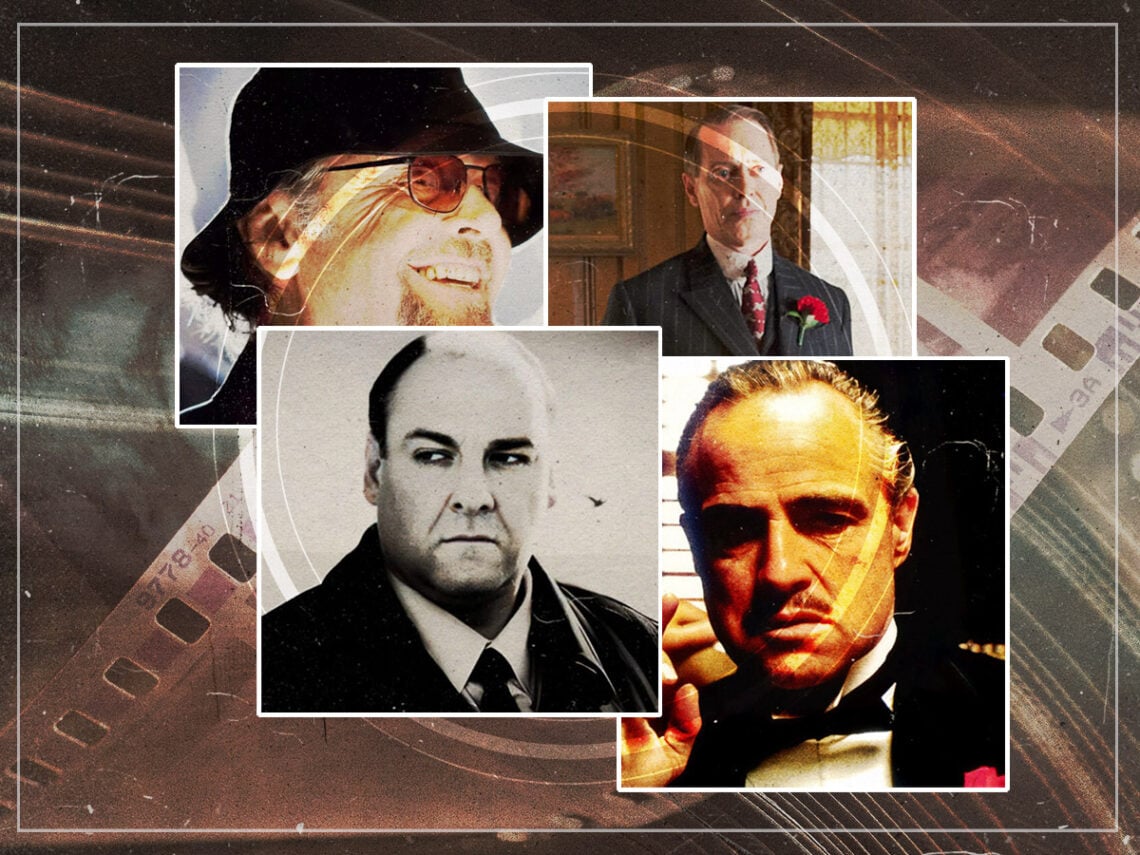
The 10 greatest on-screen mafia bosses

Much like any other widely popular form of filmmaking, the gangster genre has become beholden to its own bespoke set of tropes and trappings during a near-century in the limelight.
One of the most important is the depiction of the person in charge, with the head of any crime organisation required to command respect in order to make it nothing less than believable that they control not just an army of underlings but huge swathes of an entire city’s illegal operations.
Film and television has been blessed with countless figures over the years to have done just that, but there remains a difference between being a great character and an unforgettable icon. There’s plenty to have been one or the other, but the list of those to have achieved both is decidedly slimmer.
Across the big and small screen, history has been littered with a vast array of formidable figureheads who have ruthlessly overseen many offshoots of the mafia and beyond, with the following ten living long in the memory even after several of them met a bullet-riddled demise as a result of their activities.
The 10 best on-screen mafia bosses:
10. Fat Tony (The Simpsons, 1991-present)
No rule says the greatest on-screen mafia bosses have to be restricted solely to the realms of the hard-boiled crime genre – or even be live-action, for that matter. Based entirely on the status as one of the most memorable and longest-running supporting characters in an iconic series, Fat Tony fully merits his position.
Since debuting in 1991, Springfield’s resident head of organised crime has been involved in countless classic episodes of The Simpsons, with Joe Mantegna’s husky tones always welcome whenever Fat Tony gets drawn into the orbit of Homer and the rest of the titular family. Just don’t make him mad, because as he famously said, that’s when he gets stabby.
9. Paul Cicero (Goodfellas, 1990)
Paul Sorvino regularly found himself typecast as an Italian-American gangster, but there’s no shame when he repeatedly proved great at it. As the erstwhile antagonist of one of the genre’s greatest-ever movies, Paul Cicero remains the defining role of a career always swept up in the shadow of the mob.
Based on real-life underworld figure Paul Vario, Sorvino exuded gravitas laced with the underlying fear that he could explode at any minute in Martin Scorsese’s all-time great. Taking Ray Liotta’s ambitious Henry Hill under his wing proved to be a fatal move in the long term, but within the context of the narrative, there was nobody better – or more respected – from whom to learn the ropes.
8. Rico Bandello (Little Caesar, 1931)
Mervyn LeRoy’s tale chronicling the rise up the ranks of Rico Bandello may have seen Edward G. Robinson on fairly familiar turf as a hard-nosed hoodlum, but Little Caesar is often regarded as the finest performance of his entire career.
With his eyes set firmly on the top of the organised crime tree, the influential epic played a massive part in popularising the gangster film in the 1930s, with Robinson never anything less than utterly convincing as he seizes hold of Chicago’s entire North Side upon taking an entirely different path to his more level-headed friend Joe (Douglas Fairbanks), who understands early on that there’s nowhere to go but down when you reach the summit.
7. Frank Costello (The Departed, 2006)
Not so much chewing on the scenery as inhaling it whole, Jack Nicholson’s Frank Costello is equal parts frightening and charismatic. Whether he’s waving around disembodied hands or pulling out sex toys in the middle of a cinema simply to amuse himself, “unpredictable” is the operative word.
Increasingly swamped by a growing sense of paranoia – and rightfully so, as it transpires – Nicholson is allowed to swing for the fences and pitch his performance broader than audiences had been conditioned to expect from Martin Scorsese’s gangster output without ever coming close to devolving into either hammy territory or outright caricature.
6. Al Capone (The Untouchables, 1987)
Al Capone has been played in various guises by everyone from Jon Bernthal and Tom Hardy to F. Murray Abraham and Mel Gibson’s son Milo, but Robert De Niro’s disconcertingly charismatic turn in Brian De Palma’s The Untouchables stands out as the most layered portrayal.
Disappearing into the role with the aid of prosthetics, De Niro opts to approach the mob boss as a public-facing politician and charming friend to the working class first and foremost, with his seamless ability to pivot to the ferocious crime lord being kept largely behind closed doors as Kevin Costner’s renegade police unit seek to dismantle his operation.
5. Sonny LoSpecchio (A Bronx Tale, 1993)
Having written the original play as a semi-autobiographical one-man show before penning the screenplay for Robert De Niro’s feature-length adaptation, nobody understood A Bronx Tale on a deeper level than Chazz Palminteri, which was on full display in his turn as Sonny LoSpecchio.
Spanning almost a decade, the focus might be the coming-of-age story that sees young Calogero Anello growing up under the tutelage of LoSpecchio, but Palminteri delivers the strongest work among the impeccable ensemble by ensuring that his kindly-if-vicious mob boss exudes an unwavering air of authority, even as he struggles to maintain control of his territory.
4. Nucky Thompson (Boardwalk Empire, 2010-2014)
Steve Buscemi won a Golden Globe for ‘Best Actor in a Television Series – Drama’ for Boardwalk Empire‘s first season, with his riveting portrayal of Enoch ‘Nucky’ Thompson lauded as one of the small screen’s most memorable gangsters just 12 episodes in.
Following the remaining four seasons, that status was undeniable, with Nucky constantly wrestling with the inner turmoil of trying to balance two very different lives that sought to achieve opposite means. Luxuriating in the decadence and excess that came with the illicit side of the Prohibition era, Buscemi excels in painting a life of crime as both a worthwhile risk and an all-encompassing nightmare at once.
3. Michael Corleone (The Godfather trilogy, 1972-1990)
Escaping from the looming shadow of his father by the end of the first film, Francis Ford Coppola’s second and third Godfather movies saw Al Pacino’s Michael Corleone step into the daunting shoes left vacant by Marlon Brando’s Vito, with the middle chapter every bit the equal of its illustrious predecessor.
As many faults as Part III does have, Pacino’s acting is never one of them, with the eager young man audiences first met in 1972 gradually evolving into a cold, remorseless, and single-minded leader of the Corleone crime family at the expense of virtually every personal relationship he’d ever forged.
2. Tony Soprano (The Sopranos, 1999-2007)
It may have taken Tony Soprano a while to rise to the rank of boss across the seminal six-season run of the series, but there’s a reason why the old saying posits that it’s about the journey and not the destination.
As the figurehead of his family and the DiMeo group before its eventual renaming, Tony’s reputation on the streets directly opposes the fears and insecurities that plague him on a personal level. Effortlessly moving from threatening charisma to an anxiety-riddled shell depending on his situation, The Sopranos is deservedly lauded as one of TV’s finest-ever shows, with one of the most iconic bosses to ever be found across screens, either big or small.
1. Vito Corleone (The Godfather, 1972)
Arguably the single most iconic member of any crime family there’s ever been on either film or television, Marlon Brando’s minimalist performance in The Godfather was more than enough to win him an Academy Award for ‘Best Actor’, enshrining Vito Corleone as a cultural staple in the process.
One of the most widely-quoted and oft-imitated characters in cinema history to boot, the mere presence Brando exuded as the patriarch of the sprawling crime clan is virtually Shakespearean in nature. Even people who have never seen The Godfather – of which there surely can’t be many – know exactly who Vito is, a testament to his status as the don of all dons.
