


10 greatest needle drops in horror movie history

The perfect combination of sounds and images can be any motion picture’s most evocative and moving part. It can elevate a scene to new heights, leaving you in a state of shock as you reflect on the beautiful timing of a synchronised movement or the use of one song that says something an image couldn’t.
In the world of horror movies, the soundtrack can elevate the language of fear, making your spine tingle and blood curdle at the scratchy violin that accompanies the shower scene in Psycho or the languid trombone that looms over the mountains during the opening to The Shining.
However, where some directors prefer to use original scores, many have perfected the art of the needle drop, using pre-existing songs to haunt their audiences by making us hate a track we used to love or squeeze fear from a simple nursery rhyme that used to lull us to sleep.
But in a genre over-saturated with sound, which films have made the most out of their music choices? So, without further ado, here are the ten best needle drops in horror movie history.
The 10 greatest horror needle drops:
Us – ‘I Got 5 On It (feat Michael Marshall)’ by Luniz
In Jordan Peele’s twisted follow-up to Get Out, the director showed once again that he is a master of sound and vision with his chilling remix of ‘I Got 5 On It’. When the trailer for Us was first released, it was accompanied by the distorted and lilting melody of the iconic 1995 beat, elevating Peele’s genius to new levels in the fact that he could make a song about smoking weed sound so genuinely terrifying. The track is cleverly deconstructed within the film with additional layers of reverb, jagged strings and a painfully drawn-out baseline, creating a perfect soundscape that encapsulates the blend of humour and horror that Peele is now known for.
The movie is perhaps the most accessible in his filmography, both horrific and entertaining at face value, but with terrifying depths to its themes and hidden messaging that can be teased out for as long as you can handle, with endless theories that satisfy even the most ferocious of film lovers.
Scream – ‘Red Right Hand’ by Nick Cave & The Bad Seeds
There’s nothing more satisfying than a needle drop that is perfectly timed with the physical action in a scene, and the use of ‘Red Right Hand’ in Scream is no exception. The clanging drums and military-esque sound of Nick Cave is used in the movie after Randy accuses Billy of being the killer, quickly cutting to Dewey as he investigates the mysterious murders. The use of the song is linked to the reveal of Ghostface, acting as a hidden clue towards the true identity of the killer and another example of the film’s satirical self-awareness, with the lyrics based on a line from John Milton’s poem Paradise Lost that refers to divine vengeance.
But perhaps even greater than this is the editors’ excellent timing of a slamming car door with the clashing bells in the song, a moment that is so ridiculously gratifying that I replay it at least four times on every rewatch. Forget jump scares; sometimes, one synchronised moment is all you need to make an audience leap out of their seats.
The Shining – ‘Midnight With the Stars and You’ by Ray Noble and his orchestra
There’s nothing quite like the ending of The Shining: a wave of sheer awe as the eerie and endearingly nostalgic sound of Ray Noble washes over you. The simplistic ballroom tune works against what you’ve just witnessed and makes you question everything you’ve just seen, a tonal disconnect so jarring that you almost feel gaslit into thinking you watched a sweet, feel-good film.
The lazy big band tune adds to the general mood of paranoia and terror, a slow, sweeping realisation that nothing is as it seems, and perhaps there is no obvious truth or neatly packaged answer. Stanley Kubrick is able to sustain feelings of dread throughout the film by resisting the temptation to explain what is happening, instead lingering in the unknown, which is ultimately more terrifying. The film’s casually mind-shattering ending, accompanied by this song, is a testament to Kubrick’s genius and why The Shining remains one of the best horror films of all time.
Suspiria – ‘Main Theme’ by Goblin
OK, I know this isn’t technically a needle drop, but I simply needed to include it on this list. When you hear the breathy gasp of Goblin as you first watch Suspiria, it puts you in an inescapable trance that only ends when the film does. The distorted drums and repetitive harpsichord are a singularly unique backdrop to Dario Argento’s campy horror, creating a frenzied and claustrophobic soundscape that feels as unrelenting as the mysteries within the cursed ballet school.
Given the witchy subject matter of the story, the trippy escalation of the pounding drums captures the true essence of the film: a subtle mental torture that leaves you desperate for an escape, much like the students of the school.
Funny Games – ‘Bonehead’ by Naked City
Watching the work of Michael Haneke is emotionally exhausting, and the opening credits to his 1997 film Funny Games is no different. In a classic move from the Austrian director, he opens with the seemingly picturesque image of a happy family, smiling together as they drive towards their idyllic holiday house in the countryside. However, we quickly get a flavour of the hellscape that is about to descend as Bonehead plays over this innocent image, a song that can only be described as the auditory equivalence of a car crash.
Haneke bookends the film with this roaring headache of a song, almost mocking the torture that the family have been exposed to by ending with the perpetrators as they break the fourth wall and smile at the camera. It highlights our desensitisation to violence and our exploitation of it for entertainment, something that is referenced in the very title of the film. Because it’s just a funny game, isn’t it?
The Substance – ‘Pump it Up’ by Endor
Coralie Fargeat’s use of ‘Pump It Up’ in The Substance is nothing short of genius, an exhilarating and constant force that pumps through your veins, much like the toxic sludge that pulses through Elizabeth Sparkle.
The film is an escapable roller-coaster ride that never takes its foot off the pedal, constantly escalating to new levels as it explores the damaging ideals that control us. It’s a thunderous sledgehammer of a story that exaggerates the damage we do to our bodies in the pursuit of beauty, reminding everyone to respect their inner balance and be careful when shopping online. I will now eat an apple and learn to enjoy my youth.
I Saw The TV Glow – ‘Claw Machine’ by Sloppy Jane ft. Phoebe Bridgers
Jane Schoenbrum’s I Saw The TV Glow is a heartbreaking and ethereal-feeling film that captures the loneliness of queer assimilation. It follows Owen, a teenager forced to conform until they slowly lose each special part of themselves, the magic and endless possibility of life that they dreamed of as a child fading away completely.
But there’s one scene in the film where everything goes completely still, with a hauntingly beautiful musical sequence as Sloppy Jane and Phoebe Bridgers sing about the feeling of becoming distanced from your true self, stuck in a permanent state of disbelief that this self may never be fully realised. It’s a tragic dream of a film with a soundtrack that only adds to its transcendental mood and urgent messaging.
American Psycho – ‘Hip to be Square’ by Huey Lewis and the News
“He’s been compared to Elvis Costello, but I think Huey has a far more bitter, cynical sense of humour!”
The juxtaposition of Patrick Bateman’s meticulous attention to detail with Huey Lewis’s relaxed swing as he hacks away at Jared Leto with an axe is quite the sight to behold. Christian Bale is deliriously unhinged in his portrayal of the composed serial killer, and the use of ‘Hip to be Square’ brings a much-needed relief to the stiffness of the character, someone so obsessed with order that you feel suffocated as you watch it.
It’s one of the rare films that has evolved with the times, remaining as relevant now as it did 20 years ago in its critique of masculinity and privilege. Anyway. Sorry about the short review, I have to return some videotapes.
Climax – ‘Supernature’ by Cerrone
Climax is just what you would expect from controversial director Gaspar Noé: a fevered and atmospheric trip of a film that constantly shifts and changes before your eyes, flashing between different styles and genres that leaves you feeling dizzy. The opening dance sequence of the film (accompanied by ‘Supernature’) feels primal and hypnotic, an endless collection of movements that just keeps on going, unsure of where it’s taking you, but nonetheless, completely enthralling.
Noé lures you in with a false sense of fun before quickly escalating the dance party into a drug-fuelled murder spree with guttural screams and nauseating lighting, leaving you longing for the comparatively simplistic opening scene that feels like High School Musical on acid. Ahh, gotta love the French.
Titane – ‘Doing it to Death’ by The Kills
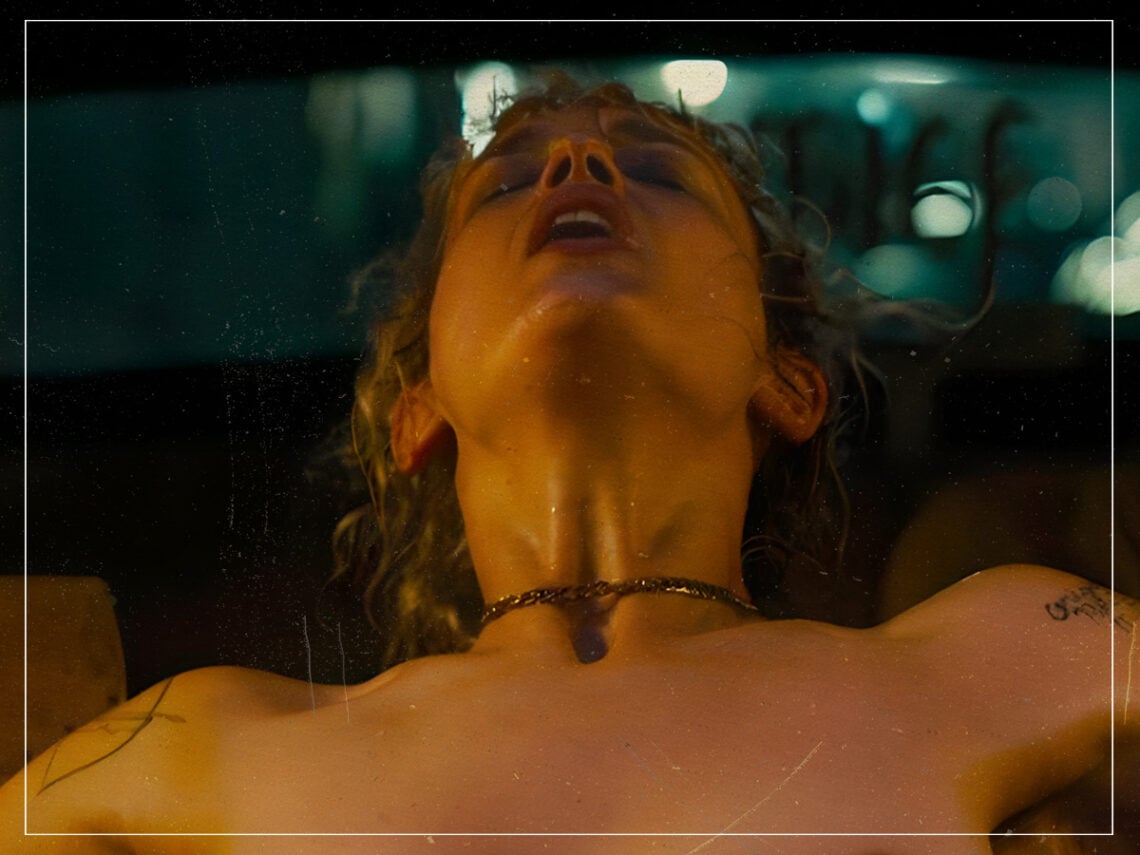
The beginning of Titane is unlike anything I’ve seen before. Half-naked girls dance on cars in an underground basement, with flashy lights and pulsing music as the main character, Alexia, writhes and slides over the bonnet of a vintage Cadillac. It’s completely intoxicating, luring you into the appeal of this strange world and its addictive power.
‘Doing it to Death’ plays throughout the sequence; a grimy and sexy sound that flows with ease over the scene and captures the raw energy of this space, a place that is both liberating, empowering and dangerous. I cannot think of a more perfect introduction to this story world, drawing us in with its seductive imagery only to pull the rug out from under us and leave us in a state of complete shock as it becomes a profoundly moving allegory about stifling gender norms, acceptance and unconditional love.
