


Mad, bad and dangerous to know: The 10 greatest Byronic heroes in cinema

George Gordon Byron knew how to sell a newspaper. Frequently cited as one of the first celebrities, the English Romantic poet was never far from a scandal, causing much controversy with provocative, countercultural and sexually-charged works like Childe Harolde’s Pilgrimage.
The heroes of Byron’s works helped establish one of the most popular tropes in literature, that of the Byronic hero. This pervasive archetype is still as popular today as it was when Emily Bronte sat down to write Wuthering Heights, especially on the big screen.
Generally tortured by their very existence, the Byronic hero is sullen, withdrawn and intensely charismatic. They are the very embodiment of Romantic values: passionate, unrestrained and yet deeply unsatisfied with the world around them. In The Rebel, Albert Camus put it a different way. For him, the Byronic hero is “capable only of an impossible love” He longs to feel alive, “but it must be in the terrible exaltation of a brief and destructive action.”
In the below list, you’ll find a lot of crossover with the figure of the anti-hero, as most of our cinematic anti-heroes are themselves Byronic. That being said, the Byronic hero can also be genuinely heroic, as is the case with the first entry on our list. So, let’s get going.
The 10 greatest Byronic heroes in cinema:
Han Solo from Star Wars (George Lucas, 1977-1983)
Half Dirty Harry, half Humphrey Bogart – Han Solo is a human smuggler originally from the planet of Corellia, where he was orphaned at an early age. His troubled past has made him thorny, argumentative and caddish, but he turns out to be a real hero – winning the heart of Princess Leia.
Solo plays the part of the rogue and stands in stark contrast to the oh-so-Messianic Luke Skywalker, but he’s actually far less egotistical and rakish than he makes out. Sure, he might be cynical, impenetrable and a bit of a scoundrel from time to time, but when it comes to fighting the Empire, he puts his comrades first, sacrificing himself to save those he loves.
Heathcliffe from Wuthering Heights (Coky Giedroyc, 2009)
Heathcliff, the puppy-murdering foundling from Emily Brontë’s classic gothic novel Wuthering Heights, has been portrayed by some of the UK’s finest actors, including Lawrence Olivier (1939), Timothy Dalton (1970) and Ralph Fiennes (1992). For me, Tom Hardy’s version of the notorious anti-hero in the 2009 ITV series is the most faithful representation of Brontë’s original character.
Probably the illegitimate child of Mr. Earnshaw (though there is, admittedly, not much evidence), Heathcliffe is bought to Wuthering Heights as a child, where he develops an intimate relationship with the nearby moors and with Cathy Earnshaw. After being dehumanised and abused by his step-siblings (at one point, they refer to him as the “imp of Satan”), he becomes bitter, cruel and violent. But despite his flaws (of which there are many), we can’t help but sympathise with him.
Wolverine from X-Men (Bryan Singer, 2000)
Wolverine – the coolest of all the X-Men – is also the most troubled. “I’m the best there is at what I do,” he says in the original comic, “but what I do best isn’t very nice.” Born Jimmy Howlett, but most commonly referred to as Logan, the immortal hero was born and raised in 19th-century Canada, where he witnessed his adopted father’s murder and, in a fit of rage, kills his actual father, Thomas Logan, with the bone blades protruding from his fists.
Unable to die and tortured by the loss of his loved ones, he is incredibly heroic and intensely dark. Like all the best Byronic heroes, Wolverine never lets people get too close to him, giving him an air of mystery that only heightens his gritty charm.
Maxim De Winter from Rebecca (Alfred Hitchcock, 1940)
Cultured, handsome and in possession of a dark secret, Maxim De Winter has achieved everything a man of his rank could hope for: wealth, status and the enormous estate of Manderley. It’s here he takes his new bride following the death of Rebecca in a freak yachting accident. A tortured soul capable of immense cruelty, he’s your typical Mr Rochester character, only even more aloof.
Lawrence Olivier immortalised Maxim in Alfred Hitchcock’s 1940 adaptation of Rebecca, with the English actor capturing the bottled rage of Daphne De Maurier’s original character while highlighting his charisma and obsessive desire to control those around him.
Charles Foster Kane from Citizen Kane (Orson Welles, 1942)
Based on the real-life newspaper baron Randolph Hearst, Charles Foster Kane is separated from his family as a boy and thrust into the ruthless world of media and politics. Over the years, he learns to play the game and winds up establishing himself as an internationally-recognised media tycoon.
But despite his riches, Kane is a broken little boy deep down. His cutthroat business acumen has given him fame and fortune but he lacks friends, family and happiness. He is a walking, talking embodiment of blind ambition, reminding viewers that a love of money is a love of nothing but oneself.
Mr Rochester from Jane Eyre (Cary Joji Fukunaga, 2011)
Edward Rochester is the brooding, mutton-chopped anti-hero of Charlotte Brontë’s Jane Eyre. Adapted for the big screen countless times over the years (most recently in 2011), it follows the trials and tribulations of an orphaned girl as she navigates the harsh and unfeeling world of early Victorian England – typhus outbreaks included.
Dismissed as “plain” by her contemporaries, Jane meets the mysterious Mr Rochester (tall, dark, handsome, and riding a rather fetching horse) during a walk and immediately falls for his rude manner and rugged good looks. He certainly has his charm, but he’s also keeping his mad ex-wife locked in the attic, which, I think it’s fair to say, is a bit of a red flag.
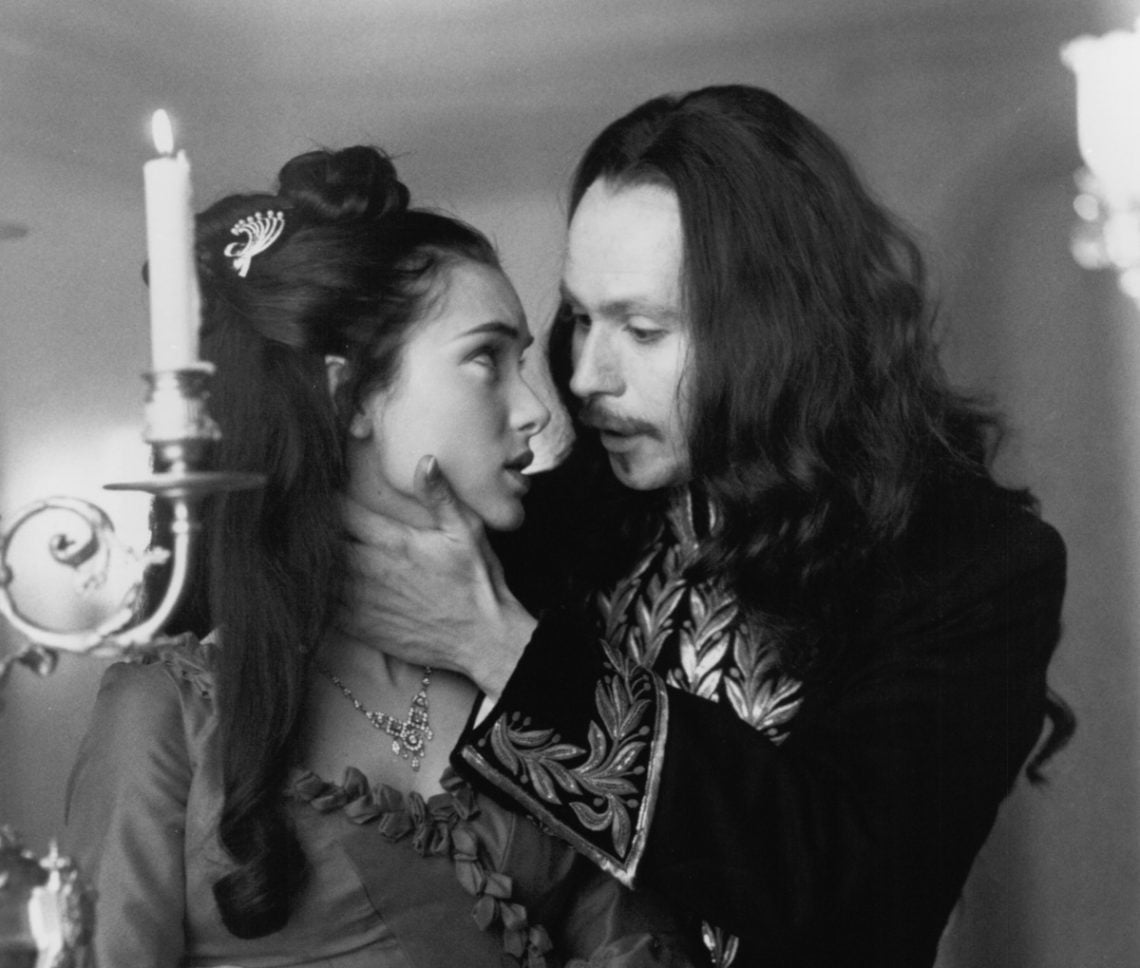
Count Dracula from Bram Stoker’s Dracula (Francis Ford Coppola, 1992)
A medieval bad boy with a taste for human blood, Count Dracula first crept onto the big screen in 1929 with F.W Murnau’s terrifying expressionist masterpiece Nosferatu. Since then, the Transylvanian bloodsucker has been portrayed by the likes of Luke Evans, Christopher Lee and, of course, Bela Lugosi.
Francis Ford Coppola’s 1992 version of Dracula puts particular emphasis on the powerful sexual allure of Bram Stoker’s original character. He might be a little crusty, but once he’s had a dose of blood and made the passage to Britain from his distant homeland, he quickly starts seducing polite young ladies and turning them into sexually rampant vampire brides. Talk about being thirsty.
Daniel Craig’s James Bond from James Bond (various directors, 2006 -2021)
The James Bond of Ian Fleming’s novels is a smooth, elusive and slightly pedantic rake with a knack for getting himself out of sticky situations. For decades, the film franchise relied on this original characterisation, but in 2006 the Bond team decided to emphasise 007’s dark side, particularly the psychological and social impact of his occupation.
Craig’s bond is a traumatised, embittered and battle-hardened individual with a non-existent social life, a severe drinking problem and a pretty fucked up sense of self-worth. The only thing keeping him going is the job, and even then he doesn’t really care if he lives or dies.
Marcello Rubini from La Dolce Vita (Federico Fellini, 1960)
The protagonist of Fellini’s 1960 Italian classic La Dolce Vita, Marcello Rubin, is one of the most unpalatable cads in modern cinema. Suave, sophisticated and self-deluded, he lives his life at night, roaming the urban jungle in search of adventure, scandal, and, most importantly, women.
In a world obsessed with celebrity and passing trends, Rubini – played by Marcello Mastroianni – struggles to find meaning. Rather than packing in his job as a newspaper hack, he gives up on his dream of being a real intellectual and slides into a half-life where partying, wooing and making money are all that matters.
Count Lazlo from The English Patient (Anthony Minghella, 1997)
The English Patient jumps between two key locations: a secluded monastery in war-torn Italy and the vast expanse of the Sahara Desert. In the former, Lazlo is an unrecognisable burns victim. In the latter, he is a strapping young man working to uncover the ruins of a lost civilization before the outbreak of the Second World War.
As his memories slowly return, we learn that Lazlo, a charismatic, brooding and obsessive cartographer, collaborated with the Nazis in exchange for a plane to rescue his dying lover – the wife of one of his colleagues. Tortured by his past, he would rather die than live with the loss of Katherine.
