


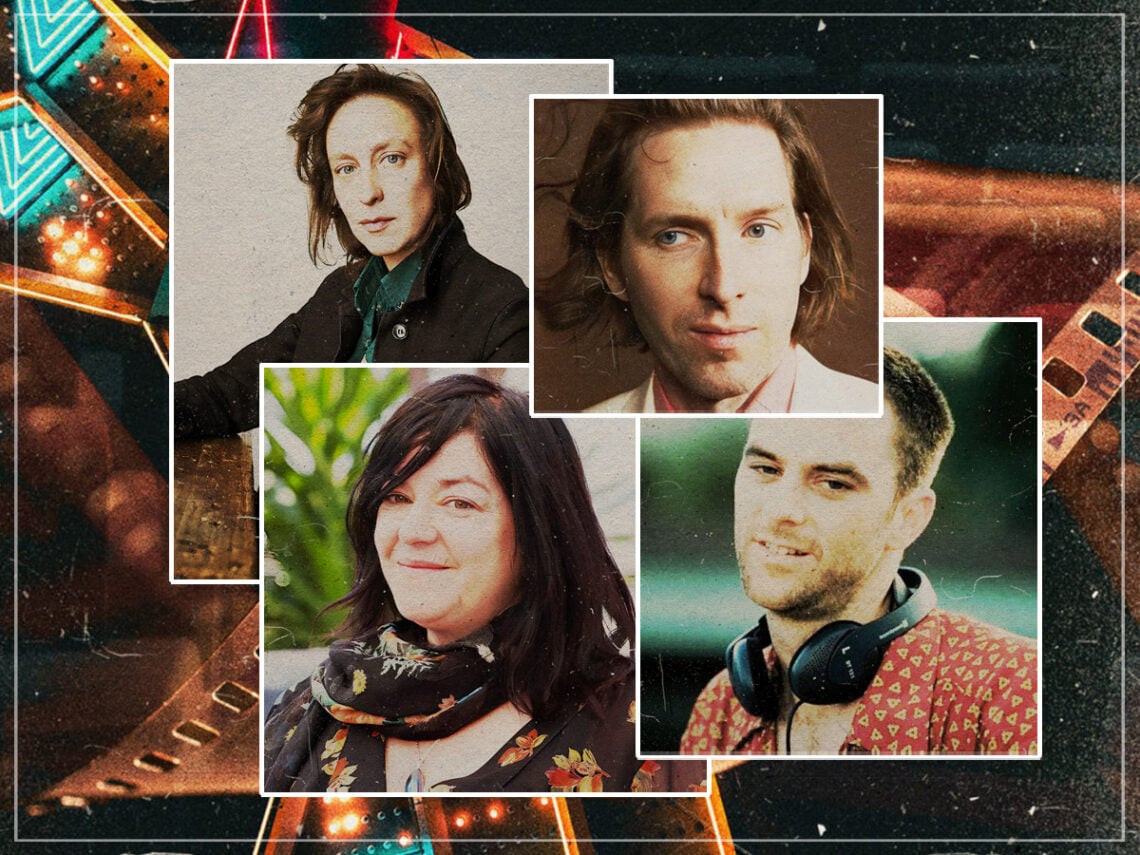
10 directors with utterly perfect filmographies

Making movies isn’t as glitzy and glamorous as Hollywood might have you believe. Behind the star-studded premiere and red-carpet interviews are years of hard work, buckets of sweat and a good few handfuls of tears. Just ask such iconic directors as Stanley Kubrick, Martin Scorsese, Jane Campion and Greta Gerwig, who have toiled over their respective projects, no matter if it’s 2001: A Space Odyssey or Barbie.
Therefore, making just one movie that is a critical or commercial hit is a massive success in and of itself, let alone an entire filmography. Indeed, this list will delve into ten perfect filmographies made by some of the industry’s finest-ever minds, exploring remarkable bodies of work that hold up to scrutiny even when analysed on a granular level.
Average filmographies will not do, nor will near-perfect bodies of work, meaning that the likes of Quentin Tarantino, Martin Scorsese and Steven Spielberg will sadly have to be omitted thanks to the likes of Death Proof, Boxcar Bertha and 1941.
Look at ten perfectly perfect filmographies below, including such talents as Paul Thomas Anderson, Wes Anderson and Lynne Ramsay.
10 directors with perfect filmographies:
Paul Thomas Anderson
Considered one the greatest working directors, the American filmmaker Paul Thomas Anderson has made a name for himself as a creative with a meticulous, uncompromising vision. Emerging in the late 1990s with his debut Hard Eight, Anderson didn’t waste any time establishing his style, following the 1996 film Boogie Nights year later with an ambitious project that is arguably his greatest movie to date.
Anderson boxed off the ‘90s with Magnolia in 1999 before storming the new millennium with a bundle of modern classics, including Punch-Drunk Love, There Will Be Blood and The Master. As dogged fans of his will stress, the director is ‘yet to miss’, making nine movies that are each quality in their own right.
Wes Anderson
Not unlike Paul Thomas Anderson, Wes Anderson (unrelated) emerged in the 1990s with a specific visionary approach to cinema. Also releasing his debut in 1996, in Bottle Rocket, Anderson announced his sparky, unique cinematic view. The least stylistically refined movie from his filmography, his debut made way for such subsequent successes as Rushmore, The Royal Tenenbaums and The Life Aquatic with Steve Zissou.
Thanks to his uniform style, Anderson has rarely put a foot wrong in his career, with 2004’s The Life Aquatic and 2021’s French Dispatch being the weakest releases, yet not bad enough to spoil his entire filmography. As for his very best, this accolade would have to go to his ‘Best Picture’ contender, The Grand Budapest Hotel.
Michael Haneke
Austrian filmmaker Michael Haneke began his career in television before releasing his feature film debut in 1989 with The Seventh Continent, an innovative depiction of alienation and the family. As the filmmaker’s career has progressed, he has consistently explored the violence within the every day, unearthing the corruption and unease we attempt to suppress. In 1997, he released the horrifyingly good meta-commentary on cinema and violence, Funny Games, which he later remade in English, shot-for-shot, to spread his message to a wider, mainstream audience.
Elsewhere, he has shocked audiences with movies such as The Piano Teacher, Cache and The White Ribbon. With a penchant for depicting the depths of human depravity and violence, Haneke has crafted a cinematic world that audiences certainly won’t forget. Through potent imagery and nuanced forrays into the relationship between the human condition and society, Haneke’s filmography is practically perfect.
Krzysztof Kieślowski
Unfortunately, Krzysztof Kieślowski died when he was just 54, only two years after he released the last instalment in his Three Colours trilogy, White. However, through his three-decade-long career, Kieślowski used his films to explore themes such as fate, liberation, freedom, morality and human nature. In 1988, he released Dekalog, comprised of ten one-hour-long films, which Stanley Kubrick called the only “film masterpiece” he could name.
Kieślowski also expanded two episodes into critically acclaimed films, A Short Film About Killing and A Short Film About Love, and released the stunning drama The Double Life of Veronique in 1991. The director’s final project before his early death was the beautiful Three Colours trilogy, highlighting Kieślowski as one of the most influential filmmakers of his time.
Yorgos Lanthimos
After cutting his teeth in the music industry business, Greek filmmaker Yorgos Lanthimos made his feature debut in 2001 with My Best Friend. From the beginning of his career, Lanthimos has demonstrated experimental impulses, with his bizarre yet vital 2009 movie Dogtooth polarising audiences due to its darkly comedic surrealist qualities. As the years have passed, Lanthimos has worked his way into the mainstream, although he hasn’t abandoned his unique style.
His English-language movies, such as The Lobster and The Killing of a Sacred Deer, introduced Lanthimos to a broader audience. However, it was The Favourite that truly launched him to widespread success. The movie won countless awards, including ‘Best Actress’ at the Oscars for Olivia Colman, alongside nine other nominations. His latest movie, Poor Things, won the Golden Lion at the Venice Film Festival, proving Lanthimos to be an unstoppable cinematic force.
Ruben Östlund
Quickly becoming one of cinema’s most beloved cinematic minds, the eccentric world of Ruben Östlund has provided some of the greatest movies of modern times. Beginning his work back in 2004 with Gitarrmongot, a terrific piece of formative anthology comedy that would inform his 2008 follow-up Involuntary, Östlund has since won two Palme d’Or awards at the Cannes Film Festival for his films.
Although he has gained popularity in recent years with such movies as Triangle of Sadness, The Square and Force Majeure, his greatest films came earlier in his career, with 2011’s Play being the pick of the bunch. A playful satirist, Östlund’s films are bundles of cinematic joy that are given strong foundations thanks to consistently impressive scripts that shock and surprise.
Lynne Ramsay
At this point in contemporary cinema, there is no doubt at all that some of Britain’s greatest cinematic minds are female, with Lynne Ramsay joining a growing cohort that includes the likes of Clio Barnard, Andrea Arnold, Joanna Hogg and Emerald Fennell. Ramsay, with a powerful cinematic vision and eye for human drama, started her career with her best film to date, 1999s Ratcatcher.
Continuing to innovate, Ramsay kicked off her 21st-century efforts with Morvern Callar in 2002, before much of the industry got to know her name with the release of the devastating drama We Need to Talk About Kevin in 2011. Six years later, You Were Never Really Here followed, and Ramsay became known as a formidable filmmaking talent, with her forthcoming projects being highly anticipated.
Kelly Reichardt
Emerging in the 1990s, Kelly Reichardt has consistently challenged the mainstream through her work, both stylistically and thematically. Her first movie, River of Grass, was released 12 years before she was able to make another, Old Joy, which received plenty of acclaim. However, Reichardt has found particular success with films like First Cow, Wendy and Lucy, Meek’s Cutoff and Showing Up, many of which feature close collaborator Michelle Williams.
Reichardt typically prioritises realism, often focusing on the working class and other marginalised groups. She is one of the most prominent modern filmmakers working within the slow cinema realm, creating movies that oppose high-octane Hollywood blockbusters.
Céline Sciamma
Céline Sciamma is one of the greatest directors working in France today, prioritising powerful explorations of gender and sexuality through her tender films. Not only did she pen the stunning animated film My Life as a Courgette, but she has directed five astounding movies, beginning with Water Lillies. In Tomboy, she focused on the life of a young child struggling with their gender identity, and in Girlhood, she charted the coming of age of a young, black Parisian girl, hoping to bring visibility to an underrepresented group in French cinema.
However, she is best known for her moving romantic drama Portrait of a Lady on Fire, which has been widely heralded as one of the greatest films of the 21st century. Sciamma has the ability to capture the experiences of marginalised groups so eloquently, making her one of modern cinema’s most essential voices.
Andrei Tarkovsky
Many of the filmmakers we’ve explored on this list have been contemporary names that continue to innovate in the industry to this very day. Russian filmmaker Andrei Tarkovsky passed away back in 1986, however, but not before giving cinema one of the most complete filmographies of all time, gifting such classics as 1979’s Stalker, 1983’s Nostalgia and 1986’s The Sacrifice, his final masterpiece.
His feature film efforts kicked off in the early 1960s, releasing the WWII drama Ivan’s Childhood in 1962, a phenomenal debut feature he followed up with Andrei Rublev four years later. Never dipping beneath mesmerising, any one of Tarkovsky’s films could be argued as his one masterpiece.
