


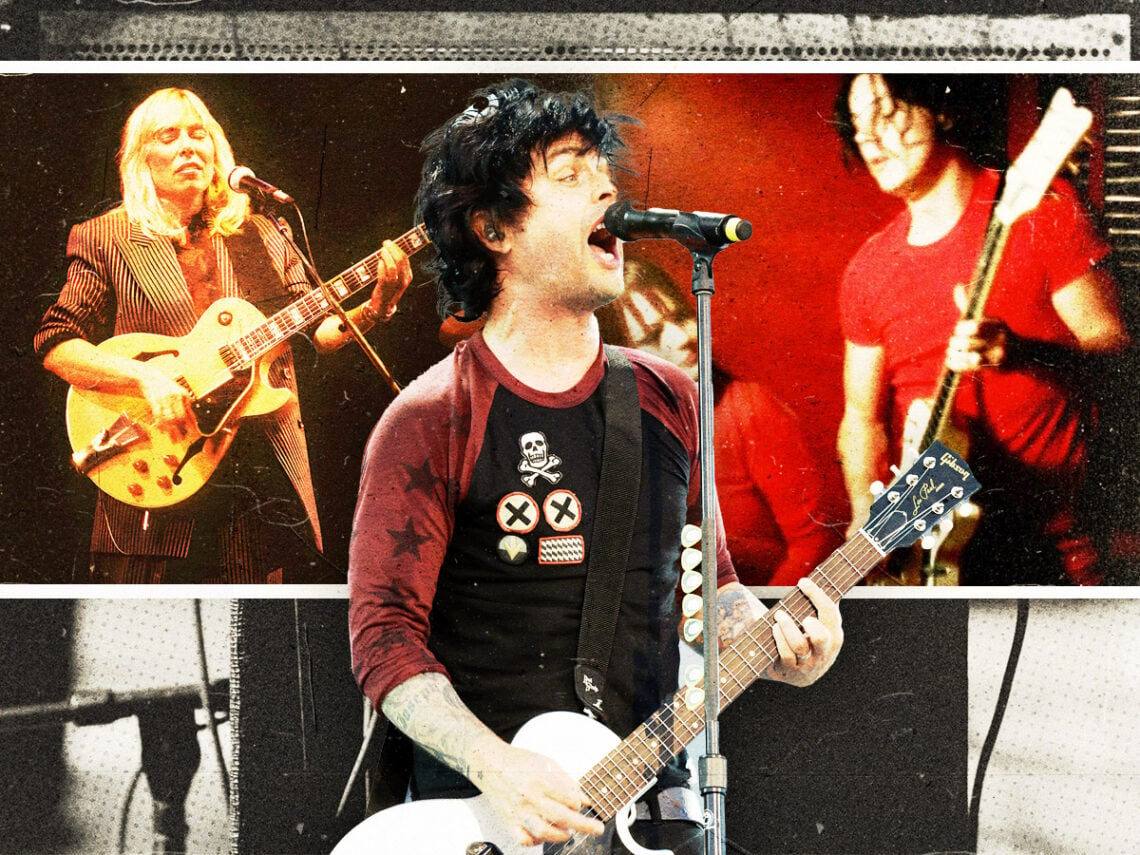
10 classic songs that sound completely different live

Every good rock act lives and dies on the live stage. Although the studio might give a security blanket to certain artists who want to build their tracks from the ground up, it’s another matter to deliver those same tunes to stadiums of people feeding off the band’s energy. While artists have been known to stay faithful to the record, now and again, the live version of tracks by Oasis and Metallica sound a little different.
Then again, why would anyone go about restructuring their song? Well, if a band has been playing their signature track for years (or decades), there’s a good chance that old material sounds stale. Instead of taking it out of the set, some artists have decided to reimagine their tunes as entirely different pieces, as if to remake their song from the ground up live onstage.
At the same time, no artist is getting any younger, and a handful of their classics had to change out of necessity. Compared to the spry musicians that they may have been back in the day, the change in a singer’s tone of voice might also require the key to be lowered a few steps, giving them more wiggle room to work with.
Granted, there’s one essential instrument that always sticks out in the live version of songs: the audience. Since there are more people in front of them, the artist tends to thrive off the reaction the audience gives them, creating a back-and-forth that’s impossible to quantify. Although most musicians tend to go through the motions when performing live, these musical moments make the whole endeavour feel like a communal experience.
10 songs that sound different live:
10. ‘Both Sides Now’ – Joni Mitchell
When talking about different interpretations, Joni Mitchell probably deserves her separate category. Since she viewed her music as different musical portraits of her soul, half of Mitchell’s live catalogue was about giving her audience a different view of the world through her lens. Although ‘Both Sides Now’ may have meant one thing when she wrote it in the 1960s, time has turned Mitchell into a different woman singing it years later.
Performing a more bombastic version with an orchestra later in life, Mitchell puts her humble folk ballad on the same pedestal as classical music. Although there’s nothing taking away from Mitchell’s innocent voice on the studio version, her weathered voice in this updated performance brought one element the older version never could: experience.
Since the lyrics talk about seeing the world from both sides, Mitchell sounds like a woman well beyond her years, even in her 20s, trying to explain the subtle intricacies that make the world go round. Now that she has seen what the world can do to a person, her voice working off the orchestra is a tribute to a life well-lived. Seeing the world from both sides might seem simple initially, but only time can keep everything in perspective.
9. ‘Something’ – The Beatles/Paul McCartney
During The Beatles’ recording sessions, nothing was necessarily off the table when the tape wasn’t rolling. Throughout the documentary Get Back, Paul McCartney can be heard performing John Lennon’s masterpiece ‘Strawberry Fields Forever’ while Lennon sang McCartney’s first-ever song ‘I Lost My Little Girl’. Music was the one element that brought the Fab Four together, and Macca has continued singing a George Harrison classic for years on tour.
Though the Lennon/McCartney partnership may have given Harrison a limited amount of tunes to work with on the record, ‘Something’ became one of the biggest highlights of their career, singing about the pure ecstasy that comes with meeting one’s soulmate. While Harrison was lenient about live performances decades before his death, McCartney dusted off ‘Something’ for his solo tours as a tribute to Harrison.
First debuted at The Concert for George, McCartney’s choice of ukulele for the performance keeps in the spirit of Harrison’s later years, with his son Dhani Harrison claiming that he played anything he could think of on the instrument. The days of hearing tracks like ‘All Things Must Pass’ live might be long gone, but the spirit of Harrison is alive every time McCartney plays this tune by his old school friend.
8. ‘Eruption’ – Van Halen
There’s a good chance that every Van Halen show could have been carried by Eddie Van Halen alone on a stage. Though David Lee Roth had enough charisma in his left toe than most other frontmen could muster in their whole body, Eddie’s two-handed tapping licks made audiences frenzy whenever he started playing. While fans got the recorded version of ‘Eruption’ to go back to, Eddie never liked to be confined to just one solo section.
Whenever Eddie’s solo spot came during a show, he occasionally threw in bits and pieces of other famous instrumental passages, like the volume swells of the Diver Down interlude, ‘Cathedral’. Since he didn’t carry an acoustic guitar on tour, his solo gave him a chance to deliver an electrified version of ‘Spanish Fly’, showing off a bit of his flamenco chops that would have been too busy for a proper Van Halen track.
Even in his final performance, Eddie was still trying on different musical pieces to see how they would fit, including the lush chordal work taken from ‘Little Guitars’ before going into his signature tapping melody that ends the original recording of ‘Eruption’. Since a handful of those licks probably were off the top of Eddie’s head, any live clips of him alone onstage are footage of an artist painting a masterpiece.
7. ‘Don’t Forget Me’ – Red Hot Chili Peppers
The Red Hot Chili Peppers have been known for their bonkers live shows since day one. Although many acts were trying to make a name for themselves in the California rock scene, there weren’t too many willing to go onstage completely nude except for socks covering their more delicate parts. While the wild years of The Peppers were behind them during the 2000s, ‘Don’t Forget Me’ is the moment where John Frusciante could unleash the beast inside him.
Before rejoining the band, Frusciante had gone through a huge downward spiral into heroin addiction, which left his guitar playing severely affected on the album Californication. By the time they recorded By The Way, though, Frusciante had made the most out of his minimalistic approach, squeezing as much emotion as he could out of a handful of notes on the solo to ‘Can’t Stop’.
When they hit the road, ‘Don’t Forget Me’ went from an atmospheric deep cut to an explosion of musical expression. Though the guitars sound a bit buried in the mix on the studio cut, Frusciante pulls out every stop when playing it live, sounding like a mix between Eddie Hazel and Eddie Van Halen. While most guitarists might like to plan their solos, ‘Don’t Forget Me’ sound like Frusciante pulling out a piece of his heart for the world to hear.
6. ‘Wake Me Up When September Ends’ – Green Day
As the 2000s were dawning, Green Day was among the last bands people expected to make them feel something. Although their token acoustic track ‘Good Riddance’ had been a staple of graduations for years, it’s hard to take it seriously when it came from the same band that wrote lyrics about masturbation and whose name is slang for a day smoking weed. As America headed off to war, though, Billie Joe Armstrong reached down in his heart to create ‘Wake Me Up When September Ends’.
While many assumed that the recent 9/11 attacks inspired Armstrong, he wrote this sad power ballad in tribute to his father, who had died of cancer when he was a child. Looking back on the tragedy, Armstrong practically sounds like that angry little kid all over again, wishing that everything could blow over for a little while so he can feel happy again.
Whenever they play it live, Armstrong makes a few lyrical adjustments to his original draft. While the third verse talks about his father being gone for 20 years, the frontman adjusts the number of years to keep it relevant to him every show. It must be painful having to relive that pain whenever singing those words, but understanding those emotions is the first step towards healing.
5. ‘Icky Thump’ – The White Stripes
For most of The White Stripes’ career, everything was about deconstructing the rules of rock and roll. As opposed to having a typical band setup, Jack and Meg White’s decision to remain a duo brought the genre back to a sense of childlike innocence, testing where they could go with just two people. While they could layer as much as they wanted to in the studio, it was bound to sound different once they got to the live stage.
Since Meg provides the driving beat to ‘Icky Thump’ every time they perform live, that leaves Jack with the responsibility of playing virtually everything else. Manning the guitar and vocals for most of the song, Jack gets the most he can out of his various effects pedals, using an octave pedal to give his six-string a bit more muscle than he would get out of a standard amplifier.
Then again, the track would be nothing without the iconic organ break, and Jack compensates for it by throwing on as many effects as possible. From distortion to chorus to his own built-in effects, Jack makes his guitar scream in the same way an organ might, either flipping the octave pedal back on or making white noise that sounds like him trying to strangle the guitar. While ‘Seven Nation Army’ may be the most emblematic of The Stripes’ career, any live performance of ‘Icky Thump’ proves what can be done with just two people onstage.
4. ‘Battery’ – Metallica
It’s practically a miracle that Metallica can still deliver on the live stage these days. Although there are more than a few people that have called Lars Ulrich’s drumming into question over the years, hearing James Hetfield’s signature down picking working at full-speed on tracks like ‘Master of Puppets’ takes a superhuman level of strength to pull off. Though ‘Battery’ has been a fan favourite live, the band have removed one instrumental section from their repertoire.
Looking at the tune’s melodic construction, it would make the most sense to cut out the classical guitar at the beginning because of how abrupt the tone switch is. While the band occasionally has the guitar backing track blaring before transitioning into their signature brand of thrash, the section just before Kirk Hammett’s is usually glossed over.
After coming out of the second chorus, the whole band comes to a standstill as Hetfield does his rap with the crowd, asking them how good it feels to be alive before launching into the next solo. While the missing riff is one of the more intricate parts of the tune, it makes sense why the band would put everything on pause at this moment. For anyone playing at Hetfield’s level, it’s about taking the breaks you can get, and engaging in banter with the crowd does spare his wrist for at least a few seconds.
3. ‘Dazed and Confused’ – Led Zeppelin
Even amid the British blues boom in the late 1960s, no one had seen an act like Led Zeppelin. Although they played the same style of blues that Jimmy Page had been playing with The Yardbirds, everything was amplified to the max by Robert Plant and John Bonham, each bringing their unique intensity to tracks like ‘Good Times Bad Times’. While ‘Dazed and Confused’ was another bluesy cover, the midsection was when Page became the mad scientist behind the band.
As Bonham keeps the tempo throughout the sequence, Page hardly even plays the guitar, breaking out the theremin to create wild sonic experiments live. Since the instrument has to be operated with hand movements, Page turns his guitar around and strikes strange poses as he bends the notes, making him look like an ancient wizard casting a spell in front of the audience.
Going for the highest squeals that he can muster before making a crashing cacophony of noise, most listeners would have thought that Page was trying to soundtrack the apocalypse before leading the rest of the band back in for the final verses. While Zeppelin was known to play as hard as they could at every gig, Page’s performance on the theremin is one costume away from being an avant-garde theatre piece.
2. ‘Don’t Look Back in Anger’ – Oasis/Noel Gallagher
There’s a good chance some of Oasis’ classics will outlive us all. Although the Gallagher brothers liked to talk a big game back in the 1990s, their claim to be the biggest band in the world was warranted with singles like ‘Live Forever’ and ‘Wonderwall’. Though each of their singles was a fine piece of pop perfection in its own right, ‘Don’t Look Back In Anger’ doesn’t seem to belong to Noel Gallagher anymore.
While Noel has been known to sing ‘Anger’ at almost every gig since its debut on What’s the Story Morning Glory, the latest version is much more lowkey. Substituting his Marshall stacks for a gentle acoustic guitar, Noel performs his signature tune one key lower, turning it into a plaintive folk tune. Though he can still perform to any audience that will have him, the audience is the real star of the show during the chorus.
Usually giving up on singing after the pre-chorus, the sheer volume of the crowd overpowers Noel’s vocals, screaming the chorus back to him as he carries on with an instrumental version of that section. Noel may have written the basis for ‘Anger’ back when he was a young kid without a penny to his name, but his humble song about love lost is now practically the national anthem for Britpop rockers everywhere.
1. ‘Bohemian Rhapsody’ – Queen
To this day, what Queen poured into the recording of ‘Bohemian Rhapsody’ is a technical feat. Even by the standards of progressive rock in the 1970s, Freddie Mercury’s need to layer one vocal take after another to get each operatic section perfect is unmatched by any other vocal group. Then again, how do you approach singing those kinds of harmonies when performing live?
In the days before live triggers of studio recordings, Queen didn’t even attempt to do the operatic section live, usually playing the backing track as their light show began onstage. By the time the rock section kicks back in towards the end, the band return in full force to deliver the crushing blow, with Mercury putting more gusto into his performance to match the intensity of the recording.
Even when the band played their mammoth show at Live Aid, they knew better than to just play the track, only performing the ballad section before going into their onslaught of hits like ‘Radio Gaga’ and ‘Hammer to Fall’. Queen have always thrived on being live performers, but with ‘Bohemian Rhapsody’, they had created a masterpiece too difficult to replicate to their audience.

Never Miss A Beat
The Far Out Led Zeppelin Newsletter
All the latest stories about Led Zeppelin from the independent voice of culture.
Straight to your inbox.