


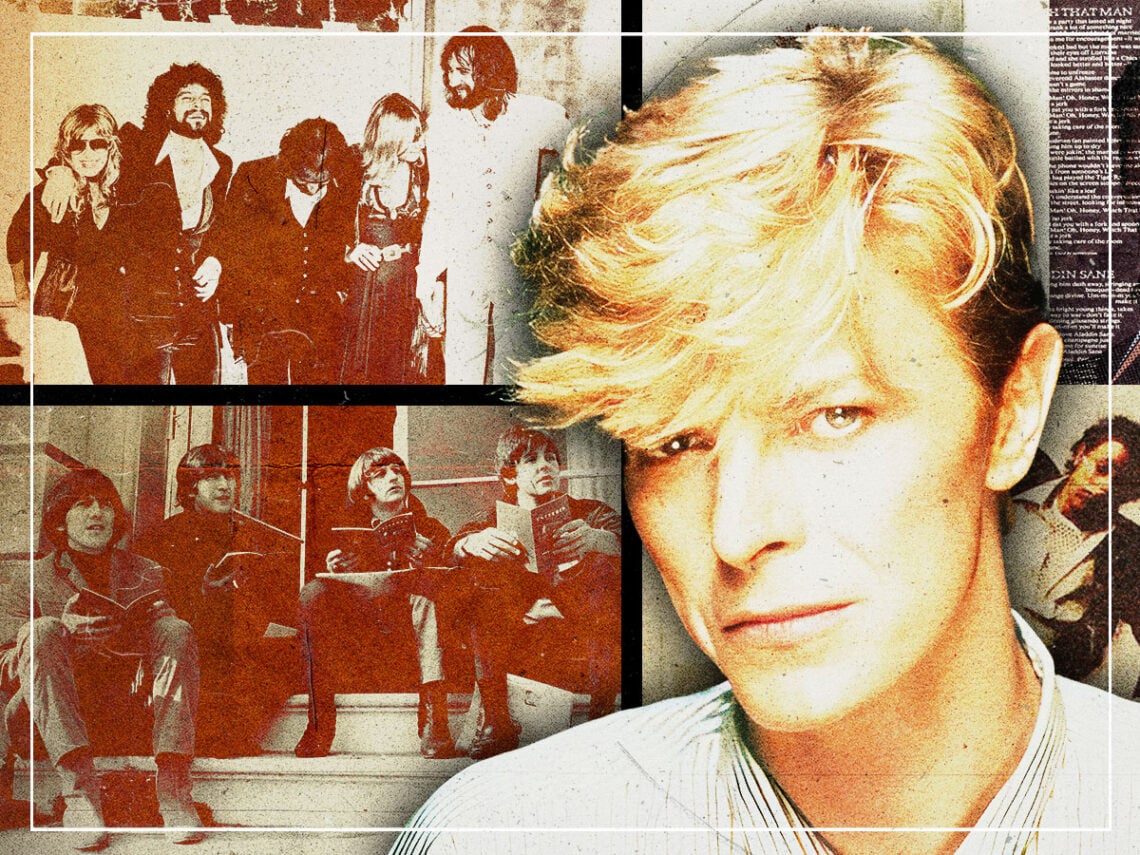
10 classic rock artists that reinvented their sound

Every artist is always searching for the one sound that is most synonymous with them. Very few can spend an entire career copying their heroes forever, and some of the best moments in rock come when artists hit upon a sound that fans identify as them the minute they hear it. Then again, that kind of sound can still grow tiresome, and artists like David Bowie and The Beatles were also looking to explore other genres.
Throughout the history of rock music, some of the biggest artists in the world have gone against the grain and recontextualised themselves for a new audience. As much as the decision to leave their old sound behind might have been a gamble, most ended up paying off in spades, garnering a completely different audience in the process.
While each artist did have to work out the bugs of their genre–hopping, the results were unlike anything the rock scene had ever witnessed, almost like the band were becoming rock and roll stars all over again. Despite their fame reaching an all-time high, the desire to change could also be seen as a reaction to the fame they received when they first cut their teeth, opting to shake off the hangers-on from their fanbase.
Although it might have been a lot to ask for the fans to go along with, most of these artists had the undying devotion of their listeners, willing to go down the rabbit hole with them to see what kind of songs had yet to be uncovered. It takes a lifetime to get any great rock band off the ground once, but the transitions into other categories are like seeing a band being born again.
10 rock artists that reinvented their sound:
10. The Who
When The Who first cut their teeth in the early British rock scene, the focus was still primarily on R&B. Throughout their first handful of albums, the songs of Pete Townshend were meant to be nothing more than pale imitations of what wild men like James Brown were doing, only through the filter of loud guitars and the Mod aesthetic. Townshend had a vision for the band, though, and he would spend the rest of The Who’s day building his sonic worlds.
Starting on the title track to A Quick One and the mad concept album The Who Sell Out, Townshend began toying with the idea of using narratives in his music to get his point across. After hitting upon the story of a deaf, dumb and blind kid, Tommy was the sound of Townshend’s mind let loose, bringing rock and roll songwriting on the same level as modern opera, with various movements used to tell the story.
From there, Townshend found his calling as one of the premiere storytellers in rock and roll, making albums that pushed the genre forward with new musical instruments like synthesisers and the sounds of dramatic orchestral music across Quadrophenia. Townshend had already had his inspiration ignited by rock and roll, but the operatic side of the band unlocked what the genre was capable of in more grandiose terms.
9. Björk
Any band looking to take a risk is often faced with an uphill battle. Though it might be easy to take the building blocks of certain genres and infuse them into a new genre of music, it will always be polarising for fans who don’t take kindly to the switch. As for Björk, every album she has put out has been based on some sort of risk.
From her days in The Sugarcubes playing some of the best indie music of the late 1980s, her solo work hit the ground running with Debut. Across her ‘90s output, one can catch faint wisps of everything from industrial rock to chamber pop to big band music on her covers of songs like ‘It’s Oh So Quiet’. While the ‘90s may have been the premiere decade for Björk’s time in the spotlight, the next generation of listeners was in for another surprise.
Adopting inspiration from the world around her, Björk has never been satisfied staying in one place, pushing the boundaries of the human voice on her acappella album Medulla and writing songs with flowing time signatures and naturalistic stories on Biophilia. As she prepares to enter a new decade, Bjork is still more interested in where her muse is taking her than anything a label says about it.
8. Queen
No matter what came on the radio in the late 1970s, it was always easy to tell when a new Queen single came out. For all of the other operatic-sounding rock of the time, with bands like Electric Light Orchestra, the sheer power behind Freddie Mercury’s voice was enough to make people pay attention when songs like ‘We Will Rock You’ blared out of car speakers. Then again, Queen wasn’t looking to bring opera to the masses for the rest of their lives.
While it’s no secret that Mercury was fond of the classical forms of music, some of the greatest shifts in Queen’s career have been when they took risks, like the drastic turn towards gospel music on ‘Somebody To Love’ or their flirtation with progressive rock on their early albums. Their album The Game is practically a smorgasbord for their versatility, with the first side covering hard rock, AOR rock, dance music, and rockabilly within four tracks.
Though there are definitely some sore spots amongst their versatility, like Hot Space, Queen should still be applauded for the fearlessness they had when co-opting different genres under one roof. There might have been a distinct sound to Queen in the early days, but as long as it made sense to the four of them, no other genre was off the table.
7. U2
At the end of the 1980s, it looked like U2 was about to reach a level of acclaim held only by rock legends. After playing some of the most militant rock and roll for nearly a decade, their massive self-congratulatory Rattle and Hum spotlighted just how much Bono’s words could move something in the audience’s souls. U2 was the sign of hope in rock and roll, but no optimism in rock was safe from the dread of the next decade.
Although grunge was responsible for wiping out some of the biggest names in ‘80s rock, U2 reinvented themselves by playing into their rock star acclaim even more. Donning a pair of bug-eyed shades, Bono’s reincarnation as ‘The Fly’ on Achtung Baby brought various new sounds, embracing the electronic movement and turning their shows into some of the most dystopian musical experiences ever created.
At the heart of the songs, though, Bono was still questioning his worth every step of the way, with lyrics that showed how shallow the life of a rock star can truly be if one isn’t careful. U2 might have been playing up their flashy side on the record, but no other act has made the emptiness of fame sound more human.
6. Rush
One of the genres indebted to mixing different musical styles is progressive rock. From the golden age of prog with King Crimson and Genesis, the name of the game was to mix elements of classical and jazz music into the traditional sounds of distortion and grit that rock was known for. Even for a genre built on experimentation, Rush was one of the few bands that covered more territory than normal.
Originally starting off as a pale imitation of Led Zeppelin on their debut, their focus quickly changed on Fly By Night, as Rush started to create episodic songs that bled into each other throughout the track listing. Once that became too much, though, albums like Permanent Waves and Moving Pictures blended both sides of their sound, making time signature changes and weird rhythms sound like something that could get played on the radio.
As the ‘80s arrived, the band continued honing their sound with different synthesised elements, making different periods of their sound based around electronic music. Settling into traditional hard rock fare for the final decade, Rush has remained one of the few bands that never found a sound that didn’t suit them.
5. Pink Floyd
It would be easy to label most of Pink Floyd’s work under the label ‘progressive rock’. From their early days in the ‘60s to some of their more celebrated material, half of their songs were about pushing the boundaries that most other acts were too afraid to cover. When talking about the different sounds of Pink Floyd, it normally comes down to which lineup is being discussed.
Throughout the Syd Barrett era of the group, the band made songs that felt more akin to space rock, leading to them making grand spectacles whenever they took to the stage. Once Barrett started to lose his battle with his sanity, bringing in David Gilmour as second guitarist gave them a different aesthetic that would define them for the rest of their days. By the time they had made the song ‘Echoes’, something felt much different, spanning over 23 minutes and telling the story of the human experience working together.
From there, Floyd were interested in dissecting the emotional distance between people, with Roger Waters creating warped visions of the world across their most celebrated albums, finally climaxing with Dark Side of the Moon, Wish You Were Here, Animals and The Wall. Outside of all the songs that remind the listener that they indeed live in a society, Pink Floyd never lost the heart at the centre of their music.
4. Fleetwood Mac
The different eras of Fleetwood Mac tend to feel like talking about two completely different bands. While there’s a certain style synonymous with the band these days, the original lineup with Peter Green at the helm brought some of the tastiest blues rock of the late ‘60s, as Mick Fleetwood and John McVie provided the perfect rhythm section behind him. As time passes, though, relationships tend to break down.
Once Green left to follow his muse, bringing in guitarist Bob Welsh gave the band a jazzier sound, which made for some of their first easygoing hits like ‘Sentimental Lady’. After Welsh decided to quit, though, adding the songwriting duo Stevie Nicks and Lindsey Buckingham alongside John’s wife Christine on keyboards made for morning radio heaven.
Despite the tortured sessions that went into albums like Rumours, the band became one of the biggest pop machines of the late ‘70s, with songs that had more to do with how much animosity existed between the relationships in the group. Though the band may have sung its last notes after the tragic passing of Christine McVie, their discography remains one of the most varied in rock history.
3. Bob Dylan
How does one live up to the label ‘voice of a generation’? From the beginning of his career, Bob Dylan had that moniker thrust upon him, as he played songs that pointed the finger at everything wrong with the world and offered solutions about how his fans and world leaders should live their lives. Dylan never wanted to be known as a pop music preacher, so he never tried to go along with the program.
Much like his cagey responses to interview questions throughout most of the ‘60s, Dylan’s musical responses to his fans were equally polarising. After making different strides to shed his folk music roots, the public originally lambasted him, thinking that he was playing into the corporate side of his musical revolution. As time passed, though, Dylan always saw it fit to rebel against the rebellion that co-opted him as their leader.
Across each decade he’s been active, Dylan has undergone different changes in everything from his song topics to the style of music to even his vocal delivery. In fact, it often sounds like two completely different artists when we comb through different pieces in his catalogue. Dylan never wanted to be seen as a spokesman for his generation, but one of his smartest moves as an artist was not playing into what people expected of him.
2. The Beatles
It would have made complete sense if The Beatles had decided to play the same style of pop-rock for the rest of their lives. If the sounds of silly love songs paid the bills and kept every audience in a frenzy, most people would be hesitant to mess with this kind of winning formula. As the Fab Four entered the next half of their career, they practically swan-dove into experimentation.
Starting with albums like Rubber Soul, the band began working outside their usual medium, embracing folk rock and adding different instruments like the sitar. After leaving the touring life behind, the studio became their unofficial playground, with each songwriter having their own unique visions, from John Lennon’s ‘Strawberry Fields Forever’ to Paul McCartney’s ‘Hey Jude’ to George Harrison’s ‘Within You Without You’.
Look no further than The White Album to hear their different sounds at work, with every song sounding like it’s coming from four solo artists working out the bugs of their songwriting process. Capping things off with the brilliant bow out on Abbey Road, The Beatles had given the rock world the perfect example of reaching beyond traditional rock and roll, and it was up to their contemporaries to follow suit.
1. David Bowie
David Bowie has always been defined by his contradictory nature. When he first cut his teeth trying to play traditional rock and roll, Bowie never felt comfortable in the role of the archetypal rock star, despite eventually turning himself into one of the biggest celebrities in music. Those early years were just Bowie, and it would take a few more years before we got ‘The Starman’.
Starting with the song ‘Space Oddity’, Bowie changed his approach to music, often defying trends in whatever way he could. Though he has been lauded for his work in the world of glam rock as ‘Ziggy Stardust’ and ‘Aladdin Sane’, those were just pitstops for him, embracing everything from krautrock during his Berlin period to embracing the mantle of being a pop star on the album Let’s Dance.
That kind of experimentation wasn’t reserved for his time in the spotlight, either, later adapting to the modern sounds in his older age, from the drum and bass textures of Earthling to closing out his career in the world of experimental jazz on his farewell release Blackstar. Most fans will probably never know the true man behind all of Bowie’s hits, but that was part of the mystique. From the start of his career, these sonic changes may as well have been sonic costumes Bowie could wear to show his innermost feelings.

Never Miss A Beat
The Far Out Beatles Newsletter
All the latest stories about The Beatles from the independent voice of culture.
Straight to your inbox.