


10 classic movies with embarrassingly bad villains

Villains can make or break a movie. No matter how charismatic and well-acted the protagonist might be, an antagonist with a shoddy backstory and irritatingly over-the-top performance can wreck the whole story. More often than not, however, a bad villain is merely emblematic of a movie’s broader failings.
It’s hard to believe that 2016’s Batman V Superman: Dawn of Justice would have been any good even without the unwelcome contributions of Jesse Eisenberg as Lex Luther. And there is absolutely no way the Wachowski’s space opera Jupiter Ascending would have cohered in any universe even without the near career-halting performance of Eddie Redmayne as the falsetto-voiced Balem Abrasax.
Sometimes, however, a movie is just so good that even the most embarrassingly terrible villain can’t bring it down. There are many reasons why an evil character might end up being the worst part of an otherwise great film. Sometimes, they’re just a plot device shoe-horned into the narrative to give the protagonist a conflict. Other times, they’re the victims of a terrible performance.
No matter how they ended up being so irritating, these villains stick out like a sore thumb and leave the audience scratching their heads. Luckily, there are enough saving graces about their respective movies to allow us to forget them and move on. Usually.
10 embarrassingly bad movie villains:
10. Vice Admiral Beau ‘Cyclone’ Simpson (Jon Hamm) – Top Gun: Maverick (2022)
Why is this guy so mad at Tom Cruise? Doesn’t he know Maverick always gets the job done? Has he not seen Top Gun? Jon Hamm’s character in 2022’s industry-saving hit, Top Gun: Maverick, is a classic plot device villain. As a top official at TOPGUN, he’s tasked with choosing the elite squad of new recruits to execute a dangerous mission. As soon as Cruise’s Pete ‘Maverick’ Mitchell shows up to help train them, however, Cyclone makes it his personal mission to put him in his place.
It’s true that Maverick is known to flaunt a few rules here and there, but even he doesn’t deserve the arbitrary vitriol that Cyclone throws at him. He’s a character who lives mostly off of one-liners, and he channels all of his military accolades into being incredibly petty and humourless. Given that there is already so much inherent conflict in the unprecedented mission that Maverick and his squad are about to undertake, Cyclone is a completely redundant villain whose absence would only have served to shorten a movie whose only failing is its bloated running time. Seems like there was a solution just waiting to be discovered there.
9. Mr Nolan (Norman Lloyd) – Dead Poets Society (1989)
Most movies starring Robin Williams have terrible antagonists because the comedian was so darn loveable that the only type of person who could credible despise him was an irrationally acerbic a-hole. There is the hospital dean in Patch Adams who hates Williams’s character for making sick children happy, the doctor played by John Heard in Awakenings who couldn’t care less that Williams’s character has made a medical breakthrough, and, of course, there’s Mr Nolan in Peter Weir’s 1989 tearjerker, Dead Poets Society.
Nolan (Norman Lloyd) is the headmaster of the fancy boarding school where Williams’ character, John Keating, has been hired to teach English. Nolan believes in tradition, honour, discipline, and the nebulous and highly subjective concept of excellence. He drills these values into his students with the severity of a drill sergeant, and when Mr Keating begins to teach the students about free thinking and chasing their dreams, he is apoplectic with rage. 1958 might have been a dark time for education, but it’s hard to believe that a headmaster who used to teach English would be so furious about a fellow English teacher who does the impossible by making teenage boys care about poetry.
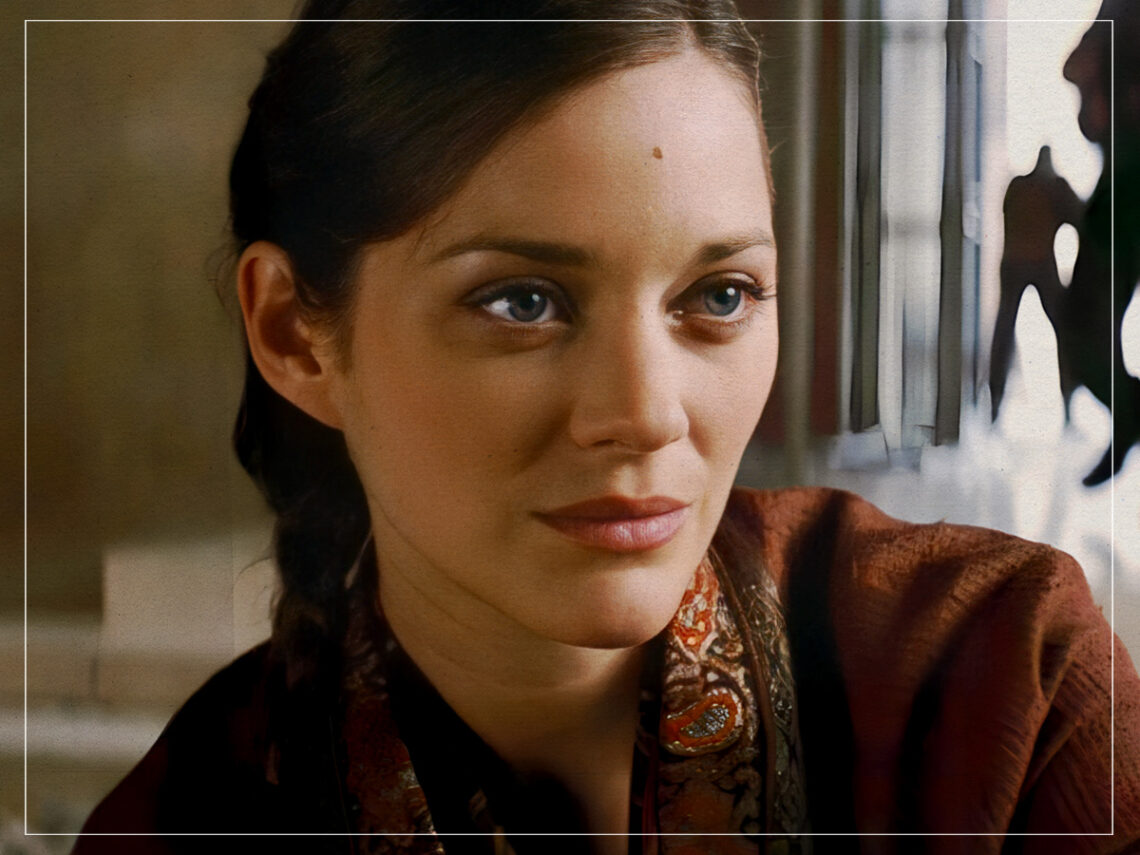
8. Talia al Ghul (Marion Cotillard) – The Dark Knight Rises (2012)
Female antagonists are rare enough that whenever one does arise, it feels like a stroke of genius. So when Marion Cotillard was cast as Talia al Ghul in Christopher Nolan’s 2012 box office smash, The Dark Knight Rises, it seemed like an inspired decision. At the beginning of the movie, she is Bruce Wayne’s new girlfriend and the CEO of Wayne Enterprises. By the end of the movie, however, she reveals herself to be Bane’s main accomplice, loyal to the villain from the time he protected her when she was a girl.
Nolan has often been criticised for underwriting his female characters, and Talia is an unfortunate example. The scene in which she reveals her identity to Bruce brings the movie to a grinding halt as she provides in breathy detail the exposition that the audience needs to make sense of the overstuffed plot. But it’s her death that proved to be the biggest talking point. Cotillard is, without question, a top-tier actor, but her death scene here is straight out of a daytime soap opera. “My father’s…work…is done”, she gasps before clamping her eyes shut and dropping her head to her chest. It’s a bad sign when your first reaction to a character’s death is to burst out laughing.
7. Kurt Hendricks (Michael Nyqvist) – Mission: Impossible – Ghost Protocol (2011)
The bar for Mission: Impossible villains is low. The challenge, should they choose to accept it, is to give Ethan Hunt and his IMF crew sufficient stakes to get up to the usual antics – scaling the highest building in the world one-handed, launching a motorbike off a mountain peak, that sort of thing. But Kurt Hendricks, the antagonist in Brad Bird’s 2011 instalment, Mission: Impossible – Ghost Protocol fails from the beginning. We are told that Hendricks is a mad scientist with an IQ of 190 who wants to start a nuclear war because “global destruction is natural”.
Played by Swedish actor Michael Nyqvist, he is innocuous rather than sinister and barely appears in the film until the end, aside from a scene in which he wears one of those trademark Mission: Impossible masks that is so life-like that he has to be played by another actor. Hendricks is the white bread of the story – bland, unsatisfying, and completely useless on his own. For all the thrills of seeing Cruise climb the Burj Khalifa and extricate himself from a sinking car, it feels as though these action set-pieces were the starting point of the script, and Hendricks was a last-minute addition when someone remembered that Hunt and Co. needed a reason to be doing the impossible in the first place.
6. Walter Peck (William Atherton) – Ghostbusters (1984)
There is little reason for Walter Peck to exist in the classic 1984 supernatural comedy Ghostbusters. The ghoul-hunting team led by Bill Murray, Dan Ackroyd, and Harold Ramis have enough conflict without the petty bureaucrat nipping at their heels. And yet, Peck is relentless. As an enforcer for the Environmental Protection Agency, he’s well within his rights to ask a few questions about the potential hazards of the ghost containment unit, but his gleeful hatred has no context.
Wearing a three-piece suit and a condescending sneer, he grills Venkman on his credentials before threatening him with a court order. Sure, Venkman has enough sass to put the entire cast of Mean Girls to shame, but Peck enters the interaction with an unexplained chip on his shoulder. The team picks on him mercifully so that by the end of the film, he’s become a punching bag. It’s played for laughs at first, but the Ghostbusters take it a few steps too far and end up sounding like schoolyard bullies. If Peck had been more sensible to begin with and vocalised his legitimate concerns about the erratic activities of the Ghostbusters, he might have been a worthy antagonist. But as it stands, he’s an arbitrarily nasty piece of work whose weakness ends up being pathetic rather than comedic.
5. Biff (Thomas F Wilson) – Back to the Future (1985)
Robert Zemeckis’s classic 1985 sci-fi romp Back to the Future is beloved for its creative take on time travel, so it’s a shame that its villain, Biff, is such a hollow stereotype. Played by Thomas F Wilson, Biff is a caricature of a bully who, in high school in the 1950s, is shown to torment Marty McFly’s father, George McFly (Crispin Glover). Assaulting the timid intellectual physically and verbally, Biff terrorises George into becoming a meek, unsuccessful adult. When Marty (Michael J Fox) travels back in time, he alters his father’s fate by encouraging him to stand up to the bully. In the re-written present, George is a successful science fiction writer, and Biff is deferential and dependent on him for his business.
Bullies are rarely subtle, but there is so little complexity in Biff’s character that it’s hard to take him seriously as an antagonist. Portrayed as being brutish and cruel, his insults and mode of attack are so artless and uninspired that they even cast a shadow on Fox’s effervescent charm and threaten to turn this classic into a dud.
4. Clay Shaw (Tommy Lee Jones) – JFK (1991)
Most conspiracy theory movies deserve to be ignored, but Oliver Stone’s 1991 revisionist fantasy JFK is annoyingly good. Starring Kevin Costner as New Orleans district attorney Jim Garrison, it disguises a thoroughly debunked conspiracy theory about the assassination of President John F Kennedy in the trappings of a thrilling courtroom drama. In real life, Garrison did bring a man to court whom he accused of orchestrating a conspiracy to kill the president, but he was acquitted in under an hour, and historians have overwhelmingly rejected the attorney’s case.
From a historical standpoint, the entire film is an abject embarrassment, so it stands to reason that the villain in this version of events would be doubly so. Clay Shaw (Tommy Lee Jones) was a New Orleans businessman who was accused based on circumstantial evidence from an unreliable witness. Although Jones plays the role with his usual craggy authority, the real villain of the movie is Stone, for peddling the conspiracy in the first place.
3. Eddie Brock / Venom (Topher Grace) – Spider-Man 3 (2007)
There are too many villains in Sam Raimi’s weakest Spider-Man outing, 2007’s Spider-Man 3. There’s James Franco as Harry Osborn, who finally turns on his best friend. There’s Thomas Hayden Church’s tortured Sandman, and then, there’s Topher Grace as Eddie Brock, Peter Parker’s unscrupulous rival photographer at The Daily Bugle. There is arguably a fourth villain, too – Spider-Man himself. When he unwittingly becomes the host to an extraterrestrial symbiote, he goes full emo, complete with a stringy, side-swept fringe.
The movie would probably have been more entertaining if Peter was possessed by the symbiote right up to the end (the scene in which he starts a punk band must have been left on the cutting room floor), but instead, we’re saddled with the transformation of Grace from smarmy Eddie to a not-so-fearsome Venom. At the time the movie came out, Grace was most well known for playing a geek on That ‘70s Show, and while he could convincingly play an immoral photographer, his rendition of Venom is more petty than predatory, making that iconic match-up between the superhero and his main rival more akin to a high school spat than a super-human clash.
2. Niander Wallace (Jared Leto) – Blade Runner: 2049 (2017)
There is a gene that makes some people despise cilantro with a passion. It’s not a matter of preference; it’s a matter of DNA. Perhaps the scientific community should look for a similar phenomenon regarding the work of Jared Leto. The Academy Award winner has a knack for pissing people off, whether he’s noshing on scenery with an Italian accent so bad it’s xenophobic or going so hard on the off-set method acting for his role as the Joker that he had no acting left in him by the time the cameras started rolling. One of his least irritating performances is in Denis Villeneuve’s 2017 sci-fi thriller Blade Runner: 2049, but it’s still the weakest link of the film by far.
Leto is arguably playing his most natural role to date – that of an obnoxious tech billionaire who threatens the very existence of humanity with his megalomania. Niander Wallace has thrown his fortune behind developing replicants who are obedient to him and genetically superior to humans. He spends his scenes murmuring monologues like a yoga teacher guiding his students through savasana but in a distinctly punchable way. The fact, of course, is that no matter who played Wallace, they could never have approached the sinister poignancy of Rutger Hauer in Ridley Scott’s original film. The character is a two-dimensional villain with no more complex emotion than greed, and for a movie that is working on so many levels, that just isn’t good enough.
1. Dr Jonas Miller (Cary Elwes) – Twister (1996)
There is a paper-thin line between a great and a terrible villain, and Cary Elwes sidles up to that line like a nervous tightrope walker in Jan de Bont’s classic 1996 disaster movie Twister. Unfortunately, he always ends up on the wrong side of it. Bill Paxton and Helen Hunt star as soon-to-be-divorced couples chasing storms for a living. In order to test their new weather alert system, they have to go straight into the path of deadly tornadoes.
If you were to hazard a guess as to the identity of the villain in the story, you’d probably say the weather. It is the thing that is most likely to kill them, after all, and the thing they are trying to defeat by making it easier to predict. But then there is Elwes’s character, Dr Jonas Miller. All we know about Jonas is that he is an unusually vicious academic who enjoys high-speed car chases and a well-timed eyebrow raise. He spends most of the movie chasing the storm chasers, stealing their technology, and randomly insulting them, and when he finally gets a death worthy of a Bond villain (impaled by a tornado-thrown pylon), we still don’t know anything else about him. As soon as he’s out of the picture, it’s like he never existed.
