


10 classic movies that would flop today

The box office is a fickle mistress at the best times, but in 2024, it has become even harsher toward certain kinds of movies. Indeed, today’s moviegoing landscape is so different from even five years ago that it sometimes looks like a new business entirely. In 2024, if you hope to make vast sums of money at the ticket office, there are depressingly fewer ways to stack the deck in your favour – and more movies than ever seem destined to flop.
This is why so many movies these days are enormous blockbusters based on recognised intellectual properties: comic books, video games, books, and toys. The number of sequels, remakes, and reboots is also enormous because, once again, Hollywood is banking on people recognising the brand, which it hopes will convince them to traipse out to the cinema.
This challenging landscape for original material means casting your mind back over the success stories of past decades, which becomes more fascinating with every passing year. How many of these movies would stand a chance in the modern box office landscape if they went up against the 21st MCU movie or latest franchise relaunch?
To that end, we’ve compiled a list of ten hugely successful classic films – and we will tell you why they would flop hard in cinemas today.
10 iconic movies that would flop in 2024:
Gone with the Wind (Victor Fleming, 1939)
In October 2023, Martin Scorsese’s Killers of the Flower Moon was released in cinemas. It was a true classic: a searing, horrifying exploration of the evil in men’s hearts and the terrible plight the Osage Nation endured at the hands of the white man’s greed. Naturally, it received rave reviews and ten Academy Award nominations.
Unfortunately, all most audiences seemed to care about was the film’s three-and-a-half-hour runtime, which caused an incredible amount of consternation among people who probably never even intended to see the film to begin with. For this reason, we reckon a four-hour epic historical romance like Gone with the Wind would receive a very different reception in 2024 than the one it got in 1939.
Even if you don’t dive into the film’s retrograde social and racial aspects, which would be very uncomfortable for many modern audiences to stomach, we think its length would be the biggest stumbling block for audiences. Instead of becoming the highest-grossing motion picture of all time, it would be lambasted for its runtime, as if its 221 minutes were some kind of personal affront to cinemagoers.
Rain Man (Barry Levinson, 1988)
Rain Man is the product of a different era of Hollywood – and we mean that in several ways. It was the highest-grossing movie of 1988, bringing in $354million on a $25m budget. It’s a comedy-drama about a slick, young asshole doing everything he can to ensure his dead father’s multimillion-dollar estate comes to him instead of the autistic brother he never knew about. It stars a young actor on the rise and a veteran actor at the top of his game, and it swept the Oscars, winning four of its eight nominations.
No matter how good it is, though, this movie could not be the single biggest critical and commercial hit of the year in 2024. For one thing, it’s not a four-quadrant blockbuster, so it would never make that kind of cash. There would be controversy over the film’s content, and Hoffman’s performance as a savant would be under the microscope a lot more than in ’88.
In addition, star vehicles aren’t made as much these days, meaning it’s hard to think of an old star/young star pairing that would have the same heat as Cruise and Hoffman in 2024. Cruise probably wouldn’t even take up the mantle of an older star nowadays, as he hasn’t made a drama in a very long time. He saw how the wind was blowing in the 2010s and has almost exclusively made blockbusters since.
The Exorcist (William Friedkin, 1973)
If you grew up in the UK, you probably thought of The Exorcist as a verboten Video Nasty that would cause you to die of religious terror as soon as you witnessed a second of it. That’s why it always shocks us to look back upon William Friedkin’s classic tale of demonic possession and find out that it was a genuine cultural phenomenon at the box office. It made $428m worldwide 40 years ago, equivalent to a staggering $2.7 billion in today’s money. Yes – The Exorcist was the Avatar of its day.
There isn’t a chance in hell – pun very much intended – that The Exorcist would get anywhere near those numbers today. Even though horror is currently one of the box office’s most reliable genres, this particular brand of religious horror has a ceiling on it. Is it because people aren’t as religious as they once were, or have movies simply lost the power to shock because audiences are so desensitised? It’s hard to say, but we really can’t see an audience that big being mobilised into seeing The Exorcist these days.
After all, in 2024 alone, The First Omen made $53m, Immaculate made $28m, and Russell Crowe’s Exorcist-referencing The Exorcism amassed a scant $9m before being quickly relegated to Shudder. In truth, the $137m made by David Gordon Green’s The Exorcist: Believer sounds about right in today’s market – although that was also considered a flop.
Fatal Attraction (Adrian Lyne, 1987)
Fifty Shades of Grey aside, the erotic thriller hasn’t been a reliable box office draw since its late-80s and early-90s heyday. Back then, something like Fatal Attraction could become the second highest-grossing film of the year and be nominated for six Academy Awards. These days, a film of its ilk is more likely to be a Netflix Original or an eight-episode series on a random streaming service. In fact, Fatal Attraction itself was turned into a middling series on Paramount+, but it wound up being cancelled after one season.
In theory, though, a film like Fatal Attraction should still stand a chance of hitting big at the box office. Audiences still like watching attractive people having torrid romances that lead to tragedy, and if the titillating sex can be mixed with some violence, then that’s even better. So why can we simply not see a world where people again fill cinemas to watch something like this Michael Douglas/Glenn Close classic?
According to some, the wide availability of internet pornography is what killed the erotic thriller, but we’re not entirely sure that’s the case. We can’t help thinking that the culture sees on-screen sex so differently these days that a film like Fatal Attraction would be a tough sell – unless it was kept behind closed doors on streaming, that is.
Dances with Wolves (Kevin Costner, 1990)
Pinpointing why Dances with Wolves would flop in today’s marketplace is easy. Why? Because Kevin Costner already released a three-hour western epic in 2024, and it tanked so badly that the studio pulled the cinema release of the second instalment of his planned story. Horizon: An American Saga – Chapter 1 may have had its fans – we were there, Kevin – but $38m at the box office simply wasn’t what anybody needed.
Indeed, westerns have had a tough road at the box office in the last couple of decades in general. There’s an easy way to illustrate this, too: the only western to have made more money than Dances with Wolves in the 24 years since its release is Django Unchained, and it pales in comparison if you adjust the numbers for inflation.
Sadly, westerns seem to have moved away from the big screen and settled into life on television these days. Taylor Sheridan’s Yellowstone universe is a TV phenomenon, while Netflix efforts like Godless and the new Australian show Territory are keeping the fire burning for cowpokes and gunslingers everywhere.
As Good as It Gets (James L Brooks, 1997)
Imagining the discourse a movie like As Good as It Gets would inspire in 2024 isn’t a pretty thought. The idea of building a movie around an old, rude, homophobic man who regularly insults his gay neighbour and is awful to the much younger single mother he winds up romancing sounds like a recipe for disaster in the modern world. There’s certainly very little chance the film makes $148m at the box office and lands duelling ‘Best Actor’ and ‘Best Actress’ Oscars for its stars.
Yet, despite everything we’ve said about the film, it undoubtedly still works. The stellar performances from Jack Nicholson, Helen Hunt, and Greg Kinnear somehow suggest that people might actually warm to the seemingly reprehensible Melvin Udall over time. In that way, the movie is something of a magic trick—but one we can’t see working in 2024.
Interestingly, Nicholson and director James L Brooks already tried to recapture some of the magic in 2010. Brooks put Nicholson alongside young stars Reese Witherspoon, Paul Rudd, and Owen Wilson in the acerbic romcom How Do You Know – but it flamed out spectacularly, making only $48.7m on an inflated $120m budget. Nicholson then quit acting entirely.
The Godfather (Francis Ford Coppola, 1972)
To this day, people still adore The Godfather. It’s probably the greatest movie ever made, after all. Here’s the thing, though – if The Godfather was released in cinemas today? It would flop harder than Sonny Corleone’s body did when it hit the ground after being riddled with machine gun fire.
The Godfather is still the third highest-grossing gangster film at the worldwide box office despite its numbers being over 50 years old and unadjusted for inflation. The only gangster flicks that have grossed “more” are Ridley Scott’s American Gangster and Martin Scorsese’s The Departed. Even if you widen the net to include crime films, Ben Affleck’s The Town is probably the last crime thriller to make good money at the box office – and it’s still nowhere near The Godfather’s numbers.
These days, the domain of gangsters, criminals, and the people obsessed with catching them is almost exclusively television. In fact, the “Golden Age of TV” was built on the backs of criminals: The Sopranos, The Wire, The Shield, Breaking Bad, Narcos, Ozark, etc. It seems that when people get their fix at home, it’s a lot harder to get them out to the cinema.
Die Hard (John McTiernan, 1988)
The modern action movie landscape is so predicated on IP that we have no doubt Die Hard would go down in flames if it were released in 2024. Just think about it – a star known for a TV romantic comedy, a British villain who’d never been in a movie before, and a story about one wisecracking tough guy cop fighting a skyscraper full of terrorists. That thing would star Gerard Butler and wind up on Prime Video so fast its head would spin. If it did make it to cinemas, though, it wouldn’t perform much better than the standard Butler or Liam Neeson actioner.
It’s a crying shame, too, because many of the greatest action movies of all time came from original scripts with no IP behind them: Lethal Weapon, Speed, The Rock, Con Air, Mad Max, and McTiernan’s own Predator to name but a few. The last time an action movie came out of nowhere and captured the public’s imagination in a big way was John Wick – and it was originally intended for a direct-to-video release.
Indeed, these days, it’s hard not to imagine cinema audiences turning their noses up at a movie like Die Hard without watching it and instead marching out to see the latest superhero movie or space war.
There’s Something About Mary (Peter and Bobby Farrelly, 1998)
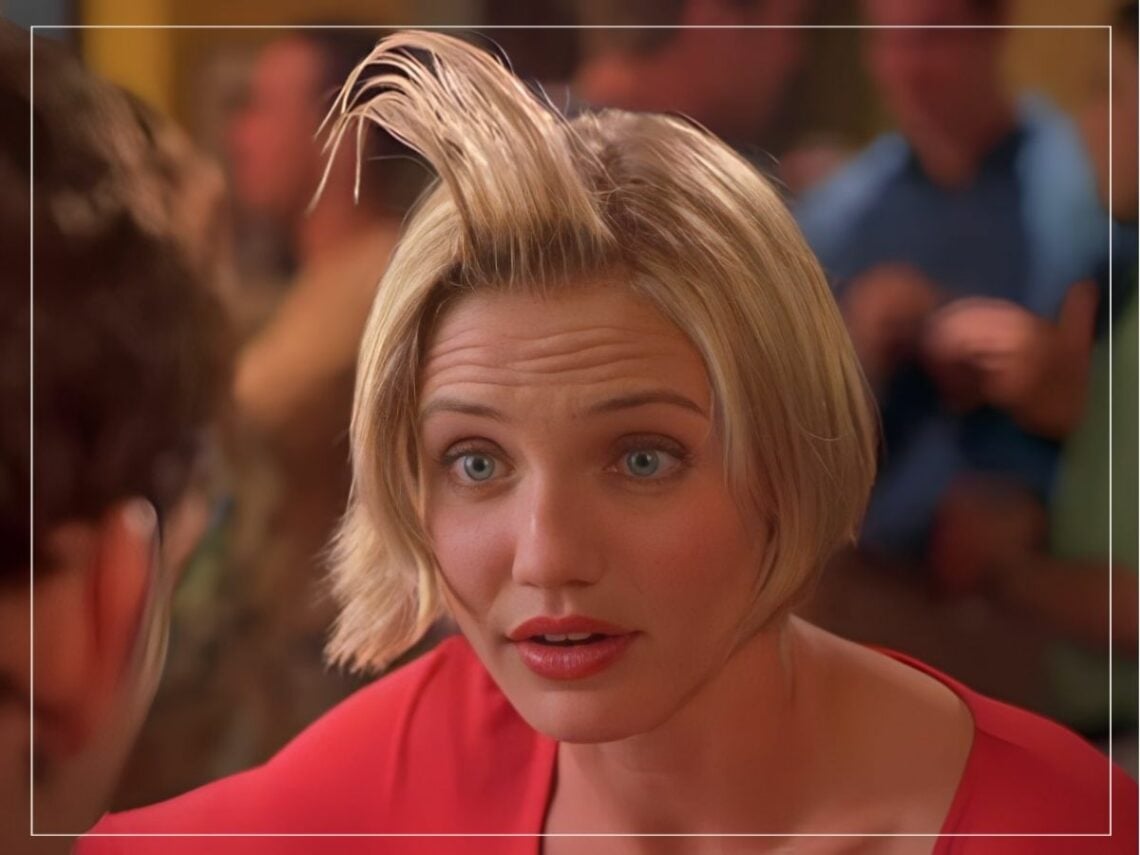
In 2023, Jennifer Lawrence did the Lord’s work and tried to kickstart the return of comedies in cinemas with the raunchy and hilarious No Hard Feelings. It made $87m worldwide on a budget of $45m, which was seen as a decent return but perhaps not the all-conquering hit she and Sony Pictures were hoping for.
In truth, comedy on the big screen has been dead for almost a decade at this point, with the only funny flicks turning a massive profit at the box office being ones that add laughs to another genre: action comedies, comedy horror, etc.
If the Farrelly Brothers’ There’s Something About Mary was released today, there isn’t a hope in hell it would make anywhere near the $369m it did in 1998. That equals around $715m today – more than eight times what No Hard Feelings made.
Grease (Randal Kleiser, 1978)
In recent years, a strange thing has happened with musicals – they’re no longer being marketed as musicals. Indeed, Hollywood seems to be ashamed of the genre. In the last year alone, Wonka, The Colour Purple, Mean Girls, and Joker: Folie a Deux have all hidden their musical leanings in the trailers. Why is this? Well, according to Paramount marketing president Marc Weinstock, “To start off saying musical, musical, musical, you have the potential to turn off audiences. We didn’t want to run out and say it’s a musical because people tend to treat musicals differently.”
In light of this quote, is it any wonder that we think a classic like Grease would die a horrible death at the box office in 2024? There’s simply no way it would become the beloved classic it has been to generations since its release in 1978 – because Hollywood is convinced audiences don’t like musicals anymore, full stop.
There’s another thing we should add that may point to Grease’s chances of being slim in today’s landscape. Paramount knew the brand still had potential, so it made the streaming series Grease: Rise of the Pink Ladies for Paramount+ in 2023. Harrowingly, its viewing figures were so low that it was cancelled less than a month after release. Ouch.
