


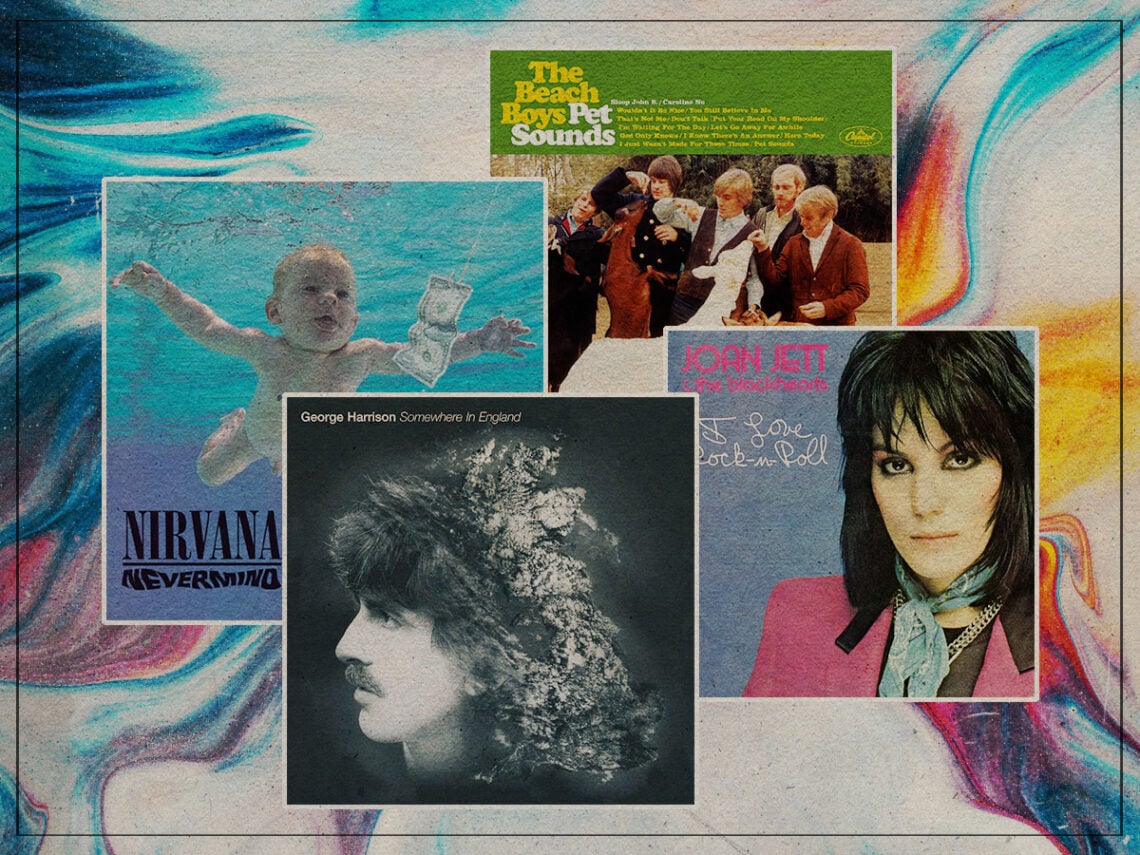
10 classic albums that labels had no faith in

For any up-and-coming rock band, a record label is both the best and worst of what the industry offers. Even though they might be responsible for putting financial backing behind any great album, the suits will also stick their nose into places they don’t belong, occasionally telling the artist to return to the drawing board when they think an album isn’t cutting it. Although acts like Radiohead and Tom Petty may be considered legends today, sometimes their labels didn’t consider their classics as anything special.
While not every album released by a mainstream act is meant to be the most explosive record of the year by any stretch, all these projects were treated like they were the nadir of the band’s catalogue. Even if there were a handful of decent songs on display, the label thought it would be best for the group to return to the studio, either recommending they recut the tracks or throw everything away and start over.
Despite the massive pushback from the suits, each album found its way to the top of the charts, either bubbling up underground or giving artists the overnight middle-finger to the naysayers that most acts can only dream of. The label didn’t get their way, either, with the band sticking to their principles and releasing their record as intended.
While not every album is necessarily the most marketable project in the world, no form of artistic expression is worth being tampered with to serve the bottom line. These artists believed in their craft, and by sticking to their guns, they turned in the most ambitious projects of their generation.
10 classic albums labels had no faith in
10. Aerosmith – Aerosmith
For all of their credentials, Aerosmith didn’t deserve the flak they got at the start of their career. Instead of judging them on their merits, most casual rock fans wrote off the partnership between Steven Tyler and Joe Perry as a re-run of The Rolling Stones, casually leaving them behind in favour of cooler acts like Led Zeppelin. Although Aerosmith had their own unique identity, their label seemed to agree with at least a few of those detractors.
When working on their debut album, Aerosmith was given a shoestring budget to create classics like ‘Mama Kin’ and ‘Dream On’, electing to use one of their friends to shoot the cover photo to cut down on costs. While the band would usually be promoting their album after its release, their label was interested in a different rock star that they had just added to their roster: Bruce Springsteen.
While ‘The Boss’ may not have set the world on fire with his first release, the lack of promotion towards Aerosmith led to them doing the dirty work, touring relentlessly before building up a massive fanbase for their sophomore effort, Get Your Wings. ‘The Bad Boys From Boston’ may have had to become road dogs before hitting the big time, but that constant run of shows turned them into a well-oiled rock ‘n’ roll machine.
9. I Love Rock ‘n’ Roll – Joan Jett
Joan Jett tends to be the epitome of everything rock ‘n’ roll stands for. From her badass demeanour in interviews to her tough-as-nails delivery on every song, there’s no doubt that Jett is the real deal whenever she steps up to the microphone. Then again, it wasn’t easy getting that same attitude onto a vinyl record.
Fresh out of The Runaways, Jett originally shopped her demos around to different labels to see if anyone was interested. Despite having future hits like ‘I Love Rock ‘N’ Roll’ and ‘Crimson and Clover’ on it, Jett was turned down by 23 different labels, thinking that the image of a female rock star wouldn’t click with the public.
Releasing it on her own label, Joan Jett and The Blackhearts quickly became a fixture of every radio station in the world, turning in letter-perfect odes to what rock ‘n’ roll was all about. Although Jett may not claim to have been the most original artist in the world, she believed in what the genre stood for, and her persistence led to her having her cake and eating it… in front of every label that turned her down.
8. 2112 – Rush
There has never been another rock band with as die-hard a fanbase as Rush. Even though none of their albums have been heralded as commercial masterpieces by any stretch, the Canadian power trio has built a career off of fans falling in love with their story-driven songs and epic pieces that go on for 10 minutes at a time. While those fans showed up in droves throughout the rest of the band’s career, there was a good chance that they were going to get dropped after their third album.
With Caress of Steel becoming an overwhelming flop, the pressure was on the band to make more radio-friendly material. Rather than cower to what their label wanted, the band returned to the studio with another lavish conceptual piece, creating ‘2112’, with a story about standing up to the powers that be; the very same powers who had pushed them around. Aside from being a not-so-subtle middle-finger to their label, the suits didn’t think the album would go anywhere upon release.
Instead of the traditional radio route, Rush fans were born through word of mouth, with the few who bought the record spreading the band’s material like wildfire before turning it into one of the biggest non-mainstream acts in the world. Rush may have had a handful of singles later on in their career, but the initial success of 2112 is what earned them the distinction of the world’s most popular cult act.
7. Desperado – Eagles
By the time the Eagles got the chance to release their first album, there was no chance they would turn-out anything half-hearted. Having been working on the country-rock circuit for years, the songs of Glenn Frey and Don Henley started to spread like wildfire from the word go, with tracks like ‘Take It Easy’ and ‘Peaceful Easy Feeling’ becoming radio staples. While the band thought they had a worthy follow-up, their label rang a death knell for them when they heard Desperado.
Inspired by various books on outlaws and gunslingers, Frey and Henley crafted a conceptual piece about rock stars being the ultimate rebels. However, since the album had a heavy emphasis on country music, the label thought there was no way to market the album to rock fans, with one representative notoriously storming out of his office after hearing it, saying that the band had made a cowboy record.
While the initial sales for the album waned significantly, the songs would get a second shot later, with Linda Ronstadt turning the title track into a hit when she recorded it alongside the rest of the band. Although every band member was looking to expand their craft, going into a massive rock opera seemed to some like the gauntlet had been pushed too far.
6. Take Off Your Pants and Jacket – Blink-182
Anyone who goes into a traditional Blink-182 album knows not to expect the most mature songwriting in the world. Formed in the mid-1990s, nearly every song on the band’s breakout album Enema of the State was meant to have a bit of tongue-in-cheek humour to it, like the kid who refuses to grow up on ‘What’s My Age Again’ and the petty breakup anthem ‘Dysentery Gary’. While the label expected more of the same, the pop-punk brats weren’t looking to act like they were 23 forever.
For the initial version of Take Off Your Pants and Jacket, the band had a far more serious tone, writing songs that were more heartfelt than their earlier material. Thinking there wasn’t an obvious single on the final project, though, their label originally sent the album back to the band to write a summertime anthem.
While the band were pissed off, the extra work on the album resulted in Tom DeLonge and Mark Hoppus writing ‘First Date’ and ‘The Rock Show’, each of which would become staples in the band’s live catalogue to this day. Although the label may have been correct in making the album more commercial, the songs included in the deluxe editions are an alternate look at what the album could have sounded like if the band had their way.
5. Somewhere in England – George Harrison
As the 1980s were dawning, it looked like George Harrison’s solo career was about to run out of gas. Having been one of the most successful solo Beatles throughout the 1970s, the scattershot quality of albums like Extra Texture and Dark Horse led to fans questioning where he would be going next. Although Harrison remained his spiritual self throughout every album, his label didn’t have time to discuss God.
After crafting Somewhere in England in early 1980, Harrison’s label thought there was no chance any song on the project could have gotten on the radio. Thinking they had found the optimal formula for making radio hits, Harrison was sent back to the drawing board to cut new material, resulting in a few songs that felt like they were made out of obligation, like the gloriously cheesy ‘Teardrops’.
Despite the changes, Harrison would only get one hit out of the album for the single ‘All Those Years Ago’, chronicling his time with John Lennon a few months following his murder. Any label might have an artist’s best intentions at heart, but the moral behind Somewhere in England is to not get in George Harrison’s way when making an album.
4. Full Moon Fever – Tom Petty
Towards the end of the 1980s, Tom Petty’s luck was about to change. Having been the victim of arson and making a lacklustre album with The Heartbreakers, Petty got the chance to operate among rock legends in The Traveling Wilburys, where he witnessed his favourite writers compose songs right in front of him. Instead of returning to his old gig, Petty wanted to keep the good times rolling with Jeff Lynne on Full Moon Fever.
Recorded in the weeks leading up to Lynne’s departure to England, most of Petty’s first solo outing consisted of songs he co-wrote with the ELO frontman, like ‘Yer So Bad’ and ‘Free Fallin’. Despite the massive amount of singles, MCA Records didn’t want to release the album, thinking that it conflicted with Petty’s image as a grizzly rocker.
Despite the pushback, Petty didn’t have to wait long to get his way, eventually delivering the same album after a change in management and being greeted with massive acclaim once songs like ‘Runnin’ Down a Dream’ and ‘I Won’t Back Down’ hit the airwaves. The songs on Full Moon Fever may have been a touch softer than what was expected, but given his reputation with his label, Petty wasn’t going to have anyone interfere with his craft.
3. Nevermind – Nirvana
It’s impossible to overstate the impact Nirvana had on the rock landscape. With the release of Nevermind, rock ‘n’ roll changed overnight, as fans kicked hair metal to the curb and embraced the sounds of existential angst. Although Nirvana were considered potential hitmakers, the label didn’t want to get their hopes up that much when putting out their magnum opus.
After getting signed to Geffen Records, thanks to Kim Gordon of Sonic Youth, the label decided to market the album using the same tactics that they would deploy with Gordon’s original outfit. Rather than try to estimate huge sales, Nirvana was projected to sell well under 500,000 copies of their record based on how much Sonic Youth’s Goo had sold.
While Nirvana quickly proved everyone at their label wrong, the sudden influx of fame also hurt them, with fans showing up at record stores and not seeing the album because of how low the initial projections were. Nirvana was meant to be treated like any other alternative act, but the power behind Nevermind reshaped what people thought about the rock charts.
2. Pet Sounds – The Beach Boys
As the 1960s began to get psychedelic, Brian Wilson was in a creative arms race with The British Invasion with The Beach Boys. Ever since The Beatles busted down the doors for what an album could be on Rubber Soul, Wilson was determined to push music even further, leaving the road to work on songs in the studio. While Wilson’s experiments resulted in one of the biggest pop albums ever created, it became the right album at the exact wrong time.
Despite having lavish production and amazing performances by The Wrecking Crew, Pet Sounds was greeted with little support from the label, thinking that it wasn’t a proper pop album. Although songs like ‘Wouldn’t It Be Nice’ fit into the traditional Beach Boys formula, Wilson’s masterpiece was quickly forgotten by the label, electing to release a greatest hits compilation shortly afterwards to compensate for all the money they thought they would lose from the album’s failure.
While the initial sales were slow for Pet Sounds, everyone who did hear it, was floored, with The Beatles striving to make an album even more groundbreaking when putting together Sgt Peppers a few months later. Wilson would eventually start to lose his way when moving on to further psychedelic affairs, but the pure inspiration behind songs like ‘God Only Knows’ only comes once in a lifetime.
1. OK Computer – Radiohead
Radiohead didn’t have any business continuing on as a rock band past 1994. Since their original single ‘Creep’ revolved around the band plagiarising every trope of the grunge icons from across the pond, many fans thought that they would be destined for one-hit wonder status after the fad began to wane. Radiohead persisted, though, and when they came through with a masterpiece, their label was completely underwhelmed.
Having built on their initial sound with The Bends, OK Computer became a bleak concept album about man’s struggles with technology, with the band reaching the greatest sonic heights of their career on ‘Paranoid Android’ and ‘Exit Music (For a Film)’. When their label heard it, though, they thought that there was no chance of the band getting any sort of single out of the record, going so far as to adjust their marketing model in case the album underperformed.
Once the public got ahold of the record, they found the biggest musical event to come out of the decade since Nirvana, with Yorke reminding his listeners about the dangers that can come when putting one’s life in the hands of technology. Nothing on OK Computer could be considered mainstream by any stretch, but if a band releases songs of this calibre, usually the mainstream comes to them.
