


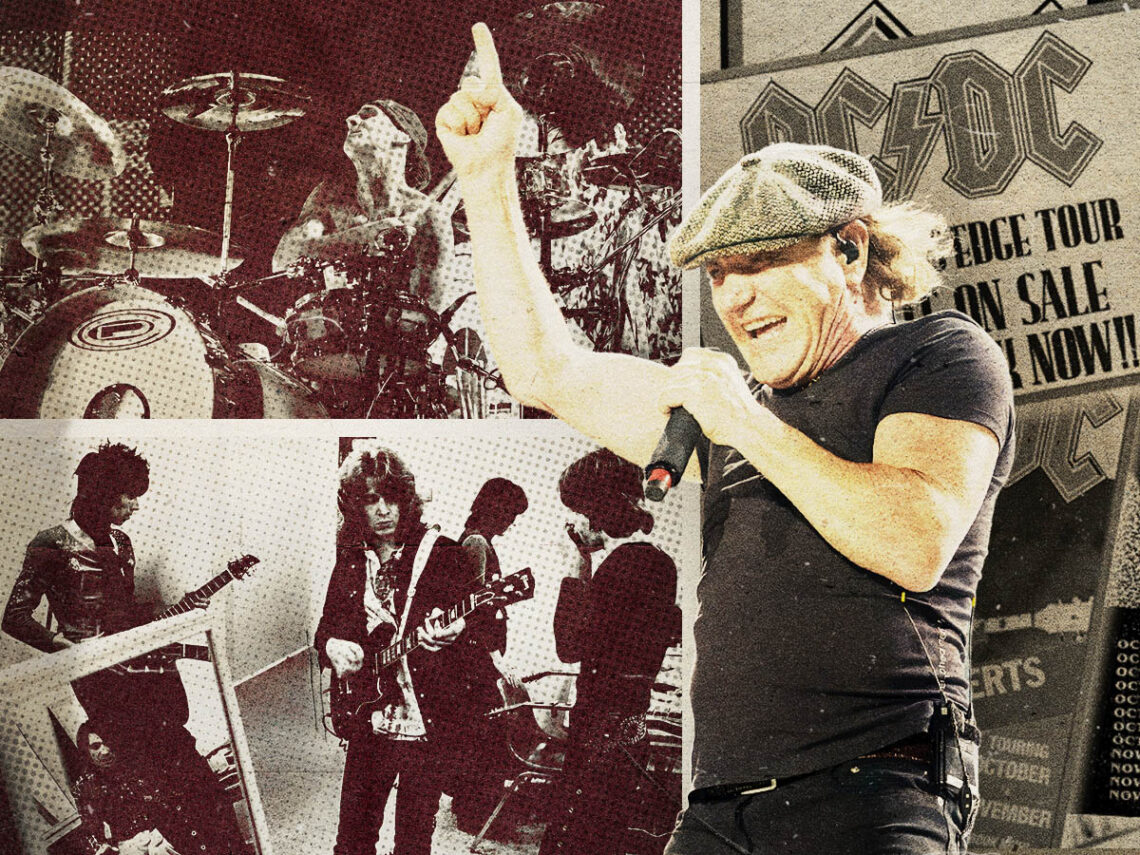
10 best replacements to iconic band members

Some of the biggest bands in the world have irreplaceable musicians at their disposal. While any decent bar band can get a decent bunch of musicians together to create a giant wall of noise, there was an unspoken chemistry between every member of these acts, almost like they were speaking in their own language. It might be hard to find that chemistry, but it’s impossible to recapture it but acts like Van Halen and AC/DC were up to the challenge with new replacements.
Through different circumstances, all of the internal harmonies turned sour between these original lineups, leading to the band starting from scratch with a new singer, guitarist, or another key member. Although they had the odds stacked against them, these new members locked in perfectly with the rest of the band, being a fresh sound to the table that they hadn’t worked with before.
Being a new member also comes with a fair share of hang-ups. Despite wanting to bring one’s creative personality to the table, these replacements also had to do justice to the legacy these older members had, honouring what they did while also trying to bring their unique twist to the equation.
Most bands can only hope to recapture some of their past glory, but these acts carved out new careers for themselves over time, going on to even further success that might outshine what they had done previously. It might not be fun starting at ground zero all over again, but these acts were looking to make a career renaissance when they got back on track.
10 best replacements to iconic band members
Jason Newsted – Metallica
If Metallica were a well-oiled metal machine, Cliff Burton was its beating heart. Although James Hetfield may have been responsible for some of their heaviest riffs, Burton had a fascination with music theory and would often turn their neanderthal riffs into metal symphonies on their first handful of records. After his tragic passing in a bus crash, though, Jason Newsted had the opportunity of a lifetime when Metallica held auditions back in California.
During a break between their tours, Metallica auditioned Newsted and were impressed with how easily he could keep up with some of Burton’s parts. Being a lifelong Metallica fan, Newsted knew the material backwards and forwards while also bringing a punk edge to the old material. When it came time to write, Newsted also held his own, offering the riff that would turn into the song ‘Blackened’.
Despite his dedication to the band, it would always be downplayed, as the rest of the group treated him like trash before finally leaving in the early ‘00s. While Newsted might not be looking to rejoin Metallica by any stretch these days, he was right in the bullseye when the thrash legends went from legendary underground band to global superstars.
Bruce Dickinson – Iron Maiden
As the ‘80s were dawning, metal music was going through a transitionary period. Although the old guard, like Black Sabbath, was still going strong, acts like Led Zeppelin were dissolving and were starting to look passe compared to the punk movement. Iron Maiden fit in as the metallic answer to The Sex Pistols, but something was missing for the first half of their career.
Though Paul Di’Anno gave his all to Maiden’s first two albums, his register was not as powerful as the songs demanded. Di’Anno had been a fan of the punk scene, and his snarling tone of voice was much more in tune with someone like Joe Strummer than Rob Halford. In between legs of touring, bandleader Steve Harris started to get an idea when he saw the band Samson perform in a local club.
After coaxing Bruce Dickinson out of Samson, Harris had found the extra ingredient that turned Maiden into a global force. On tracks like ‘The Trooper’, Dickinson is channelling something closer to opera singing than traditional metal vocals, which would lay the groundwork for the conventional style of heavy metal singing going forward. Di’Anno may have gotten a raw deal, but no one could compete with ‘The Human Air Raid Siren’.
Travis Barker – Blink-182
In the early days of Blink-182, Tom DeLonge talked about seeing the band as an art project. Although they took their craft seriously, they had no sense of what writing a hit song meant in the early days, instead filling their songs with fast-tempo riffs and in-jokes about non-politically-correct material. Scott Raynor might have fit right in on tunes like ‘Dammit’, but the air was changing going into the late ‘90s.
Towards the end of the tour for Dude Ranch, Raynor was kicked out of the band for drinking too much, with DeLonge and Mark Hoppus finding Travis Barker from his other band, The Aquabats. They may have just been looking for another drummer, but what they got was the closest thing to a punk rock god they could get. Flying off the handle from the first song on Enema of The State, Barker teaches a drum clinic with every performance, testing the limits of where percussion could go.
Barker also proved to be integral to the band’s songwriting, talking about changing the beat around on certain songs to create clever dynamic builds in the songs that they didn’t have before. After years of being a punk rock art project, Blink finally found the songwriting method that would appeal to millions of kids worldwide.
Brian Johnson – AC/DC
For most hard rock fans, there was no AC/DC without Bon Scott. While the Young Brothers found their frontman’s wild-man antics as disposable for some time, Scott’s tale of rock and roll excess sent them to the top of the charts, making for one of their biggest success stories on the album Highway to Hell. Just when it couldn’t get any better, Scott’s time ran out after a night of heavy drinking.
Having passed out in a car, Scott choked through the night and was found dead the next day. Since the Young Brothers wanted to continue, they discovered that Scott’s replacement had already been recommended years before he died. Scott had loved local band Geordie, whose singer, Brian Johnson, had a distinct gravelly scream similar to what Scott was capable of.
After bringing Johnson down for a few sessions, the wheels started turning again, with the band creating Back in Black as a tribute to their fallen frontman. As much as Johnson might like the role of the frontman, he always remained humble about his role in the group. Angus and Malcolm have always led AC/DC, and the only reason he has the gig is that he can channel Scott’s spirit like no one else.
Joe Walsh – Eagles
From the start of The Eagles, there was always a bit of creative tension between the group. As much as the band might have radiated California sunshine, Glenn Frey’s mission for the band to blend different genres never sat well with Bernie Leadon. After having to put his country music influences on the shelf, Leadon left after one gig where he poured a beer over Frey’s head backstage.
The Eagles didn’t have to look far for a replacement. During their tour for One of These Nights, they had been touring with Joe Walsh and would often bring him out onstage for their encores and play The James Gang’s ‘Funk #49’. By Frey’s admission, he knew that Walsh’s vocals weren’t quite as good as Leadon’s, but the guitar chops more than made up for it.
Walsh made his presence known right out of the gate on Hotel California, working with Don Felder to create one of the most epic guitar solos of the ‘70s, weaving in and out of each other’s lines and harmonising at just the right moment. Walsh may have been known for his unorthodox approach to humour on and off the stage, but when he hunkered down with The Eagles, they could kick some ass.
Mick Taylor – The Rolling Stones
The sad aftermath of Brian Jones leaving The Rolling Stones took its toll on every band member. Although Jones had started the group in the early ‘60s, his inability to contribute anything by the end led to one of the biggest downward spirals in rock, later being found dead in his pool shortly after his firing. Jones’s spirit would always remain with The Stones, but Mick Taylor also picked up the slack.
Right around the time that Taylor joined, Mick Jagger and Keith Richards were also going through one of their most prolific periods as songwriters, pumping out classic albums like Sticky Fingers and Exile on Main St. Though Jones contributed a handful of parts at the time, this era belongs to Taylor, having a healthy amount of bluesy grit and taste to give the songs a proper leg to stand on.
While a song like ‘Can’t You Hear Me Knocking’ might be a decent blues jam, the best parts of the tune come when Taylor lays down some lead lines, either playing off of what Richards is doing with the rhythm or playing slide guitar with enough emotion to make listeners weep. Taylor might not have lasted long after The Stones’ ‘70s run, but ‘new boy’ Ronnie Wood has always remained faithful to what he brought to the table in his time.
Ronnie James Dio – Black Sabbath
Getting a copycat singer is one of the biggest stumbling blocks when finding a replacement. Although fans might be gutted not to hear that iconic voice singing the hits again, it will never be the same if the band tries to get an identical voice to match what the original singer did. Black Sabbath wasn’t even going to try to copy Ozzy Osbourne’s schtick, so they found an equally legendary singer.
Having already turned in time with Ritchie Blackmore’s Rainbow, Ronnie James Dio brought a sense of bombast to Sabbath on Heaven and Hell. Since Dio was a more dynamic singer than Osbourne, the changes to both eras of Sabbath are like night and day, making songs that feel far more epic in scope than the blues jams they started out with. Dio’s arrival also came at the exact time for Sabbath to change.
Since the metal scene was veering towards newer acts like Iron Maiden and Saxon, the Dio years of Sabbath proved that they could hang with the new kids on the block, making songs as effective as the New Wave of British Heavy Metal. Sabbath may have written the rulebook for heavy metal, and it’s only natural that they are the ones to rewrite the rules.
Stevie Nicks- Fleetwood Mac
The classic era of Fleetwood Mac has tended to change over the years. As much as the band might have been known for their hits on ‘70s radio, their lineage goes back much further than the sounds of folksy rock and roll. The band’s original version was born out of the blues, but things started to change once Peter Green left.
Although Green was a guitar legend in his own right, his disconnect from the rest of the band led him to seek new songwriting pastures. The group might have moved forward with jazzy guitarist Bob Welch, but even more lineup changes led to them drafting in Lindsey Buckingham. Buckingham agreed immediately, but only with the caveat that his girlfriend also joined the band.
Being rooted in the sounds of classic rock, Stevie Nicks brought a mystical atmosphere to every one of the band’s songs, taking classic tunes like ‘Oh Well’ to new heights while sprinkling her musical pixie dust across new tracks like ‘Rhiannon’ and ‘Landslide’. Despite the hellish sessions for albums like Rumours, it was a small price to pay for having one of the greatest female singers in the world. It might have been a minor miracle that Nicks came into Mac, but given her penchant for the spiritual side, some divine intervention might have also been at play.
John Frusciante – Red Hot Chili Peppers
The musicians behind The Red Hot Chili Peppers have always felt more like a brotherhood than a proper band. Flea and Anthony Kiedis have known each other since childhood, and their funk rock project was bound to go places once they got songs like ‘Me and My Friends’ under their belt. As they were about to take over the world, everything crumbled down with the death of Hillel Slovak.
Slovak had been a critical figure in the Peppers’ world, and his passing left a gaping hole that remains unfilled. Instead of trying to find someone to redo Slovak’s parts every night, the band finding John Frusciante gave them a new lease on life. Frusciante had already been a fan of the group, but his ferocious playing style and knowledge of serving the song made ‘Give It Away’ and ‘Suck My Kiss’ crackle with life when they came out the speakers.
Even when Frusciante returned to the fold in the late ‘90s, his minimalist approach to albums like Californication was dripping with emotion from the minute that fans heard them. Slovak will always occupy a unique space in the hearts of Chili Pepper fans, but Frusciante is the perfect example of how to get a guitar player that makes the entire band a better creative unit.
Sammy Hagar – Van Halen
The early days of Van Halen felt like capturing lightning in a bottle. Although they might have been trying to cut songs that reflected their live set at the time, Van Halen was the answer to rock fans’ prayers, having something as forceful as metal while still maintaining a gift for melody and having a good time. David Lee Roth may have been the MC of the band’s live shows, but the perfect frontman could no longer walk on eggshells with Eddie during the mid-’80s.
After disagreeing over the creative direction of the album 1984, Roth left to pursue a solo career as the rest of the group scrambled to find a replacement. Though they initially considered people like Daryl Hall of Hall and Oates, their answer came courtesy of Eddie’s mechanic, who suggested that they get Sammy Hagar in the band. Despite Hagar’s stellar solo career, he fit like a glove in Van Halen, having a shriek that few could match.
One of the biggest strengths of the ‘Van Hagar’ era was its leap forward in musicality. Compared to Roth’s throaty wail, Hagar had a greater range that made his voice cut out of the speakers, which also gave Eddie free rein to experiment with different sounds on albums like 5150 and For Unlawful Carnal Knowledge. No matter who was at the front of the stage, nothing was going to stop Van Halen from dominating the ‘80s rock scene.
