


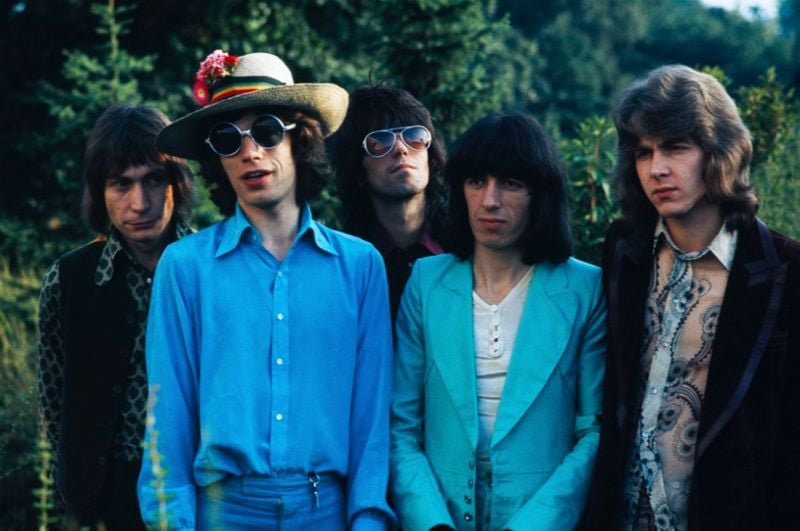
Keith Richards’ on the “beautiful possibilities” of Mick Taylor being in the Rolling Stones

When Mick Taylor joined the Rolling Stones on the tour of 1969, the sound of the band changed. Taylor was of a higher proficiency on the guitar than the already excellent stringsmiths the Stones had, including Keith Richards.
Taylor’s joining of the Stones marked the beginning of their best phase, which included the critically acclaimed and commercially successful albums, Let it Bleed, Sticky Fingers, Exile on Main Street, and Goats Head Soup. Keith Richards wrote of Taylor, “Mick Taylor being in the band on that ’69 tour certainly sealed the Stones together again. So we did Sticky Fingers with him. And the music changed — almost unconsciously.”
Richards also noted that Taylor being in the band opened up “some beautiful possibilities.” He added, “Especially during recording, because I’d just lay down three or four different rhythm guitars. Mick was very much a solo player with incredible melodic sensitivity about his playing. Most of those early Stones records, the big ones, there’s probably six, seven, eight guitars at times on those tracks, but you wouldn’t know it.”
Noting the importance of collaborative creativity in a rock band, Richards explained, “When I play the guitar, I want to play with another guy, and if he’s providing the other side of the coin, so to speak, if I’m playing down that rhythm, then the compliments that come from the other guitar can then be woven into the rhythm guitar. And that’s exactly what Mick did.”
With Taylor a part of the fold, the Stones’ tunes gathered a certain level of spice that would go on to define the band’s sound throughout their career. As Richards notes, “You write with Mick Taylor in mind, maybe without realising it, knowing he can come up with something different. You’ve got to give him something he’ll really enjoy. Not just the same old grind.”
Richards is also in complete agreement that the period of Taylor’s arrival was the golden era of the Stones. He added, “we did the most brilliant stuff together, some of the most brilliant stuff the Stones ever did. Everything was there in his playing — the melodic touch, a beautiful sustain and a way of reading a song.”
Charlie Watts also said that “the Mick Taylor period was a creative peak for us. A tremendous jump in musical credibility.” However, by the time 1974 rolled around, Taylor had seemingly had enough of the craziness of being in the Stones, and he left. Richards later said, “Mick could never explain why he left. He doesn’t know why. I always asked him, ‘why did you leave?’ He said, ‘I don’t know.'”
