


The 10 best BBC sessions of all time

The BBC was founded 100 years ago today, making it the world’s oldest and longest-standing national broadcaster. Known colloquially as the Beeb, Britain has developed a familial relationship with the corporation in a similar way some subserve the Royal Family, which is fitting, given that the corporation is established under a royal charter.
During World War II, the BBC was responsible for keeping the British population united and delivering Winston Churchill’s speeches over the radio waves. Following the global conflict, the name of the game was television. The BBC dominated televisual broadcasting for decades until the increased introduction of rival broadcasters, beginning with ITV in the 1950s and Channel 4 in the ’80s.
Throughout the BBC’s infancy, broadcasting and recording technology revolutionised media consumption and fuelled the music industry. As the ’60s dawned, a cultural and creative revolution coincided with these advancements allowing rock music to bloom in the country as The Beatles and The Rolling Stones spearheaded the British invasion of the American charts.
The seismic journey of popular music in the second half of the 20th century was followed enthusiastically by the BBC over thousands of live radio sessions and exclusive recording exploits. These sessions were popularised by the BBC’s late radio host John Peel, who became a household name at the corporation thanks to his prestigious Peel Sessions.
Peel joined BBC Radio 1 after it was founded in 1967, and with his acute cultural and musical knowledge, he became something of a scout for rising artists. Throughout the 1970s, he offered the burgeoning punk movement a vital leg up with his famous sessions, which sought to give listeners a flavour of the music, but not the original recordings. This now-abandoned regulation was intended to create employment and encourage listeners to go out and buy the records.
Today, in celebration of the BBC’s first century, we have picked out the top ten BBC recording sessions of all time.
The 10 best BBC sessions of all time
Joy Division – Peel Sessions
John Peel was lucky enough to see music evolve over the most exciting and progressive period in recorded music history. One of the most exciting moments was the punk movement and its near-immediate transformation into post-punk.
Joy Division were a tragically fleeting feature on the musical map due to Ian Curtis’ suicide in 1980, but their legacy will endure for generations. Between January and November 1979, Joy Division took on a series of Peel Sessions on BBC Radio 1. They recorded ‘Exercise One’, ‘Insight’, ‘She’s Lost Control’, ‘Transmission’, ‘Love Will Tear Us Apart’, ’24 Hours’, ‘Colony’ and ‘Sound of Music’.
Mogwai – Peel Sessions
Scottish post-rock group, Mogwai, formed in 1996 and gradually rose to prominence approaching the turn of the century. During their rise to success as a moody cult group, one of their salient apostles was John Peel. Following Peel’s death in 2004, Mogwai decided to dedicate their brilliant compilation album, Government Commissions: BBC Sessions 1996–2003, to the late DJ.
The album included a selection of their songs recorded at the BBC studios, many of which with Peel himself. The first recording on the album, ‘Hunted by a Freak’, was preceded by Peel’s voice announcing, “Ladies and Gentlemen… Mogwai!”.
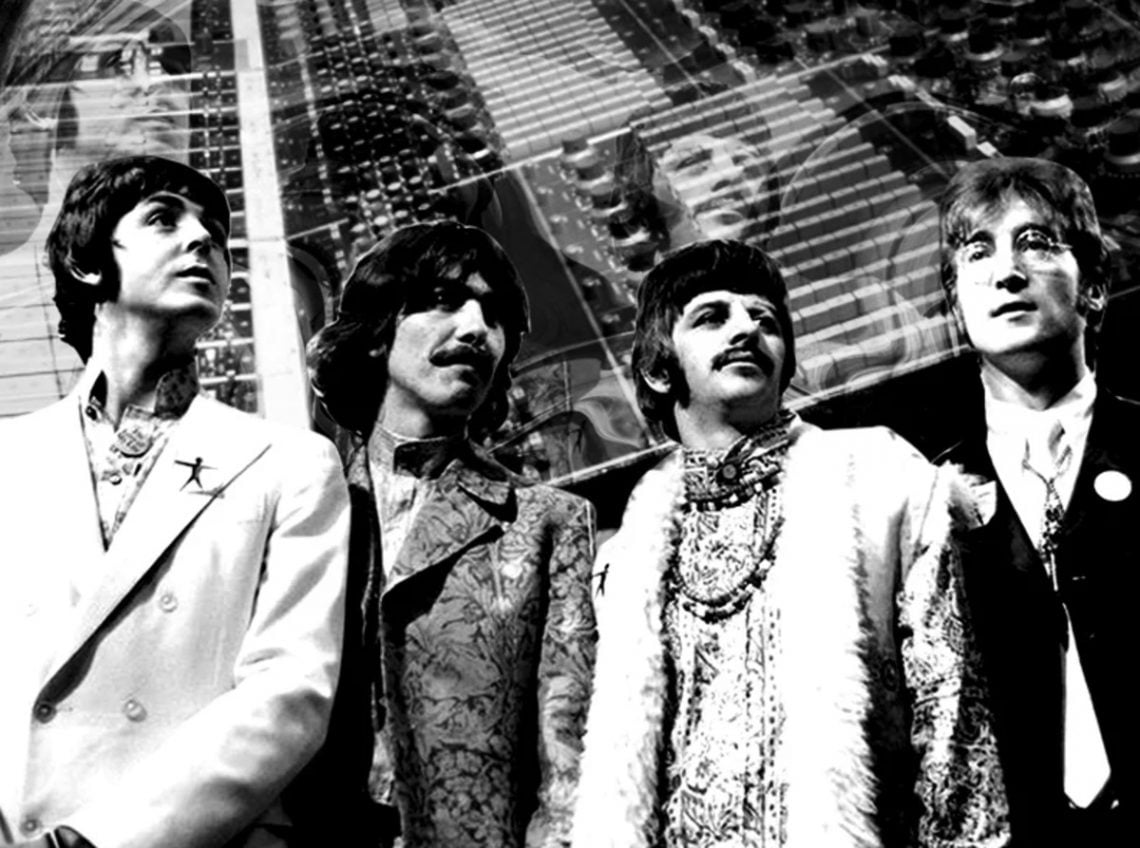
The Beatles – Live at the BBC
The Beatles require very little introduction. As the most important British rock group of all time, the BBC would have been fools not to align with the 1960s zeitgeist. Fortunately, despite the necessity for pirate radio stations to promote rock music in the late ’60s, the BBC welcomed The Beatles with open arms during their rise to power.
Over 50 BBC sessions, the Fab Four’s staggering early progress was tracked from their cover of Chuck Berry’s ‘Roll Over Beethoven’ to the established comfort of progressive songwriting in the mid-1960s. The Beatles stopped performing live in 1966, but ‘Lucy In The Sky With Diamonds’ and the like might have been a little much for the BBC back then anyway.
Arab Strap – Peel Sessions
Falkirk duo Arab Strap brought something unique to the table in the late 1990s. Their marriage of bass-heavy, guitar-driven music and spoken word delivery was first offered up in 1996 with the fantastic ‘The First Big Weekend’, a single that would later be included in their 1997 debut album, The Week Never Starts Round Here.
In March 1997, they were invited to the BBC to record their first session with John Peel. The session included four tracks, ‘The Smell Of Outdoor Cooking’, ‘Soaps’, ‘I Saw You’ and ‘The First Big Weekend’. The final track was the cherry on top and the band altered the title affectionately to ‘The First Big Peel Thing’.
The Smiths – Peel Sessions
The Smiths recorded several BBC sessions throughout their five years of existence, most with John Peel. Following the vehement introduction of their eponymous debut LP, The Smiths released their early compilation album, Hatful of Hollow, in November 1984.
The album strung together some of the Manchester group’s early hit singles, B-sides and a handful of BBC recordings. While some of the tracks were recorded with the BBC’s David Jensen, the most memorable were those from the Peel session: ‘What Difference Does It Make?’, ‘This Charming Man’, ‘Handsome Devil’, ‘This Night Has Opened My Eyes’, ‘Back to the Old House’ and ‘Reel Around the Fountain’.
Sonic Youth – Peel Sessions
The inimitable Sonic Youth first played on John Peel’s legendary show back in 1983. They would play several times throughout the 1980s, and one particularly stellar performance came in 1988 when the New York noise icons played a set comprised entirely of The Fall covers.
Peel had championed The Fall from early in their career, so he would have loved to hear Sonic Youth ripping through covers of ‘My New House’, ‘Rowche Rumble’, ‘Psycho Mafia’ and ‘Victoria’, although the latter was, in fact, a cover of The Kinks by The Fall.
Pulp – Peel Sessions
Like several young bands, Pulp were an outfit that John Peel saw something in before anyone else had. Back in 1981, Pulp were still just teenagers, and it would be over a year until they released their debut album It.
Yet Peel invited the Sheffield band, who had been aptly described as a cross between ABBA and The Fall, to record a session, and it helped Pulp to place their foot on the first rung of the music industry’s ladder. A post-punk rhythm section provides the basis for the development of Jarvis Cocker’s proto-kitchen sink confessional lyrics.
Led Zeppelin – The BBC Sessions
In 1997, Led Zeppelin released an almighty compilation album featuring several sessions recorded at the BBC. Of particular importance was disc one, which was comprised of four different sessions recorded throughout 1969.
Zeppelin are rightfully considered one of the best live rock bands of all time, and that first BBC session is an iconic time capsule documenting four absolute masters of their instruments. We can imagine Robert Plant strutting around the BBC Studio bare-chested while Page, Jones and Bonham do what they were born to do.
Pixies – Pixies at the BBC
Like Zeppelin, loud-quiet-loud pioneers Pixies released a compilation album of their BBC radio sessions in 1998. The sessions took place between 1988 and 1991. Traditional to the classic Pixies sound, the album is somewhat underproduced and provides that unique underground quality that we associate with Black Francis and co.
The 1988 session saw Pixies provide an excellent cover of ‘Wild Honey Pie’ by the Beatles. However, arguably the most iconic of their sessions came the following year in 1989, when they performed the now legendary surf rock version of ‘Wave of Mutilation’.
Syd Barrett – The Radio One Sessions
This session is something of a piece of music history. Syd Barrett left Pink Floyd back in 1968 as a result of a severe decline in his mental health. He would eventually move to his mother’s basement in 1972 in retreat from the public eye. However, between those dates, Barrett recorded two sessions for Radio One.
Barrett was said to have not spoken to any of the producers during the shows and instead had his friend David Gilmour serve as a medium, as well as playing bass, guitar and organ on the recordings. These sessions very much serve as Barrett’s final bow to the public before he retreated from sight.

Never Miss A Beat
The Far Out Beatles Newsletter
All the latest stories about The Beatles from the independent voice of culture.
Straight to your inbox.