


The 10 best basslines in classic rock

Although the days of classic rock might have ended a long time ago, the genre still retains a tremendous following. There’s a simple magic to it that compels people from all walks of life, despite the era ending in the 1980s. Emerging from the remarkable progress of the 1960s, helped by the pioneering strides made by Little Richard, Chuck Berry, and Elvis in the 1950s, classic rock had a long life, taking on many forms. The undisputed era of the band, it was then that we saw frontpeople, guitarists, bassists and drummers become gods.
Whilst the colourful vocalists, guitarists and drummers receive the most plaudits when discussing this period, thanks to various individuals ranging from Jimi Hendrix to Ginger Baker, the poor bassist is often criminally overlooked in the mainstream discussion. This is unthinkable, given how many excellent four-string dynamos there were during this age.
Whether it be the jazz-inflected psychedelia of Cream bassist Jack Bruce, the sludgy groove of Black Sabbath’s Geezer Butler or the smooth funk of Queen’s John Deacon, across this period, some of the most influential bassists of all time came to the fore.
There’s plenty of discourse on the best guitar riffs and drum solos of the classic rock era. So today, it’s time to return some of the limelight to those who were both the personal and musical glue for prominent bands. Without further ado, find the ten best basslines in classic rock below. Expect to revisit some corkers.
The best basslines in classic rock:
The Rolling Stones – ‘Jumpin’ Jack Flash’ (1968)
There’s no place better to kick off than with The Rolling Stones’ best bassline, played by Bill Wyman. Smooth and groovy, this cut came out when the London band were at their creative zenith and is a refined take on blues rock after their foray into psychedelia and baroque pop. In his memoir, Stone Alone, Wyman claimed that he even devised the song’s main guitar riff, which he worked on with Brian Jones and Charlie Watts before it was eventually credited to Jagger/Richards.
There’s debate over who in the band formulated the bassline, but it’s never been made 100% clear, so we’re sticking with Wyman on this one. Holding the various textures together and bringing the song to its climax, this performance never oversteps the mark, yet the piece would be completely different without it. It’s a testament to its brilliance.
Jimi Hendrix – ‘Crosstown Traffic’ (1968)
Although Jimi Hendrix stole the limelight from his various band members due to him being, well, Jimi Hendrix, when it came to his music, it wasn’t solely about the guitar; the bass and drums often shone too. Regarding basslines, some fans mention ‘All Along the Watchtower’ and ‘Red House’ as two of the best. However, the bassline of ‘Crosstown Traffic’ by The Jimi Hendrix Experience has to be the finest in the oeuvre.
Whilst most remember the song for its catchy kazoo line augmenting the riff, the bassline is also a highlight. A funky blend of blues and acid rock played by the esteemed Noel Redding, thanks to his work connecting the parts of Hendrix and drummer Mitch Mitchell, the song is impossible to ignore. You cannot stop dancing when this cut comes on.
Whilst we’re here, it must also be said that Noel Redding was a majorly underrated bass player. It says everything about the scope of his skill that he could keep up with Hendrix’s remarkable virtuosity as if it were nothing.
The Beatles – ‘Come Together’ (1969)
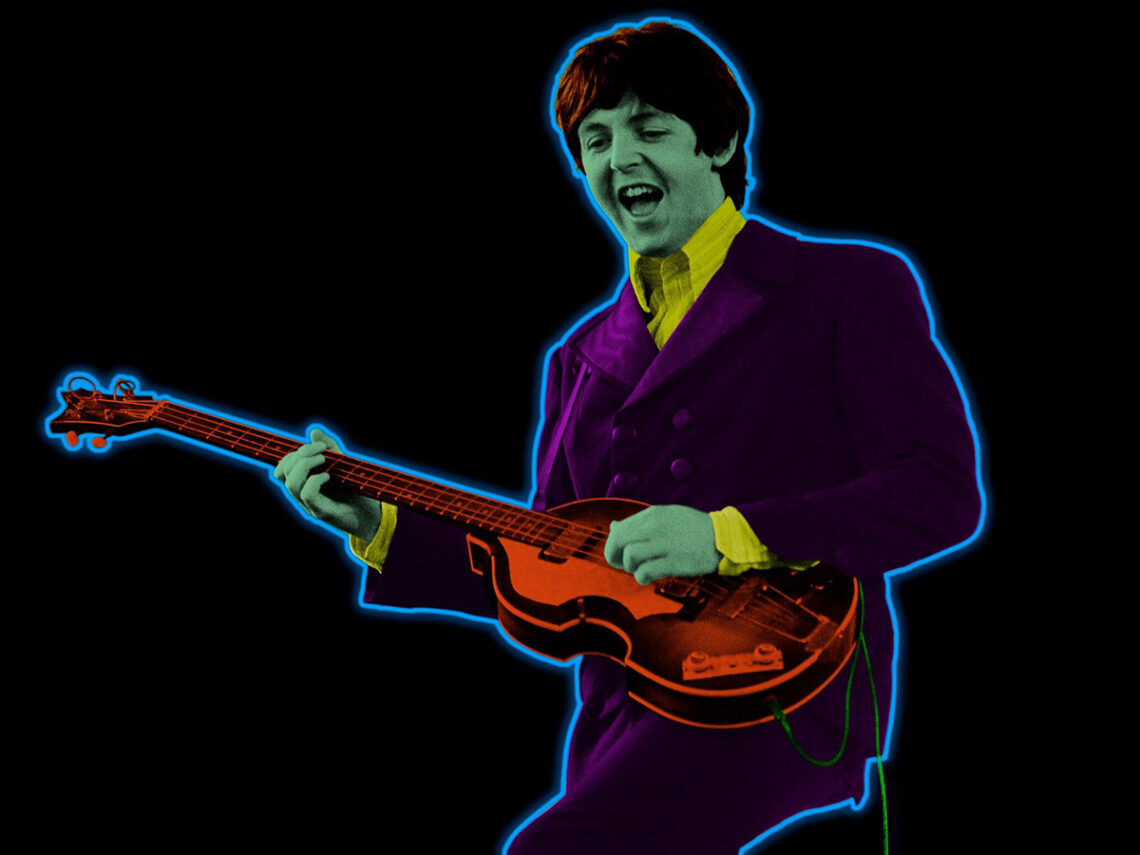
Hear me out. ‘Come Together’ might not be the most technical bassline that Paul McCartney ever delivered for The Beatles, with the likes of ‘Taxman’ and ‘Something’ far more complex, yet regarding the impact of the bass on this 1969 hit, you just can’t beat it. This bassline is the song. It’s not very often we’ve been able to say that.
Atmospheric, slightly off-kilter and distinctive, McCartney’s wobbly bassline carries the track from the breathy intro to the solo segment, where it throbs like the collective love gun of the counterculture – playing into implications of the title. McCartney’s bassline is a masterclass in serving the piece, shining while providing a ballast for the other instruments. Such is the power of the bass. To paraphrase Paul McCartney, ‘You control the whole operation when you’re the bass player’. He did that here.
Led Zeppelin – ‘The Lemon Song’ (1969)
Led Zeppelin bassist and multi-instrumentalist John Paul Jones strikes me as one who’s good at everything he does. From playing various instruments to arrangments, he can do it all, which made him the quartet’s secret weapon, imbuing their music with real zest. Whilst we could wax lyrical about his highlights reel and the scope of his basslines, the pinnacle of work with the low-end has to be ‘The Lemon Song’ from Led Zeppelin II.
Evolving out of Howlin’ Wolf’s Chicago blues classic ‘Killing Floor’, Led Zeppelin and Jones took the raw materials and ran. Jones runs the show and lets loose here, making guitarist Jimmy Page and drummer John Bonham mere afterthoughts. The bassline is so good and energetic that even James Jamerson would have been jealous of the Londoner’s myriad of runs. The second half of this song is one of the best moments in rock bass playing, making it even more outstanding that Jones improvised. That is the extent of his genius.
Yes – ‘Roundabout’ (1971)
‘Roundabout’ is one of the most famous Yes songs and is made accessible by its upbeat vibe and “Scottish jig” rhythm. The first main melody might even be the catchiest moment in prog rock. Whilst there is a lot to wax lyrical about with this extensive piece, Chris Squire’s bassline stands out before all else, carrying the track through its different chapters. From the tone to the technique, it’s excellent.
It’s one of the grittiest tones of the era, with Squire’s scratchy dead notes of the first section and nifty hammer-ons at the end of the riff worthy of great praise. Played on a Rickenbacker, the classic clank of the instrument was perfect for carrying the song to its climax and providing a counterbalance to the cheesy tone of the keyboards and the various textures that drop in and out.
Pink Floyd – ‘Money’ (1973)
Pink Floyd’s ‘Money’ is an undisputed classic, boasting one of the greatest riffs ever. Maintained by Roger Waters’ walking bassline, whilst the organ, guitar, and metallic sounds of coins dovetail with it, the four-string keeps you immersed, dictating the rhythm from the 7/4 of the verses to the short burst of 4/4 when David Gilmour lets rip on his guitar.
Another simple bassline that doesn’t overcook the meat, there’s natural potency in this funky groove. It was perfect for Roger Waters to discuss his newfound interest in money and all its trappings over. It reflects the musical brilliance of Waters’ bassline that you can listen to this song repeatedly and not get bored. A magic about it gives The Dark Side of the Moon one of its highlights.
Gene Clark – ‘No Other’ (1975)
Former Byrds frontman and principal songwriter Gene Clark had a brilliant solo career after he left the folk-rock band, with the highlight being 1974’s No Other. A pioneering body of cosmic American music often hailed as a ‘lost masterpiece’, there are many moments of note on the record, with the title track being the pinnacle. Featuring a host of the era’s most sought-after session musicians, it is crazy that Leland Sklar’s bassline isn’t widely known as one of the best out there.
Swollen, coloured by ample effects and busy, the atmosphere conveyed by Sklar’s bassline is unlike anything else on the list, exhibiting his personal brilliance and the groundbreaking sonic palette Gene Clark establishes on this record. It sums the quality of the bassline up that if the song was released today, it would be a cultural phenomenon. Ironically, it’s a shame it was so ahead of its time, as Clark never got the plaudits he deserved. Regardless, sit back and enjoy the modulated excellence of Leland Sklar.
Queen – ‘Another One Bites The Dust’ (1980)
Is Queen’s ‘Another One Bites The Dust’ the greatest bassline ever? Quite possibly. A moment from the late classic rock period, whilst the quartet’s low-end master, John Deacon, has many notable flourishes to his name, his performance on this 1980 hit must be his finest. Famously, Deacon’s bassline was inspired by disco pioneers Chic’s staple ‘Good Times’. Chic bass player and co-founder Bernard Edwards even told the NME: “That Queen record came about because that Queen bass player … spent some time hanging out with us at our studio.”
Regardless of where he took his inspiration from, John Deacon killed it here, with the funky rhythm of the Queen bass player blowing everyone away at the time of release. A complete aversion to the sound Queen were going for at the time, there’s no surprise that this simple, dry-sounding song opened the London band up to a wider market than ever before. Sometimes, it’s good to go against your instincts.
Rush – ‘Limelight’ (1981)
Singing and playing bass busily and technically like Rush frontman Geddy Lee takes real skill; that’s why he remains one of the most distinctive musicians in music. Whilst he has many of the best classic rock basslines to his name, his work on 1981’s ‘Limelight’ takes the crown. Engaged and accentuating guitarist Alex Lifeson’s melodic work, there’s a character to Lee’s work here, with the temperature taken up a notch during the middle section.
It’s one of those bass-playing moments where the listener is completely taken aback by the extent of skill on display, no matter how many times they’ve heard it. It’s always been a miracle how Lee can sing so harmoniously whilst playing such a technical bassline and remember all the different dynamics, but this is Geddy Lee. He’s no mere mortal.
King Crimson – ‘Thela Hun Ginjeet’ (1981)
The groove here is real, and it’s inescapable. Notably, creative figurehead Robert Fripp’s electric guitar plays in 7/8, and the rest of the band plays in 4/4 to elicit a strange and hypnotic effect. Clearly, this piece has a lot to unpick, but Tony Levin’s bassline stands out as the most breathtaking element. After all, it is a personal favourite of one of the greatest bass players of all time, Primus leader Les Claypool.
The central bassline is so good; it drives itself into your brain and refuses to leave. Its bends and hammer-ons give this piece its wonky spirit, off of which the rest of the band delivers their polyrhythmic brilliance. It floats from the optimistic to the ominous, in reflection of Levin’s grasp of the technical side of his instrument.

Never Miss A Beat
The Far Out Beatles Newsletter
All the latest stories about The Beatles from the independent voice of culture.
Straight to your inbox.