


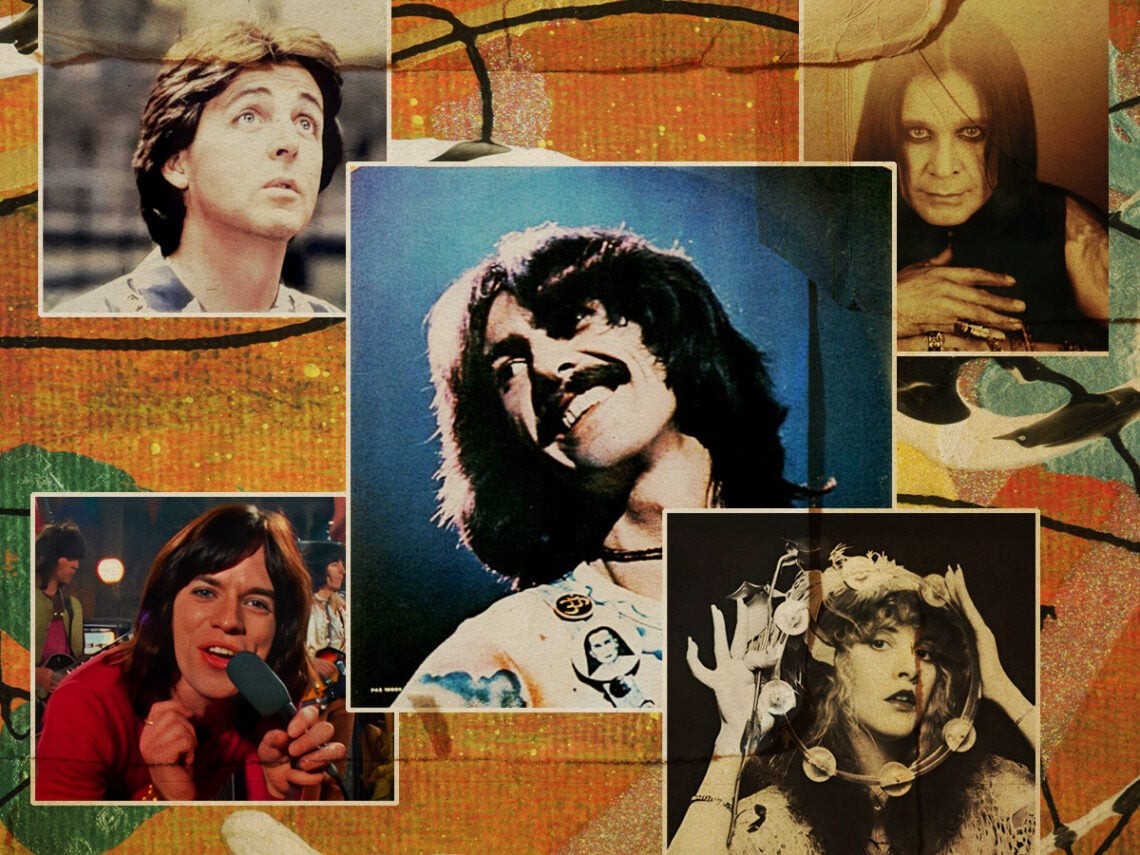
10 artists who hate their own albums

There’s no unwritten rule that says artists have to enjoy every piece of music they put out. All music is subjective, and even if the fans don’t latch onto something doesn’t mean that the artist is any less valid for having released something they viewed as their magnum opus. Then again, artists like Pink Floyd have at least admitted that a handful of their works did have some pieces of trash on them.
That’s not to say that all of them are dumpster fires from start to finish. Every album that ever came into fruition started off with what could have been a great idea, and when looking back on some of the records at hand, it’s easy to see what some of them were going for and the band not being able to sustain that theme throughout the length of the project. There are some cases where they hit the nail on the head, though.
For whatever reason, some bands have ended up putting out records that make them scratch their head, wondering what the hell they were thinking. And even if they felt right for the time, artists look to these albums with a certain level of shame, as if to distance themselves from their past as quickly as they possibly can.
While they shouldn’t take away anyone’s enjoyment of the records, it’s safe to say that none of them are worth revisiting in the long term. Because no matter how many times someone tries to put rose-coloured glasses around them, no one is willing to put a happy face on a sad situation all the time.
10 musicians who hate their own albums:
10. Never Say Die – Ozzy Osbourne
By the end of the 1970s, no one had a chance to sweet-talk Ozzy Osbourne into continuing with Black Sabbath. They had made some of the darkest music imaginable together, but listening back to everything post-Sabbath Bloody Sabbath, ‘The Prince of Darkness’ seemed more inclined to do as much cocaine as possible in between vocal takes. While that’s nothing new in rock and roll, Osbourne thought that he was virtually checked out by the time of Never Say Die.
Even though the final Ozzy-led album does have some great songs on it, like the title track and ‘Johnny Blade’, it’s easy to hear why Osbourne wasn’t a big fan. Some of the dark trademarks of the band had been replaced with quasi-muzak-sounding songs with horns, and considering he was known as a bluesy belter, having him sing tunes that were Spinal Tap levels of ridiculous certainly didn’t help matters.
Osbourne couldn’t even be bothered to finish the record off, either, with drummer Bill Ward eventually stepping up to the microphone to sing the closer ‘Swinging the Chain’. While he does have a nice voice compared to Osbourne’s powerful howl, you know something’s gone terribly wrong when the drummer decides to break his vows of silence.

9. Relapse – Eminem
No one can fault Eminem for wanting to come out swinging in the late 2000s. He had already dropped one of the most disappointing mainstream rap albums in history with Encore, and this was his chance to get his head straight and come back hungrier than ever. Although Relapse does show a lot of improvement from his last record, Slim Shady can only look back and cringe at the amount of stupid serial killer accents he was doing throughout the entire project.
Whereas Encore had the makings of a good album that Eminem intentionally made terrible, the ingenious idea of making a serial killer record feels strange listening to his cadence on half the record. Despite ‘3am’ keeping things fairly sinister, hearing him play up the dramatic flair on ‘My Mom’ and get borderline cartoony on ‘We Made You’ is like a bizarro world version of what made tunes like ‘Without Me’ so interesting.
But while Eminem looked back on the record and wished he didn’t use so many accents, is it really that much worse than what we have now? There are a lot of moments where things don’t work out the way they’re supposed to, but most of us would gladly take the serial killer version of Slim Shady that’s out for blood than the modern version of him that proceeds to make as many dad jokes as possible in a single verse.

8. Load albums – James Hetfield
There has always been a certain amount of hatred that surrounds every one of Metallica’s albums. Most fans are still happy that the thrash legends are still able to pump out classics to this day, but there is also a massive contingency of people who felt that The Black Album was a crime of the highest order that they should be persecuted for. While it might be hard to find too much wrong with the record that gave the world ‘Sad But True,’ James Hetfield had plenty of critiques for the group’s twin Load projects.
Since they had cut their hair and began making more commercial material, the albums already got slapped with the ‘sell-out’ banner before they even came out. When listening to them in context, none of them are exactly the most radio-friendly records, especially with elongated runtimes on tunes like ‘The Outlaw Torn’ or the emotional exorcism going on in ‘Bleeding Me.’ A record has to be doing something much worse than that, and Hetfield’s biggest critique was that it was too long.
Even as early as the St Anger sessions, Hetfield was already complaining that those records sounded too flabby, eventually saying that it was proof that they could try to whip anything into decent shape if they could. While the style they settled for was closer to hard rock than alternative, it makes a lot more sense to see the Load series condensed into a single classic album.

7. Diver Down – Van Halen
Every artist is usually subservient to whatever record company they’re working with. Despite having the power to write any song they want, it’s up to the suits to figure out if it’s something they are going to push the record or drop it completely. But even though Van Halen should have been able to call their own shots by the 1980s, Eddie was none too happy to put together the skeleton of Diver Down.
Because this is an album that was never supposed to exist. The whole premise was for the band to strike while the iron was hot since their cover of ‘(Oh) Pretty Woman’ started taking off, but listening to the rest of the record, it’s clear they weren’t ready. With half of the songs being covers and the originals being hung out to dry, it’s impossible to tell what tone it’s going for when listening to ‘Dancing in the Streets’ and then immediately going into ‘Little Guitars’.
While the record is the best bite-sized version of Van Halen, it’s completely understandable why Eddie hated it. The band should have the final say in what they put out, and when coming up with the material for this record, it felt like all they were doing was pulling the table scraps of their other projects and leaving some decent songs out to die.

6. Street Angel – Stevie Nicks
Most artists wouldn’t blame Stevie Nicks for never wanting to make a Fleetwood Mac record ever again after the 1980s. The massive fight between her and Lindsey Buckingham felt like reaching the final straw, and even though she stuck around for Behind the Mask, it was clear that she wasn’t going to be hanging around for much longer. She had a solo career to attend to, but listening to Street Angel, she ended up substituting her feud with Buckingham for a drug dependency.
While Rock A Little had already featured her at her most drug-addled phase, this is when she was deep in the throes of prescription drug addiction, eventually having to scrap most of the record after a major disagreement with producer Glyn Johns. When she did come up for air, though, Street Angel felt like a record made by someone on pills, with many of the tracks slowing down to a snail’s pace half the time with little room for her trademark personality.
And given the fact that Nicks was able to make everything sound slightly mystical, having no personality on her record might as well be the kiss of death. She may have reached the other side of her addiction, but all that Street Angel brings up for her is the bad memories of her days with a pill bottle clutched between her fingers.

5. Venomous Villain – MF Doom
Throughout his life, MF Doom was always a master when it came to his musical alter ego. Even though he had the potential to make some of the most mind-expanding verses to ever grace a hip-hop song, there was always a question of whether some songs were sincere or whether it was a part of his villainous persona. Although he has had numerous monikers over the years, Venomous Villain may have been one of the few times that he was as honest as possible.
Since this was under his Viktor Vaughan persona, Doom takes a more passive role on the record, usually sticking to his typical workhorse flow and not leaving too many memorable verses. When he does leave a decent few bars, though, it’s not the most flattering, like on ‘The Back End’ where he tells his audience that he made the record for the advance and that the record falls apart in the second half.
And, really, would you want to argue with the man in the metal mask? As much as he tried to scrape something together, some pieces simply didn’t work, as if Doom was trying to put together something that he thought would appease his record company rather than follow his own wacky muse. Although his ear for production is normally immaculate, there are projects where he doesn’t say a word that sounds more authentic than this.

4. Their Satanic Majesties Request – The Rolling Stones
The Rolling Stones always had a particular four-headed monster following them around ever since they started. While they have become known as rock icons in their own right, it’s hard not to see some of their best material in the 1960s without thinking about The Beatles doing everything a few months prior to them. Some of it might have been a happy coincidence, but nowhere had it been more on the nose when The Stones figured they could make their own version of Sgt Pepper.
As if the cover isn’t subtle enough, Their Satanic Majesties Request was the band’s attempt to dive into psychedelia, often with mixed results. Although there are some great moments on the record that shine through, Mick Jagger had no time to devote to the record, thinking that it sounded like a load of rubbish when all of the faux hippie material was removed from the record. Then again, it’s not like they do a poor job at psychedelia.
‘2000 Light Years From Home’ is still a fun romp with heavy guitars, and despite ‘She’s A Rainbow’ being a bit too chipper, it’s still one of the more memorable tunes from that era. The Rolling Stones may have had a habit of being glorified copycats, but it takes a special kind of talent to make their supposed rubbish albums sound this complete.

3. Extra Texture – George Harrison
By the time The Beatles broke up, George Harrison wasn’t the first person most people thought of as the leading solo star. He had been the soft-spoken genius on their hits, but by the time All Things Must Pass started tearing up the charts, people started to see the true songwriting master that was only relegated to a few songs per album. When someone makes a triple album in that span of time and seemingly never stops touring, there comes a moment when the bottom was going to drop.
And while Harrison’s lesser albums are never tampered with by the studio, he had to admit that Extra Texture was far from his best work. Outside of the standout single ‘You,’ there’s hardly anything to get too worked up about on this record, whether it’s the feeble attempts at doing soul music or hearing him going back to his classics to make lightning strike twice like on ‘This Guitar (Can’t Keep From Crying),’ which harkens back to that one Beatles song you might have heard of.
Considering the way that Harrison discussed this era and how much he wasn’t taking care of himself, it’s hard to look at Extra Texture and hear him not enjoying himself. Most of the best Harrison albums are defined by his sense of joy as it relates to his friends or to God, but the songwriter who shows up here sounds like a tired mess trying to squeeze out whatever song he can.

2. The Final Cut – Pink Floyd
There was no doubt that Roger Waters had a singular version for everything he wanted Pink Floyd to be. Even if he wasn’t the lead singer on every song, his concept for records like Animals and Wish You Were Here were paving the way for what would come on The Wall, which may as well be his magnum opus. Unfortunately for Waters, there were other members of Pink Floyd with opinions, and The Final Cut was the first time his vision started to come into question.
Since The Wall had the biggest spectacle the group had ever attempted, this was Waters’s way of building on that concept, covering issues relating to the Falklands War and making tunes in memorial of his late father, who passed away in World War II. But when most of the songs ended up being lesser material from their last album, David Gilmour spoke up, thinking that there was no reason for some of their B-sides to suddenly be worthy of including on an album.
And it’s no big surprise that Gilmour’s presence on tunes like ‘The Gunner’s Dream’ are the true highlights of the project, taking the basis of what Waters was getting at and making it feel like a full band again. Although Waters was more than happy to take his conceptual masterpieces with him when he left, The Final Cut was the moment he forgot that collaboration was what the band worked so well.

1. Let It Be – Paul McCartney
Saying The Beatles have terrible albums can normally be seen as a crime against good taste for a good portion of rock fans. Even though there are individual Beatles songs that haven’t worked out well in the past, their track record for turning the album into an art form was one of the most forward-thinking aspects of their music. So when all of their thematic elements got thrown in the trash, Paul McCartney was bound to have something to say about it when Let It Be was released.
Then again, this was never supposed to be properly made. The whole point was for the band to end things off on Abbey Road, but since the band needed one more album, Phil Spector was brought in to make everything sound dramatic. And from the first listen, Macca thought Spector ruined every one of his songs, from putting syrupy strings all over ‘The Long and Winding Road’ to having way too much on Ringo Starr’s drums when listening to the initial playback of the title track.
While most artists can count their losses and move on, McCartney wasn’t done with airing his issues in the 2000s, either, eventually putting out Let It Be…Naked as a way to showcase the album that he would have wanted to make. It’s sad to see The Beatles’ legacy end with a record that none of the band had their hearts in, but it’s almost admirable for McCartney to hold onto that grudge for decades before making his own take on his classic.


Never Miss A Beat
The Far Out Beatles Newsletter
All the latest stories about The Beatles from the independent voice of culture.
Straight to your inbox.