


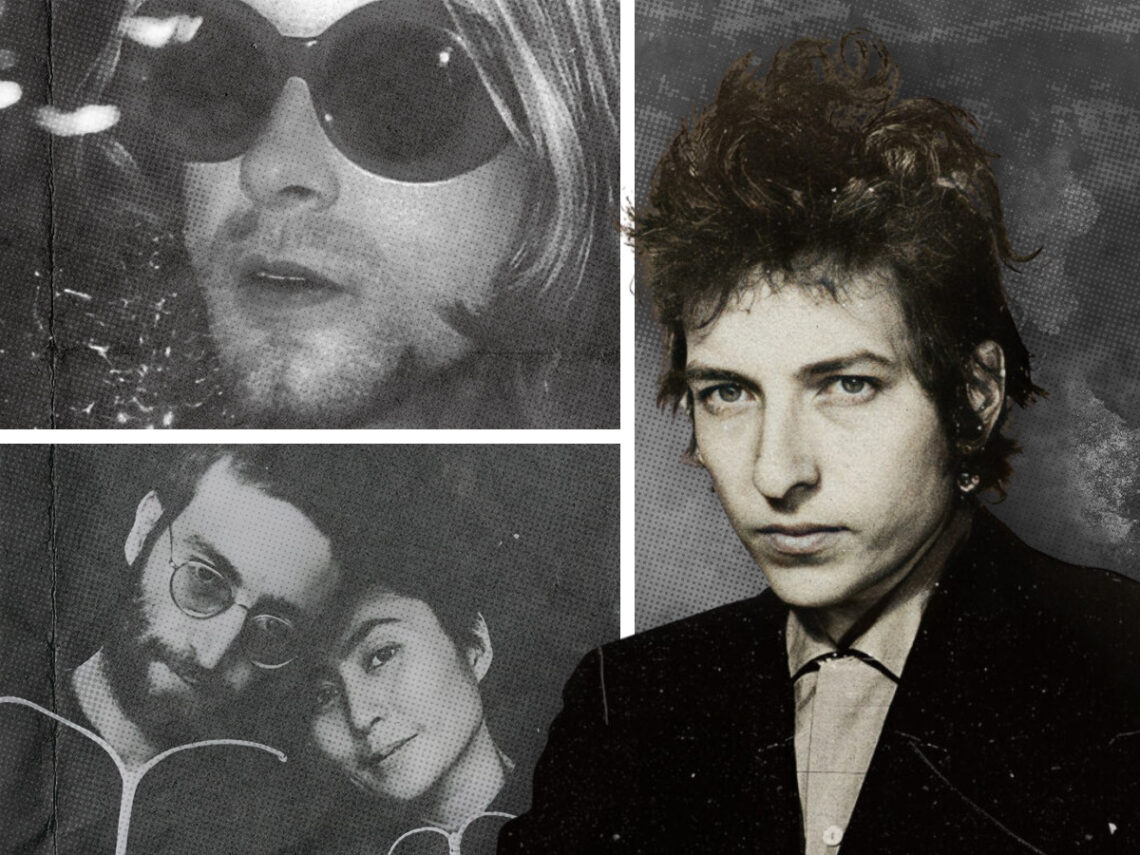
10 albums that were written after emotional turmoil

No matter what the genre, a strong song needs to feed off emotions. Even though it’s pleasurable to turn the brain off occasionally, the best musical creations tend to hit listeners on a deep level, almost like the singer is singing about their life specifically. There might be a lot of happiness there, but artists in this list such as John Lennon aren’t safe from sharing personal pain either.
While some bands like to keep their emotional moments to themselves, these acts listed prefer to channel that emotional turmoil into their songs by crafting tunes that have to do with the hurt they were feeling every single day. Whether dealing with the loss of a loved one, leaving behind a close friend, or having to deal with the music industry, their desperation to find some sort of resolution is clear for all to hear.
Despite being tough to listen to in some spots, these albums offer a look at the real artist behind the typical rockstar facade. It might not be the most glowing version of rock stars in the limelight, but these emotions demanded to be felt, warts and all.
All of these albums are unfiltered glances at artists who are emotionally naked, and leaving their true reflection bare for all to see. While they don’t make for easy listening, the unflinching honesty deserves to be celebrated.
10 albums written after emotional turmoil
Like Clockwork – Queens of the Stone Age
Joshua Homme likely considers himself lucky that he even lived to see another Queens of the Stone Age project. After years of abuse that he had put on his body, his immune system was not equipped for the surgery that he had to undergo prior to 2013’s Like Clockwork, and he was officially declared dead for a few minutes before being revived. Having an encounter with death changes a person, and Like Clockwork is a story of survival.
Bringing in every guest that he could find, Homme’s songs on here feel like a big celebration half the time, from Dave Grohl returning behind the drums for most of the project to wild card guests like Elton John and Alex Turner coming in to add their unique spin on songs. If fans listen to the lyrics, they’ll understand Homme’s headspace. In the songs, he talks about the different existential questions that come with almost dying, from wondering whether he’s going to be here tomorrow to celebrate the moment that he’s living in.
Even on songs not about existentialism, such as ‘My God is the Sun’, Homme is emotionally in tune with the elements, as he’s grateful for the sun shining down on him for another day. While Like Clockwork aims to capture the here and now of everything, it remains timeless because of how many of these questions are unanswered. Homme appreciates this music because not everything that goes around comes back around.
One By One – Foo Fighters
At the start of the 2000s, Dave Grohl was beginning to grow tired of life in the Foo Fighters. Although the band seemed to be on firmer ground with the inclusion of Chris Shiftlett as the lead guitarist, the tension between Grohl and Taylor Hawkins was reaching a boiling point, especially when Grohl decided to drum with Queens of the Stone Age. When he came back together to record an album, the sessions for One By One quickly ground to a halt.
Although the songs available today were already written, the recordings weren’t coming together because of The Foo’s animosity towards each other, with their manager remarking that he wasn’t sure any of the fans would buy the record upon release. After a screaming match prior to a festival, Foo Fighters were dangerously close to breaking up before Grohl came back into the studio with the song ‘Times Like These’, which helped restore his commitment to his main outfit.
The only problem? They recorded an album that none of them liked. After re-recording most of the tracks from scratch and throwing away a million-dollar record, One By One became home to classics like ‘All My Life’ and ‘Low’, which remain some of the most ferocious songs in their canon. Although a few of these songs have a permanent spot in their setlist, Grohl said that he never wants to revisit this album ever again.
Echo – Tom Petty
The making of Tom Petty’s Wildflowers was the calm before the storm. As much as The Heartbreakers were working together and enjoying every day in the studio, Petty was using these sessions as a method to escape from his personal life. As tensions were mounting at home, drummer Stan Lynch was fired from the band, and Petty found himself lost in the woods during the making of Echo.
Although the songs are still the same heartland rock fans expected, most of Petty’s involvement is kept to a minimum as he goes through the throes of divorce. Spending most of his time outside the studio in a chicken shack, Petty wasn’t taking care of himself and it’s audible in every word he sings, as he’s pleading with his lover to stay with him for a while on ‘Room at the Top’ or hearing the sound of her voice reverberating in his head on the title track.
While Petty might have written the songs, he admits to not driving the car on this record, with most of his backing band picking up the slack, such as Howie Epstein’s backing vocals on ‘Swingin’ or Mike Campbell getting behind the mic for a tune. Petty’s records have always had that fighting spirit, but this is far from optimistic. This is looking into the mind of a songwriter hitting an emotional low point.
.5 The Gray Chapter – Slipknot
Slipknot’s music is unashamedly ugly. Outside of their ridiculous stage getups, some of the best songs they’ve ever made have thrived on having a few disturbing images on them, like the warped look of reality happening throughout most of Iowa. It’s one thing to sing about raw anger and frustration, but it gets complicated when that pain happens in the band.
Shortly after the tour for All Hope Is Gone, Paul Gray passed away from a drug overdose in a hotel room. Though Slipknot had a few tribute shows to honour their former brother, it was going to be a long road to making a new album. After parting ways with original drummer Joey Jordison, .5 The Gray Chapter was the result of all the pain ‘The Knot’ had endured for the past few years, talking about what they could have done differently to help Gray and the anger that they feel for having to live with their own guilt.
While Slipknot’s trademark anger is still there, a part of the album keeps things at arm’s length, as if they’re still trying to digest everything and closing off certain sides of themselves for fear that they’ll go past the point of no return. Even though this might not be as hellish as Iowa or as hooky as Vol. III, this album deserves a spot in Slipknot’s catalogue strictly because of how honest it is with its fans.
Blood on the Tracks – Bob Dylan
Any major emotional moment is going to find its way into the world of the singer-songwriter. The old adage is to write about what you know, and after being heartbroken, songwriting can act as a cathartic exercise. However, for a magician like Dylan, this wasn’t going to be an album of moping around.
Starting from ‘Tangled Up in Blue’, Blood on the Tracks is Bob Dylan coping with the separation from his wife, taking fans through the different stages of grief along with him. While the initial start of the album tells the story of them coming in and out of each other’s lives, the rest of the record is Dylan dissecting why his nerves are so raw, venting his frustration on songs like ‘Idiot Wind’ and wallowing in his sadness on something like ‘You’re Gonna Make Me Lonesome When You Go’.
Going through the album, every song seems to be taking place at another time in his heartbreak, including finding some confidante to help him through everything on ‘Shelter From the Storm’. Although Dylan recorded the album twice after being told the first version was too sad, the final version doesn’t pull any punches, with ‘Buckets of Rain’ closing everything out by saying that Dylan doesn’t have all the answers to his heartache. Sometimes these stories don’t have a happy ending, and fans need someone like Dylan to remind them to move on with their lives.
Automatic for the People – R.E.M.
Rock and roll has always been a young man’s game. Ever since The Who talked about wanting to die before he got old, bands have played the game of time, either looking to ride their fame for however long they’ll have it or coaxing by on the nostalgia circuit. No one answered the question of what happens when rockers get old, and R.E.M. tried to find their own answers on Automatic for the People.
At the time, they were approaching a decade in the music business; much of this album is Michael Stipe reflecting on what brought him to be in the biggest alternative band in the world, being thrust into a world where no one tells him where to go on songs like ‘Drive’. While turning 30 might not be that huge a milestone for life, much of this album has to do with mortality, from a woman on her deathbed welcoming the afterlife on ‘Try Not To Breathe’ to pleading with the next generation to hold onto their lives while they can on ‘Everybody Hurts’.
There’s definitely a cynical streak here, but most of the record has to do with holding onto the good times for all they’re worth, like the dark optimism behind ‘Sweetness Follows’ or remembering the freedom of innocence on ‘Nightswimming’. This may have been one of the more lowkey R.E.M. albums, but this wasn’t meant to rake in the huge rock and roll crowds. This was about living for the moment and finding out if the band still had something to say.
In Utero – Nirvana
Kurt Cobain never wanted to be an icon. Although he might have been looking for Nirvana to be popular in the underground, seeing his band be embraced by MTV and become the biggest act in rock wasn’t the life he desired. Cobain wanted to tear down everything that made Nirvana special, and In Utero was the sound of him disassembling his legacy.
From the moment the first blast of noise hit people’s eardrums, Cobain is going for a much different tone on this album, talking about how the rock and roll dream that he had been chasing for so long had brought him nowhere, venting his frustration on songs like ‘Serve the Servants’. Now that he was a star in the media, Cobain started to feel more like a puppet than a human being, going to one concert or interview after another and getting more fed up with the media machine every time.
Though his knack for writing pop songs hadn’t left him on tracks like ‘Heart Shaped Box’, songs like ‘Dumb’ tapped into something a little more real. After struggling with depression, Cobain is hitting bottom here, thinking that he can only feel happy when he feels dumb or in ‘Frances Farmer’ where he can’t even feel sadness anymore. Cobain tragically passed away six months after the album was released, but when listening to parts of this record, it heartbreakingly seems part of his emotional state had checked out a long time ago.
Temple of the Dog – Temple of the Dog
By the time grunge took over the world, it wasn’t the most wholesome genre in the world. Though Kurt Cobain’s death may have cast a shroud over the entire scene, the original end of innocence was when Andy Wood passed away from a drug overdose, leaving former roommate Chris Cornell completely distraught. While Cornell was meaning to write a few tribute songs for his friend, he managed to convince the surviving members of Mother Love Bone to come in to record these tunes.
Although Temple of the Dog still has an immediacy to it, the whole thing feels like a prolonged Irish wake, as a group of friends come together to mourn one of their own. There aren’t any barriers between the band and the audience here, with ‘Say Hello to Heaven’ being a poignant song about Cornell making peace with Wood moving into the afterlife. Although this was always meant to be a one-off, it also sparked the idea of one of the greatest bands of the ‘90s.
After coming up from San Diego, Cornell suggested that one of the band’s friends Eddie Vedder hop on the song ‘Hunger Strike’, which planted the seeds for Pearl Jam once Cornell left the sessions to return to Soundgarden. Every song on this album is filled with sadness, but it’s not meant to wallow in that space. It’s about turning that grief and making something beautiful out of it.
Plastic Ono Band – John Lennon
There was no set path for John Lennon to take after The Beatles broke up. While Lennon may have been the leader of the world’s most popular band, he had a lot to unpack once he cut himself loose, going into primal therapy and trying to come to terms with his anger issues and emotional turmoil. Other patients may have tried to fight their way through therapy, but Lennon’s way of dealing with demons was to put them into songs.
Throughout this album, Lennon is as honest as possible, talking about his troubled relationship with his parents in the song ‘Mother’ and trying to come to terms with what it means to be a citizen of the world on ‘I Found Out’. Though the traditional Beatles sound is still in there somewhere, the most cathartic moments are where Lennon lets his raw nerves show, from the acoustic guitar on ‘Working Class Hero’ to screaming his lungs out on ‘Well Well Well’. Although this album may have come out in 1970, the raw intensity of these songs is almost a precursor to grunge and alternative, considering how much Lennon is willing to put his guard down.
No fan of The Beatles could have prepared themselves for ‘God’, as Lennon cast away all of his idols before he says that he doesn’t believe in his former band. This was a hard pill to swallow at the time, but it was in Lennon’s best interest to carry on with his life. The ‘70s were a new decade, and he had to come to terms with the fact that the dream was over.
Blackstar – David Bowie
Death is the only constant humans can count upon in life. Even though people might try to run away from age or their own mortality, no one is safe from having to deal with passing on to the next astral plane. Most people might like to do such things in private, but ‘The Starman’ wanted to share his final moments with his audience. During the final years of his life struggling with cancer, David Bowie put out Blackstar only a few days before his death in 2016.
Across seven tracks, Bowie confronts what his death means to him, struggling with feelings of fear of what’s on the other side to be brave in the face of the disease that’s slowly eating him away. Throughout this album, Bowie is reflecting on the life that brought him to this point, thinking about what his public image is going to be like once he’s no longer here to say his piece and trying to stay authentic to himself even when times are grim. Though there is a bit of theatricality throughout this album, nothing on this album feels phoney for any reason, as Bowie talks about sharing his thoughts with the world and even knowing that some things need to stay private until the end of ‘I Can’t Give Everything Away’.
In the last years of his life, Bowie could have been seeing the world for the last time, but he chose to spend that time making music for his fans. Underneath all of that stage makeup, Bowie was an extension of his music, and this album is him looking death right in the face, determined to carry on even if it kills him.
