


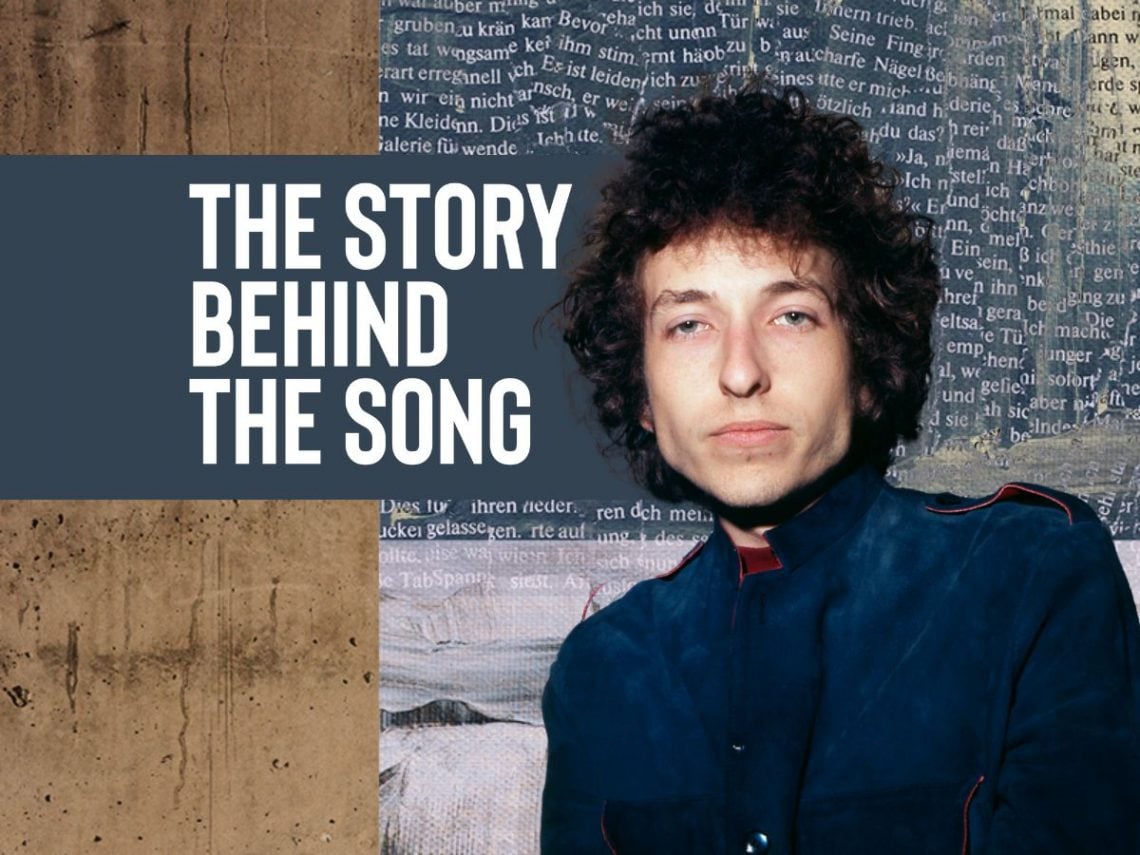
The Story Behind The Song: Decoding the autobiographical nature of Bob Dylan’s ‘Tangled Up in Blue’

I could go as far as to say that Bob Dylan‘s ‘Tangled Up in Blue’ is the legendary songwriter’s best-ever song. That said, given the fact that he has such an extensive back catalogue, the case could be made for several of his other masterpiece tracks. The song is the opener from one of Dylan’s best albums, 1975’s Blood on the Tracks.
Narratively, the track explores the nature of lost relationships and sees Dylan lament the passing of an old love. However, whether Dylan wrote the piece from an autobiographical perspective remains to be seen. We can hopefully piece together the facts and discover more about the song.
Dylan wrote the material in the summer of 1974 after he had completed his comeback tour playing with The Band. He had also recently separated from his wife, Sara Dylan, whom he married back in 1965. That autobiographical facet of the song certainly seems present as Dylan takes us through the hardships that the end of a relationship and its resulting distance and longing can bring.
Discussing the shifting in narrative perspective, time and place, which are the central features of the song, Dylan noted: “What’s different about it is that there’s a code in the lyrics, and there’s also no sense of time. There’s no respect for it. You’ve got yesterday, today, and tomorrow all in the same room, and there’s very little you can’t imagine not happening”.
Dylan also once addressed the suspected autobiographical nature of the song, claiming that it did not feature as much of his life as many thought. “It didn’t pertain to me,” he said. “It was just a concept of putting in images that defy time – yesterday, today and tomorrow. I wanted to make them all connect in some kind of a strange way.”
Then in his 2004 memoir, Chronicles: Volume One, Dylan claimed that the entirety of Blood on the Tracks had been based on short stories by the Russian writer Anton Chekhov. “Critics thought it was autobiographical – that was fine,” he wrote. While Dylan claims that the album did not feature as much of his own life as it seems, it should be noted that his breakup with Sara Dylan was most likely at the back of his mind when writing it, even if not right at the front.
The theme of love is evident in lines like, “I lived with them on Montague Street / In a basement down the stairs”. Montague is, of course, Romeo’s surname in William Shakespeare’s Romeo and Juliet, while on the actual street in Brooklyn, there was a venue called Capulet’s (Juliet’s surname and a place Dylan would frequent), reinforcing the fact that the song is about two star-crossed lovers who are destined to have their love fall into disarray.
Another interesting facet of the song’s lyrics is the fact that during Dylan’s world tour in 1978, he changed the line, “She opened up a book of poems”, to “She opened up the Bible”, which shows that Dylan appeared to have been converted to Christianity after exploring the nature of his faith throughout the 1970s.
Dylan expert Michael Gray notes that the song is indeed about a long-standing love affair that explores how the “past upon present, public upon privacy, distance upon friendship, [and] disintegration upon love” affects the kind of romantic relationship expressed in the lyrics. Dylan had also claimed that the song took “ten years to live and two years to write,” so whether or he admits to the song being truly autobiographical in nature, it simply remains one of his best.

Never Miss A Tale
The Far Out Bob Dylan Newsletter
All the latest stories about Bob Dylan from the independent voice of culture.
Straight to your inbox.