


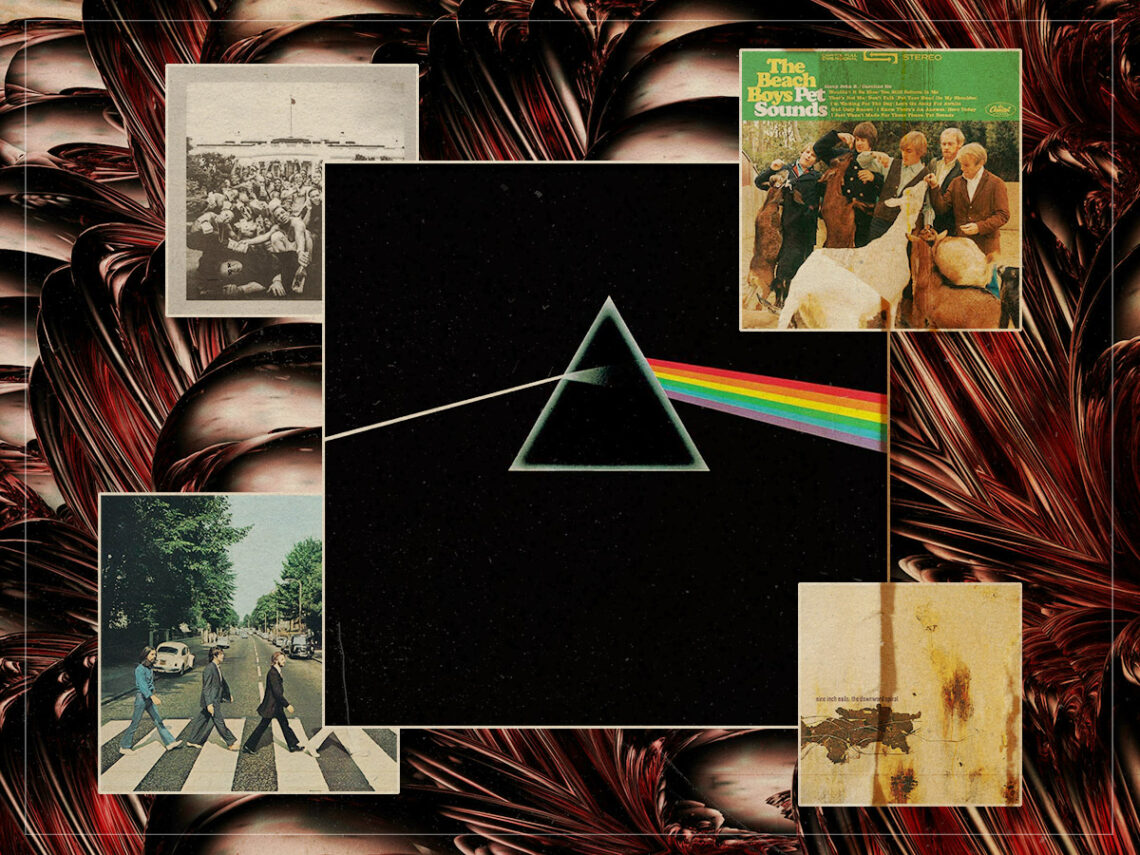
10 albums that need to be heard straight through

In an age of streaming, there comes a point where the idea of an album seems to get lost. Everyone knows what the track layout is going to be the minute they open up Spotify, so there’s no real element of surprise when they pick up a record for the first time and go through the tracks without knowing what’s coming next. While many people deemed old farts these days will always go back to the pure album format, records from the likes of Pink Floyd prove why they are so vital to the musical experience.
Because, really, an album is meant to be a statement more than a collection of songs. Each record is meant to have tunes that speak to each other in a unique way, and in the case of every album here, part of the entire experience is being robbed from the listener if they decide to pick and choose the tunes they like. For example, Michael Jackson’s is a fantastic collection of classics, but a true “album’s album” is what leaves people shell-shocked over the course of 40 minutes.
And while it would be easy to list out ten different concept albums for such a list, that’s not the reason why an album needs to be listened to in full. A compelling story behind a rock opera might be a good way to get people to stick around, but even if they are simply like-minded tracks, the format is what allows people to see the genius going on in every one of them over the course of its runtime.
It might not be the most orthodox way of listening to music now, but the true artists have even managed to keep the album medium going to this day by leaving little details for the listeners to discover on every listen. Because in an era that is inundated with bands trying to fill out their records to get maximum streaming numbers, the musicians among them can turn a handful of tunes into a grandiose statement.
10 albums that need to be heard straight through
Horses – Patti Smith

If anyone is putting together an entire album of material, there has to be some sort of meaning between every tune. The entire singer-songwriter genre had shown that the industry could be about something greater than a bunch of catchy tunes, and bands like The Velvet Underground had opened people’s eyes to what could be done with instruments that sounded far more abrasive. Patti Smith may not have wanted to go that far, but you could bet that she was going to speak her truth when Horses out.
Looking to fulfil the kind of rock and roll dreams that all of her heroes either did or never got the chance to do, the real standouts behind Smith’s opus come in the episodic tunes. Not many people had the chance to listen through a song that verged on ten minutes, but listening to ‘Land’ gave everyone a greater understanding of what Smith’s words were all about, dealing with her feelings or mortality and the importance of appreciating life before it passes her by.
Even though tunes like ‘Gloria’ have taken on a new life thanks to Smith’s legacy, the only way to appreciate ‘Elegie’ is to go through all of the stages beforehand before the album comes to a close. We had spent the better part of an hour talking about the importance of living in the moment, so when she says the line about how it’s far too bad that her friends couldn’t be here with her, it acts as one of the biggest gut punches in music history.
Thick as a Brick – Jethro Tull

The entire prog rock genre as a whole was all about the idea of concept albums. Even if not every song bled into each other, bands like Rush and Yes had no problems creating songs that felt more like classical movements, complete with six or seven different musical motifs spread out across one side of a record. When you work in that field, it can get pretentious really fast, so it’s nice to have someone like Jethro Tull to help us see the funny side of everything.
While Tull was already one of the most forward-thinking bands of the prog-rock era, Thick As a Brick is the kind of record to please and piss off every prog fan. Since the entire album is made up of one long song stretched out over two slabs of vinyl, the listener basically has no choice but to go along for the ride, with Ian Anderson even half apologising at the beginning of the piece, saying that he really doesn’t mind if some of the more fairweather fans tune them out.
For anyone willing to go on the adventure, though, this is one of the funnier trips through progressive rock grandeur, including some pieces that seem to be playing into the cover design but talking about different topics the same way people discuss the various items in a newspaper column. The live show may have taken the song to the nth degree by bringing out different characters onstage, but anyone willing to listen to an abbreviated version of the tune is sorely missing the point.
Splendor and Misery – Clipping

The best kinds of albums normally don’t have a traditional stopgap like every other record does. Some may dwell on certain songs as being the centrepiece for an album, but the best way to look at a project of this size is to see it as some sort of elaborate stage play. And while Daveed Diggs was no stranger to playing different characters on Broadway, his project Clipping ended up turning in one of the most experimental takes on what a sci-fi story could sound like on their sophomore record.
While their debut was a nice piece of alternative hip-hop, the true magic behind Splendour and Misery is the fact that it’s practically an auditory theatrical production stretched out for the length of an album. With a genre as attuned to vocals as hip-hop is, though, the exposition pieces of the project never seem to be too wordy, with Diggs enunciating every word as he plays the role of both the captive on board this ship who stands as the last piece of humankind or the AI system that’s navigating where they’re going.
The story might be a bit open-ended after he puts himself back into cryosleep one more time as the ship leaps across galaxies, but it’s probably for the best that they didn’t explain where he would be going out amongst the stars. The vast landscape of space invites loads of different adventures, and even if no one knows where he went, let’s hope that it’s some place better than the endless void.
Quadrophenia – The Who

When it comes to continuous albums, Pete Townshend may as well be the forefather of writers who dared to dream bigger. Many had tried to take their listeners on a journey before The Who, but the concept of telling a story over the course of an entire album was what Townshend helped perfect with Tommy. But whereas a tune like ‘See Me Feel Me’ or ‘Pinball Wizard’ can fit outside the context of the story, Quadrophenia feels more like one elongated piece that keeps piling on new ideas.
Since Lifehouse never came to fruition, this feels like everything Townshend was working on finally becoming realised. He had been working with tunes that had the same attitude as ‘The Real Me’, but he was finally able to paint with a broader brush here, eventually separating his main character’s journey into different chapters before arriving on the rock at the end of the album.
And while ‘Love Reign O’er Me’ does have the same staying power as ‘Won’t Get Fooled Again’ and can be played on its own, it’s never going to feel the same without the rest of the album. This is a moment of desperation on the part of Jimmy, and the only reason that desperation can come across is if everyone knows the nightmare it took for him to get on that rock in the first place.
The Downward Spiral – Nine Inch Nails

Trent Reznor knew that he chose wrong thinking that becoming a rock star would solve his problems. He came out of the gate swinging with Nine Inch Nails, but the minute that ‘Head Like a Hole’ became one of the biggest albums in the world, he knew that he would still have the same problems breathing down his neck no matter what. When you get to that low of an emotional state, though, you start thinking more along the lines of what Mr Self Destruct goes through on The Downward Spiral.
While Broken did prepare fans for something dangerous and moody, this descent into madness is one of the most audibly heinous pieces in his catalogue. There are hit singles to come from this record like ‘Closer’ and ‘March of the Pigs’, but the lion’s share of it features tunes that can only be listened to within the context of the full tracklist, like the clinical beauty of ‘A Warm Place’ or hearing him shriek to the heavens on ‘Eraser’.
And by the time we finally reach ‘Hurt’ and those final distorted guitars come roaring in on the final chorus, we realise that this story doesn’t have a happy ending. The protagonist knew that he made a grave mistake, but while we may know what he had done differently, it’s far too late for any kind of repentance.
Discovery – Daft Punk

The best dance records were never meant to be listened to in the same way that people listened to pop records. Thriller had a lot of jams that people could sing along to, but as far as dance albums went, the only rule was to have tunes that would get the people to move on the dancefloor for as long as the record lasted. But Daft Punk knew that there was always another layer to their signature sound, and what makes the album a must-listen from front to back has almost nothing to do with the music.
No, that belongs to Interstella 5555, the visual accompaniment that went with the tunes. Although the visual album has become a more accepted art form nowadays, the idea of making an entire animation company create a feature-length music video to the record was a stroke of genius. ‘One More Time’ was already a great tune, but hearing this lovable group of humanoids going through an adventure set to ‘Digital Love’ and ‘Something About Us’ is far more interesting than hearing the robot voices on the record.
It’s easy to hear a tune like ‘Face to Face’ and pick out the different samples, but the main objective of the album is about doing more than dancing. It’s about getting in touch with that kind of nostalgia that made you discover music in the first place, and while it might not be everyone’s cup of tea on every track, there’s something to be said for a dance album that can get you misty-eyed while moving your legs.
Pet Sounds – The Beach Boys

When The Beach Boys were first starting out, the album was still a relatively new art form. It may have been a good stopgap and a decent place to compile all of one’s best singles, but Brian Wilson was transfixed with doing something more with his gifts. He could reach far beyond writing songs about girls, cars, and the beach, and when he heard The Beatles’ Rubber Soul, he created the kind of pop odyssey that wouldn’t be truly appreciated until years after the fact.
While it’s impossible to think that Pet Sounds flopped, no one had a good idea what they were listening to at the time. ‘Wouldn’t It Be Nice’ was a fine Beach Boys tune, but by bringing in every member of the Wrecking Crew to work on the project, the whole project feels constructed in the same way that an orchestral piece is made, complete with the kind of musical movements that no one expected out of a pop group before like the breakdown of ‘God Only Knows’.
Although Wilson’s attempts to top it eventually fell apart when trying to make the album Smile later, that shouldn’t negate the amount of effort he put into his magnum opus. Every fan will wonder what could have been had he been able to finish the follow-up in his prime, but you don’t need another masterpiece when you’ve already written something that makes people’s hearts dance like this.
To Pimp a Butterfly – Kendrick Lamar

By the time of To Pimp a Butterfly, Kendrick Lamar was already one of the best rappers alive. He had been an up-and-comer for years at that point, but Good Kid Maad City was the first time that most people got to hear what hip-hop could be when it was fully invested in a concept. Although anything that came after that benchmark record would be compared to it, To Pimp A Butterfly took everything grandiose about its predecessor and made it a celebration of the album format.
The album itself is already steeped in the jazz and funk traditions that all great hip-hop samples are based on, but what keeps people listening is this spoken-word piece that Lamar keeps playing throughout it all. As soon as one track or movement ends, he will get further on in the poem before going on to the next tune, which deals with the problems he was facing in the line that ends that particular section.
With so much suspense building up, ‘Mortal Man’ is where everything comes full circle, where Lamar reveals that he’s been writing this poem to Tupac Shakur, after which they have a brief conversation before he gets cut off. Considering what Lamar was talking about and the kind of guidance that he talked about needing from his hip-hop mentor, the fact that he leaves the album with even more questions is one of the greatest cliffhangers that any artist could have pulled.
Abbey Road – The Beatles

Any list of albums that need to be listened to from cover to cover could easily be made up of the last projects The Beatles worked on. They had been interested in spreading out ever since Rubber Soul, and by the time they set to work on Sgt Peppers, it was clear that the cheeky lads with mop-top hairdos were dead and had been replaced with artistic thinkers. That was only the jumping-off point, though. Abbey Road was where they got the opportunity to get much more freaky.
Aside from being the best album the Fab Four ever released, Abbey Road is only as good as it is because of the variety in the tracklist. The first side has some of the most inventive tracks of their entire career, but after we get into side two, the medley at the very end is where they hold nothing back. Even if the whole side was about connecting tonally disparate songs, the whole thing fits together like glue, especially towards the end when they engage in those final guitar solos together.
Even though Let It Be was released after Abbey Road, the long journey that they take you on throughout this album is the true finale that everyone deserves to hear. Because when McCartney sings “In the end the love you take is equal to the love you make”, he’s not only saying it to his audience. He’s also reminding himself about the power that comes with that one emotion that he and the rest of his bandmates couldn’t get enough of.
Dark Side of the Moon – Pink Floyd

The idea of making any Pink Floyd greatest hits album practically feels like a pipe dream. There are plenty of compilations that throw together some of their best material onto a single disc, but it’s almost sacrilegious to take one of their albums apart and include a hodgepodge of their best stuff. While it’s easy to pick and choose pieces of The Wall or take the title track off Wish You Were Here, Dark Side of the Moon is one of the few albums that need to remain untouched throughout its runtime.
The whole concept around what drives people mad was already worked out well in advance, but hearing every band member show off throughout the piece is one of the finest moments in prog history. It’s practically a crime to call most of the tunes individual tracks; if anything, they’re different movements of the piece that give the listener a gauge for where they are, whether that’s the cry of anguish in ‘The Great Gig in the Sky’ or the ringing registers that open up ‘Money’.
Even the transitions on the final product are seamless, especially when ‘Us and Them’ bleeds into the synths of ‘Any Colour You Like’ or the bright ray of musical sunshine on ‘Eclipse’ after coming out of ‘Brain Damage’. Pink Floyd had already adopted the album as their art form, but even by the standards that were set by everyone from The Beatles to Led Zeppelin, this is one of the albums that vinyl was made for.

Never Miss A Beat
The Far Out Beatles Newsletter
All the latest stories about The Beatles from the independent voice of culture.
Straight to your inbox.