


10 albums that have become incredibly dated

Time is never on the side of the biggest names in music. Although it’s nice to capture the cultural zeitgeist at the time you release a classic, it’s anyone’s guess whether an album is going to sound great on repeated listens or become absolutely dreadful looking back after 20 years. And while many big names like Ringo Starr do have some fantastic albums to their name, what might have been considered state-of-the-art at the time only sounds unintentionally hilarious today.
That’s not to say that there aren’t some great tracks on every one of these projects. Even though an album is dated, that doesn’t mean that it’s terrible from cover to cover, and there are still some pieces of every one of these albums that could be absolutely spellbinding had they been released with a different production job behind it.
And that’s before getting into the lyrics as well. While many people try to write songs that are universal whenever they perform, there are a few that now feel timestamped in their respective eras for one reason or another, whether it’s an issue that has been resolved or referencing fashions that only existed at the time.
So even though there are some gems in here, there will be the odd tune that leaves people scratching their heads and wondering what the hell artists are talking about. Then again, it’s hard to call what’s going to stand the test of time, and while some have aged like fine wine, others have aged like fine yoghurt as well.
10 albums that haven’t aged well:
10. Pop – U2
U2 have always made their legacy off of sounding like the most important band in the room. Even when working on their 2000s output, they still seemed to be on the cusp of making something that no one else had ever attempted, even if the music itself blended somewhere between their usual sound and dad rock half the time. While Bono’s preachiness still has a place in their music, listening to them loosen up and get with the times in the late 1990s was one of the biggest musical follies.
First of all, U2 had already been at the forefront of the counterculture at the beginning of the decade. They still had enough goodwill coming off of Achtung Baby, and even if Zooropa was a little bit strange, seeing them take chances was a lot more fun than watching them try to make the kind of drum and bass music that seemed below their usual standard.
While the Irish legends were known to have a lot of exotic rhythms going on underneath them throughout their tenure, hearing them trade that in for the Village People getups on ‘Discotheque’ was the first sign that things were going wrong. Half the reason why people loved ‘The Fly’ was because Bono was clearly doing a pastiche of what larger-than-life rock stars were, but this was the moment where that line between him and the persona got a little too transparent.
9. Slang – Def Leppard
This entire list could have easily been comprised of the millions of hair metal acts that tried to gain a foothold in the late 1980s. Considering what we know now about history, watching every wannabe artist try their best to strut up and down the block and try to get the attention of a record label feels all the more sad when grunge comes in to blow away any other rock and roll outfit in Los Angeles. Then again, sometimes, the spiral from one band sticks out more than the dated production of their previous work.
Although Def Leppard should still be considered one of the best acts to come out of the 1980s, they weren’t safe from the alternative revolution when Slang came out. Despite everyone at the label thinking it was a bad idea, hearing them take away all of the layers of their production and replace them with riffs that sound like they should be on a discount Pearl Jam record made them look a lot more out of touch than they would have been if they stayed the course.
Looking at where they were on Euphoria at the end of the 1990s, things started to sound much happier and carefree for them to rise to the occasion again. Def Leppard could have waited it out if they wanted to, but most people will still remember them making their best Nirvana impersonations and seeing those massive hairstyles get traded in for grunge fringe.
8. Dog Eat Dog – Joni Mitchell
Half the reason why Joni Mitchell’s work best material works is because of how natural it sounds. While people like Neil Young have made a living by making their music sound rustic, Mitchell’s best moments come when she’s sculpting her tunes like a piece of architecture, almost using jazz players as different tools to get the right sound she wants. So when all of that is replaced by a few synthesisers, you’re not only losing Mitchell’s sound. You’re losing half of what made her sound great.
Granted, it’s hard to be that hard listening to Dog Eat Dog. It’s clear that Mitchell’s knack for melodies is still there, but the fact that they’re screaming out from underneath layers upon layers of synth-pop is grating after a while. Even if other 1970s rock legends hopped on the bandwagon like Rod Stewart, Mitchell seemed far less suited to it, culminating in a record that sounded like it was kicking and screaming upon release.
And with only a handful of tools to work with, Dog Eat Dog feels like the kind of record that Mitchell got forced into making rather than an honest labour of love. Whereas half of her songs sounded like listening to pieces of Mitchell’s soul, this is the first time where she managed to be the one thing she had avoided her entire career: one note.
7. Scream – Chris Cornell
No artist owes it to their fans to make the same record over and over again. There’s a certain freedom that comes with going into the studio, and even if not everything hits the audience the same way, it at least serves to paint a broader picture of what the music is all about. And while Chris Cornell had his fill of heavy rock by the time he left Audioslave, the choice to work with Timbaland may have been a few too many steps over the line.
Then again, it would have been hard for most people to get on board with this kind of record if the songs were actually decent. The idea of Cornell trying on a Justin Timberlake impression was never going to sit well with fans, but once people got a listen to what the singles were, it sounded like something that was halfway between an experimental art-rock record, an authentic Cornell solo album, and some custom schlock that someone throws on the radio to drown out the noise at work.
And it’s not like Cornell didn’t realise something was off, even remarking that Timbaland said people would be mad once they heard what they were doing. It’s still a respectable effort, but coming from the person responsible for stirring songs like ‘Like a Stone’ and ‘Spoonman’, no one asked him to make the rock and roll equivalent of ‘Rock Your Body’ or ‘SexyBack’.
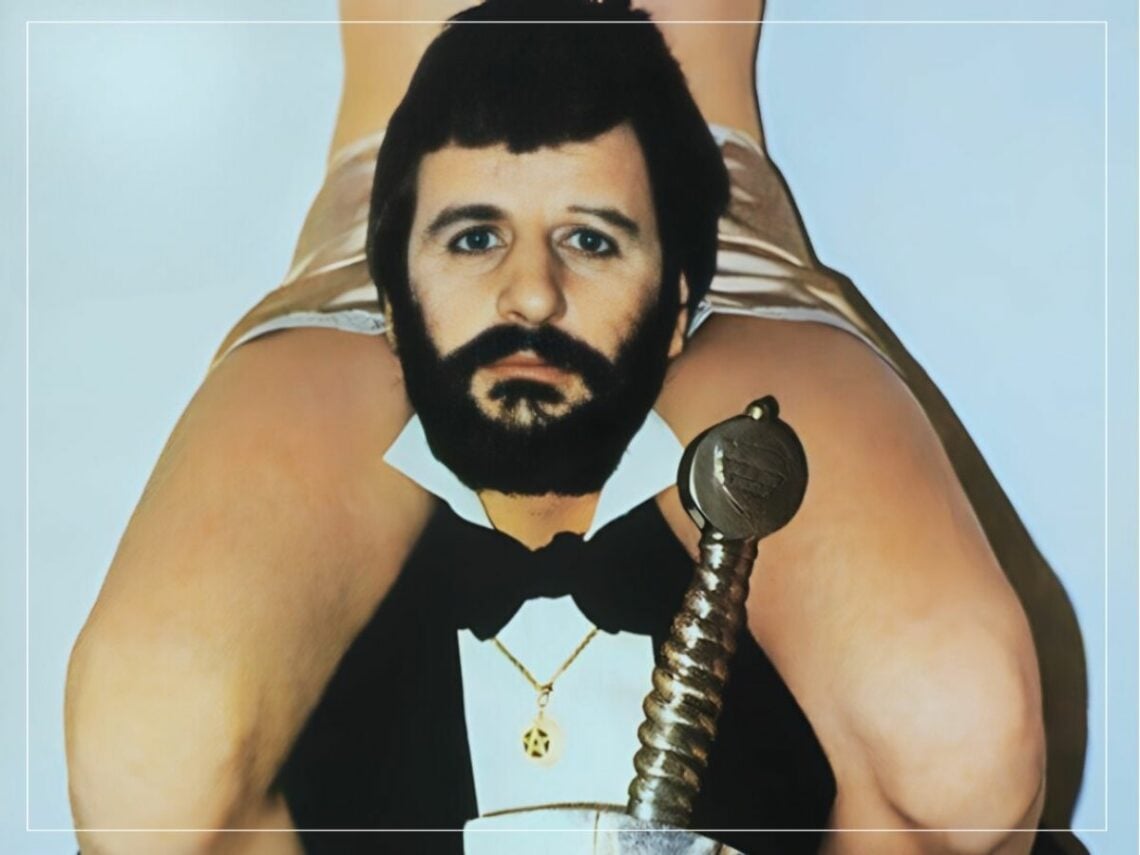
6. Ringo the 4th – Ringo Starr
Throughout every facet of The Beatles’ career, it was impossible to hate on Ringo Starr. Even if he admitted that he didn’t carry the same weight as the songwriters in the group, his way of sitting in the song and writing the best drum part for every tune he came across is half the reason why The Beatles worked so well together. While he managed to stay afloat fairly well throughout his solo career, his idea to jump on the disco train is still something that fans are trying to figure out.
While many acts were trying to incorporate that same danceable groove into their songs, Ringo the 4th is the cheesiest attempt at disco the 1970s ever made. Even though some of the tunes are at least passable, hearing Starr carry them isn’t the right fit, especially when he tries to put some muscle into ‘Drowning in the Sea of Love’ and ends up sounding like everyone’s lovable uncle trying out karaoke after a few drinks.
And despite having decent sales from his solo career, Ringo the 4th remarks a significant downshift in quality that would define how Starr looked to the public for a few years. He could still fill stadiums full of people wanting to hear ‘Octopus’s Garden’ or ‘It Don’t Come Easy’, but there’s a chance that no one has thought about a song like ‘Tango All Night’ since the ball dropped on New Year’s Day 1980.
5. A Momentary Lapse of Reason – Pink Floyd
It feels strange talking about dated albums when it comes to Pink Floyd. Throughout their career, half of their material was about crafting songs that were about the general aspects of life, and by keeping things sparse, records like Dark Side of the Moon have managed to sound absolutely timeless as the years roll by. While anyone who had to go through the recording process of The Wall and The Final Cut surely needed a break, David Gilmour’s determination led to the kind of record that the 1980s wishes it could forget.
Whereas most people refer to this album as a David Gilmour solo record in disguise, the true crime isn’t the fact that Gilmour is leading everything. No matter how many times tunes like ‘Learning to Fly’ or ‘Dogs of War’ come on now, the biggest problem comes from listening to the gated reverb on everything and the blown-out soundscapes that feel like Gilmour’s best attempt at trying to capture what Phil Collins did on his best records.
At the same time, the band managed to do right by the fans by playing the tracks live, which made them sound a lot more earthy than the other mixes. Because if all we had to go on was the recorded version of A Momentary Lapse of Reason, most Floyd fans would have jumped ship after Gilmour decided to put that 1980s-style echo on everything.
4. Long After Dark – Tom Petty
Tom Petty never tried to put on anything flashy for his fans. What you saw was what you got every time the group played, and even if they didn’t have the most magnetic stage presence, it didn’t matter as long as the tunes still backed everything up. So, for someone who built their living off of making songs that were true to life, who the hell decided to tell them that the way forward was with synthesisers?
Although Long After Dark certainly isn’t a bad record by Petty’s standards, something definitely feels off from the minute that it starts. Since the MTV generation was about to kick into high gear, hearing the synth on ‘You Got Lucky’ and the walls of guitars on ‘Deliver Me’ felt closer to the tunes that would appear on a low-budget 1980s action movie than the organic ditties Petty was known for.
And that turned out to be a bit of a bad habit going forward that Petty wouldn’t soon recover from. A lot of great moments may have come out of Petty’s 1980s material, but if he avoided a lot of the problems that happened on Long After Dark, maybe we wouldn’t have had to deal with the massive amount of clutter on Let Me Up (I’ve Had Enough) a few years later.
3. Dirty Work – The Rolling Stones
The late 1980s were a strange time to be a rock icon. Even though many people were starting to see late-era success like George Harrison with the Traveling Wilburys, there were just as many that put their worst foot forward by giving their songs to a hotshot producer and calling it a day. Even though The Rolling Stones had aged out of their maligned disco period gracefully, Dirty Work is the first time they sounded genuinely fractured.
Whereas an album like Emotional Rescue had a much weaker execution at the start of the decade, Mick Jagger and Keith Richards seem to be lost in the woods trying to put some soul back into the music. Even when they try to make something that’s danceable for the times, hearing them take a stab at ‘Harlem Shuffle’ does them no favours for people who still remember Jagger strutting his stuff next to David Bowie on their cover of ‘Dancing in the Street’.
Considering that Ronnie Wood is far too dominant on the record, he admitted that the album was doomed because of how few Jagger and Richards tunes were on it. Since ‘The Glimmer Twins’ had been on two separate pages by the time the record came out, though, this felt like the kind of release that was meant to please the record company before going out on tour.
2. American Dream – Crosby, Stills, Nash and Young
By the mid-1980s, it looked like the only time that Crosby, Stills, Nash and Young would reunite would be at Crosby’s funeral. His partying during that decade was the stuff of legend, and in between multiple arrests and problems with the law, he seemed like a ticking time bomb that no one wanted to be around to see go off. Neil Young did promise to return to the group if Crosby cleaned up, and when the former Byrd held up his end of the bargain, Young was true to his word and made one of the most fascinatingly bad albums of the band’s career.
Since the lion’s share of all CSNY material is their solo songs, each part of American Dream has a different problem going for it. While no one would blame Crosby for sitting the album out for a few songs, hearing Graham Nash pile on the synthesisers for ‘Shadowland’ and provide cheesy backing vocals for Young’s ‘The Name of Love’ comes off more annoying than it did back in the early 1970s.
While Young at least showed up with decent songs, the same can’t be said for Stephen Stills, especially the song ‘That Girl’, which feels like a parody of what a cool dad thinks the rock and rollers are listening to. Every big name of the late 1960s may have had another shot at the big time in the late 1980s, but once grunge kicked in, Young hopped on the Pearl Jam bandwagon and understandably left this piece of 1980s schlock in the dust.
1. Some Time in New York City – John Lennon
Out of all the albums on this list, most of them come down to how the record sounds. While it’s hard to anticipate what the future of music has to offer, it’s never a good idea to put “cutting edge” production choices into a song as a way of calling your shot as a production genius. It’s sometimes best to keep things simple, but when the subject matter is already dated, John Lennon turned Some Time in New York City into a time capsule before it was even released.
Then again, it’s easy to see what Lennon was going for. Since he had become used to putting politics in his music, having an album that read like a newspaper is at least an inspired idea. When listening to his offerings on the album, though, he gets way too specific with some of the tunes, like talking about The Troubles in Ireland on ‘The Luck of the Irish’ and pushing for advocate John Sinclair to be released on his namesake track.
Even by Lennon’s standards, Yoko Ono manages to be more universal in her songs, like talking about the universal love for one another on ‘We’re All Water’ and advocating for women’s rights on ‘Sisters O Sisters’. For someone who wrote such iconic peace anthems that still hold up today, like ‘Give Peace a Chance’ and ‘Power to the People’, seeing something this specific to its time feels like a massive step backwards.
