


From The Beatles to Ramones: 10 masterful albums recorded amid bitter feuds

The only thing more prone to a break-up than a band is a sitcom couple, and even they tend to get back together amicably — and not just for money 30 years later. Over the years, feuding has become part of the creative process for popular music. It doesn’t just add a dynamic to the music itself and paradoxically ensure that everyone is giving their all; it also dollops a vital dose of drama into the mix. This is a potent potion that has alchemically created many classic albums from The Beatles, The Clash and beyond.
While some bands seem to live in total harmony, there are others, like The Fall, who seem to be permanently docked in tempestuous bays for the fun of it – love really would tear them apart. After all, cohesion is for orchestras hatred is for bands. Perhaps that explains why militant bandleader Don Van Vliet – better known to you and I as Captain Beefheart – once commented: “Most of modern rock and roll is a product of guilt”.
Slightly more metaphysically, you need tension in the music itself. The act of build-up and release is something that induces catharsis, so perhaps that playing out literally in the human comedy of studio dynamics might actually be reflected in the music created within. One thing that is certain is that many a masterpiece has been cut like a diamond amid intense feuding pressure.
Below, we’ve curated some of these rising-cream classics cut in chaos, agro and indifference and perused the wild stories behind them. Whether it’s the soap opera madness of Fleetwood Mac’s Rumours or the surreal counterculture circus of The Doors’ parting 1971 masterpiece LA Woman, each of these proves that art is a symbol of transcendence.
10 masterful albums recorded amid feuds:
Combat Rock – The Clash (1982)
The Clash’s fifth studio album, 1982’s Combat Rock, brought the British punk outfit something their contemporaries could scarcely imagine: popularity Stateside. Thanks to disarmingly hooky tracks like ‘Rock The Casbah’ and ‘Should I Stay Or Should I Go?’, the LP won the band unparalleled mainstream success. It also very nearly destroyed them.
Following the release of Sandinista! in 1980, guitarist and songwriter Joe Strummer started to feel that the chaotic energy that had powered the group for so long was diminishing. Nervous of losing their edge, Strummer and Paul Simonon decided to reinstate The Clash’s original manager Bernie Rhodes.
Mick Jones, unable to relate to his bandmates as he once had, resented Strummer and Simonon’s attempt to salvage the anarchy of The Clash’s genesis. Topper Headon was equally intent on restoring the chaos of the ’77 but did so by escalating his intake of heroin and cocaine. His addiction made him a stubborn collaborator and a liability on tour. Following the release of Combat Rock, he was fired from The Clash, and by 1983, the remaining band members were barely speaking.

A Northern Soul – The Verve (1993)
With Northern Soul, The Verve really hit their stride, which is pretty remarkable considering the making of the album had been a drug-fueled disaster from start to finish.
The creative dictatorship of Richard Ashcroft had made the whole process a complete nightmare, with the frontman refusing any input from other members. At one point, producer Owen Morris smashed his hand through a pane of glass out of sheer frustration. “They did my head in, completely and utterly,” he told Guitar Magazine in 1995. “There you go. That’s life. It’s a fantastic album at the end of the day, but it’s not a process that I’d ever want to go through again”.
It’s no wonder the band split up just three months after Northern Soul was released. Ashcroft managed to reunite the band for the band’s 1997 classic Urban Hymns, but two years later, they split up again. Then, in 2007, Ashcroft got guitarist Nick McCabe and bassist Simon Jones to help him record The Verve’s Forth album. In 2009, a source close to the band told the Sunday Mirror that McCabe and Jones hadn’t spoken to Ashcroft for over a year. “As far as Nick and Simon are concerned, the Verve no longer exists,” the source said [via The Guardian]. “They think Richard was just using the reunion as a vehicle to get his solo career on track.”

¡Adios Amigos! – The Ramones (1995)
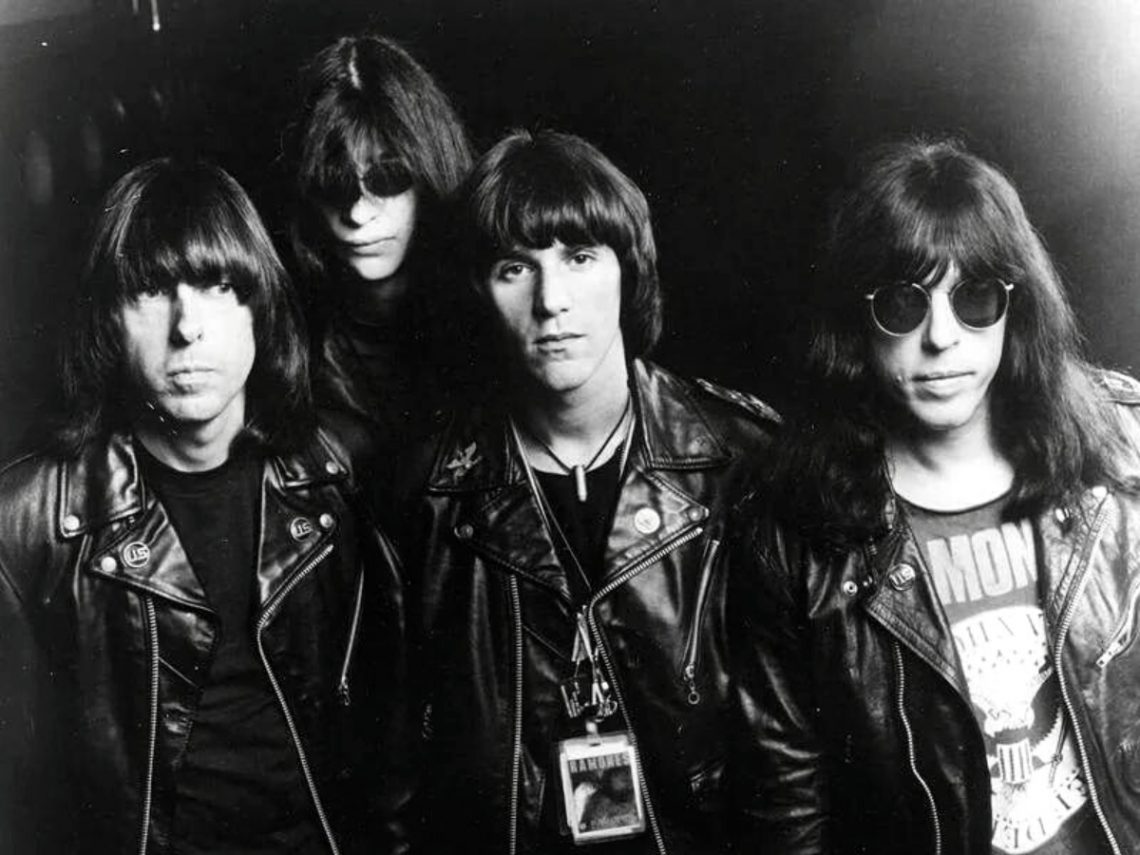
Sure, they agreed to take the same surname for the sake of art, but the individual members of The Ramones were polar opposites. While Joey was shy, docile and peace-loving, Johnny was a cruel, loud-mouthed and frequently violent right-winger. It’s remarkable that they managed to get anything done at all, let alone define the sound and look of American punk rock.
In 1982, inter-band tensions reached new heights when Joey’s girlfriend, Linda Danielle, left him for Johnny. For the next 14 years, the band members barely tolerated one another. By this time, Tommy had already grown weary of Johnny’s outbursts and decided to leave the band. In 1989, Dee Dee also snapped and went off to start a rap career. That made Joey and Johnny the only original Ramones still standing.
To make matters worse, by 1995, Joey’s health – he’d already been diagnosed with Non-Hodgkin lymphoma by this point – was deteriorating, further emphasising the rift between himself and Johnny. ¡Adios Amigos! was released on July 18th, 1995, with Marky Ramone on drums and C.J. on bass. They, too, were barely speaking to each other.

What’s The Story Morning Glory? – Oasis (1995)
Noel and Liam had always argued, but Oasis’ success turned ordinary sibling rivalry into something else entirely. Despite these tensions, the making of What’s The Story Morning Glory? was, according to producer Owen Morris, an enriching and largely pleasant experience. That is, until Liam started nipping down to the local pub.
One night, while Noel was recording his guitar lines, he met the local drug dealer and decided to bring a few people back to the studio. “I probably shouldn’t have bought ’em back,” Liam later admitted. “But I thought we were a rock ‘n’ roll band, you know.” They ended up trashing the place. Somebody let off a fire extinguisher in the farmhouse; another broke one of Noel’s guitars. “It just exploded into a big fucking bunch of chaos like you’ve never seen,” Bonehead recalled.
This all came as a bit of a shock to new drummer Alan White, who had only been with Oasis for two weeks and came to the conclusion that the band must be about to break up. “Nah, nah, nah,” Noel assured him. “This is going to happen all the fucking time.”

13 – Blur (1999)
Judging by the rusted colour palette of Blur’s 13 album cover, by 1999, Damon Albarn was not a happy bunny. But it wasn’t just the end of Albarn’s long-term relationship with Elastica’s Justine Frischmann Blur had to navigate. Though confident they needed to a change of direction, the members of Blur couldn’t agree on which direction to take.
After moving in with visual artist Jamie Hewlett and starting work on what would become Gorillaz’ debut album, Albarn joined Blur in the studio to record 13. Tensions ran high from day one, with producer William Orbit observing a “battle between Damon’s more experimental direction and Graham’s punk one” [via Uncut]. Graham’s prevailed, but resentment had already set in.
13 was very much Blur’s Let It Be. The rift between Damon and Coxon made things difficult for the rest of the band. According to drummer Dave Rowntree, it wasn’t long before people started up turning up drunk to sessions, not turning up at all, and hurling insults at one another. In No Distance Left To Run, bassist Alex James recalls knowing “how George Harrison felt” during the making of The Beatles’ final album. “I had songs,” he explained. “I played them to William. He liked them. But I was sulking. I didn’t play them to the others…”

Let It Be – The Beatles (1970)
The infamous Let It Be feud is the most talked about and well-documented in music history, not least because pretty much the entirety of it was filmed. However, when the footage was released this year with Peter Jackson’s The Beatles: Get Back, everyone – including the remaining members of the ‘Fab Four’ themselves, were surprised by how friendly and creatively concurrent everything seemed to be for the most part.
Nevertheless, a few years after the album was released and the band’s journey was being reassessed, Ringo Starr was later asked whether he thought The Beatles were basically done by the Let It Be recording sessions; he simply responded, “Oh yeah”. And it wasn’t that Yoko Ono broke up the band or any highfalutin theory; it was simply an inevitability given everything that they had been through.
All the same, as the footage shows, there was a flashpoint. With George Harrison bemoaning that the same unresolved problems were being perpetuated, he had a blazing row with John Lennon and quietly said: “I’m out of here. Put an ad in [the papers] and get a few people in. See you ’round the clubs.”

Trout Mask Replica – Captain Beefheart (1969)
Trout Mask Replica wasn’t so much recording amid a feud, it was more akin to a brutal CIA mind experiment. Off the back of Frank Zappa handing the band a recording contract and full creative control, Vliet and his merry band of musical brethren absconded to a small, rented house in Woodland Hills, Los Angeles. Therein a commune was formed, and at the heart of it was the Captain, who at times seemed to have lost sight of the album entirely. For eight months, the band remained in this stuffy abode, and everything seemed to unravel. He was determined to craft an album that would make Zappa proud, although it’s hard to see how that led to The Barrel particularly.
To explain The Barrel, we shall lean on a vignette put forth by John French, otherwise known as Drumbo, no prizes for guessing what he played. When he was drafted in, he recalled making a mistake one session and having Vliet fly off the proverbial handle. Vliet commanded Drumbo to “get in the barrel”. Unwittingly he climbed into the old beer cask at the behest of the Captain. Therein, Vliet repeatedly struck the barrel with a stick and berated Drumbo’s performance with a fury akin to the Devil’s father on the sidelines of a football game. This was a constant threat for all members during the whopping 14-hour practice sessions without any food.
Nevertheless, it is considered the maddest masterpiece of all time. As Tom Waits told the Guardian: “The roughest diamond in the mine, his musical inventions are made of bone and mud. Enter the strange matrix of his mind and lose yours. This is indispensable for the serious listener. An expedition into the centre of the earth, this is the high jump record that’ll never be beat, it’s a merlot reduction sauce. He takes da bait. Dante doing the buck and wing at a Skip James suku jump. Drink once and thirst no more.”

Rumours – Fleetwood Mac (1977)
Picture the scene: Stevie Nicks has just written a masterpiece on Sly Stone’s bed while remorsefully weeping about her breakup with Lindsey Buckingham. The song, ‘Dreams’, is a masterpiece and destined to become one of the biggest pop-rock anthems of all time. The issue is that it is only half-finished. The next day, she must take it to Buckingham, the man who it was scathingly written about, and entrust the song to him for the benefit of his elevating expertise.
Thereafter, she must also enter a silent, darkened studio room and crowd around a microphone to record the three-part vocal harmony with Christine McVie (also going through a caustic breakup with John McVie, who was watching on) and the dastardly Buckingham himself. They are all huddled inches apart around the same mic, and there is more tension in the room than if each member had needed to fart in an elevator. On the count of four, they must pour their heartaches out, no doubt in that very moment adding to it. Frankly, it’s hard to imagine a performance under any more emotional duress.
During the recording process, each and every single member of the band was going through a period of severe emotional turmoil, and each and every one of them was consuming enough cocaine to snowcap a mountain. In fact, when the record producer pranked them by spilling a fake bag of it on the floor, he nearly caused an instantaneous mass breakdown. Feud barely covers it—this was a Cold War.

Bridge Over Troubled Water – Simon & Garfunkel (1970)
From humble beginnings as a local paper teen duo, by the time the 1960s came to a close, Simon & Garfunkel were a huge act all over the world. At this time, Paul Simon ventured back to the gospel songs of his youth and penned an encapsulation opus of his life so far. However, to allow it to reach lofty heights, he knew he had to hand it over to Art Garfunkel, who simply sang it as though it was written for him all along. The problem for Simon was that this is what people were going to think: that Garfunkel had written it.
It seems that a sort of strange symbiotic toxicity was occurring. Mort Lewis, the band’s manager became concerned about their growing rivalry, once explaining: “They both envied the other’s place in the team,” he told Robert Hilburn for his book Paul Simon: The Life. “Paul often thought the audience saw Artie as the star because he was the featured singer, and some people probably thought Artie even wrote the songs. But Artie knew Paul wrote the songs and thus controlled the future of the pair. I don’t think he ever got over what happened with Tom & Jerry.”
That vying, however, paid off in a weird way. Simon became determined to write his very best songs and Garfunkel was determined to steal their thunder. That makes for a potent smash-hit mix that just about everyone loves.

LA Woman – The Doors (1971)
The problem with the music industry is that often, the greatest engines of income are the least reliable cogs in the machine. Jim Morrison was a master, and The Doors were a supreme band, gelling with him perfectly. Nothing shows that quite like LA Woman, one of the greatest rock ‘n’ roll albums of all time. However, it was also where, inevitably, things fell apart.
A perfect paradigm for this comes from John Densmore’s memoir, Riders of the Storm, in which he recalls recording ‘The End’. “At one point Jim said to me during the recording session,” he writes, “and he was tearful, and he shouted in the studio, ‘Does anybody understand me?’ And I said yes, I do, and right then and there we got into a long discussion and Jim just kept saying over and over kill the father, fuck the mother, and essentially boils down to this, kill all those things in yourself which are instilled in you and are not of yourself, they are alien concepts which are not yours, they must die.”
This might be the sort of profound philosophical poetry, but its tearful explanation was a sign that Morrison felt alienated, not just from the band but from the world. He then ventured off to Paris to reclaim his love of the craft and tragically never returned, leaving his final refrain with The Doors ringing out: “Into this world, we’re thrown / Like a dog without a bone / An actor out on loan / Riders on the storm.”


Never Miss A Beat
The Far Out Beatles Newsletter
All the latest stories about The Beatles from the independent voice of culture.
Straight to your inbox.