


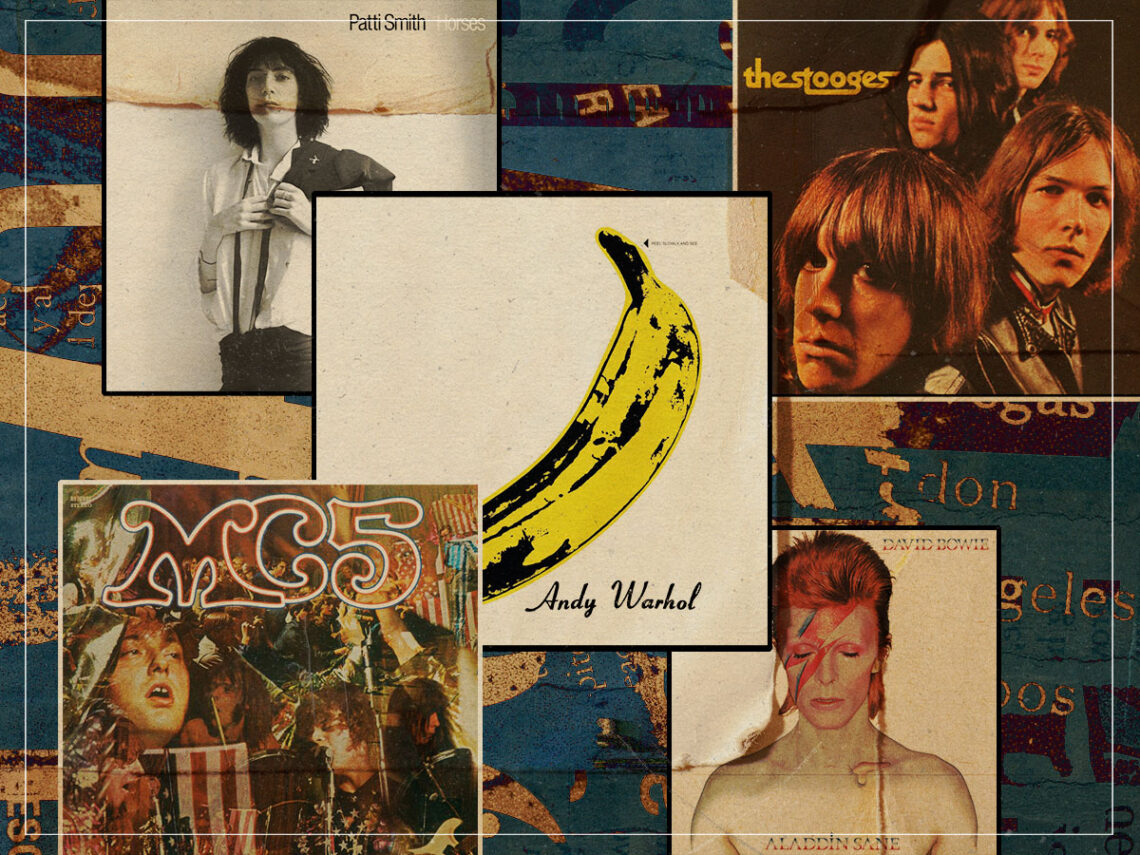
10 albums that helped invent punk music

At the end of the 1970s, punk was the movement everyone desperately needed. The entire line of classic rock stars that had come over the past few years had been fun, but the genre was getting a severe case of bloat, and it took bands that brought everything back to basics to push all of it away. That kind of basic approach had to start somewhere, and bands like The Velvet Underground reminded people how to get the job done with a boatload of attitude.
Although none of the biggest names at the time were thinking about starting a new genre, every one of these records served as a breeding ground for what punk would become. Sure, it didn’t always have to have the nervy guitars or the scratchy vocals, but the ‘anything goes’ approach behind them was usually enough to convince someone else to pick up a guitar and try to squeeze a tune out of it.
Then again, not all versions of punk are necessarily the same, and sometimes, a record goes on to invent an entire offshoot of the genre. It might be easier just to put them all into one eclectic musical stew, but the more accessible acts helped pave the way for power-pop, and the more nervy groups helped bridge the gap between punk and new wave as the genre turned a corner in the 1980s.
Regardless of how they started, all of these records took the basis of what punk was all about and slowly sculpted it into the genre we know today. Ramones and Sex Pistols might have given a face to the name, but this was more in line with how the genre was meant to be listened to back in the day.
10 albums that helped invent punk rock:
10. Ramones – Ramones
So there’s probably a lot of punk looking really confused right now at a pick like this. Sure, Ramones are one of the greatest punk acts of all time, but the genre was well on its way to mainstream success when their debut album came out. Not a word of that is necessarily untrue, but Ramones were pioneering one subset of the genre without really knowing it: pop-punk.
Because if you take the roaring guitars away and slow down the tempo a bit, all of the tunes on this record are practically pop songs with a bad attitude. While there hadn’t been too many pop songs made about wanting to sniff glue, a track like ‘I Wanna Be Your Boyfriend’ was the perfect model for what 2000s bands would draw from for their lovesick songs in the future.
From there, everyone from Green Day to Sum 41 would copy what Ramones started on their debut record, eventually turning the genre into a household name. The punk pioneers wouldn’t be around to see that version of their sound, but in a sane world, every member of the original lineup should be given subsequent royalties whenever a song like ‘All the Small Things’ or ‘Basket Case’ comes on the radio.
9. My Generation – The Who
When Pete Townshend joined The Who, he wasn’t looking to be around for too long. Even when talking about his humble beginnings, he felt that his little Mod group would do for a little while before he went on to do more exciting things in art school. As it turned out, work was better to come by as a musician, especially when songs like ‘My Generation’ blew everything open.
Since every other 1960s act pulled from blues and R&B, My Generation was a far more aggressive experience. Despite the other fantastic songs like ‘The Kids Are Alright’, the title track would be enough to earn this one of the highest accolades in punk by getting everything done with just two chords, singing about feeling oppressed, and the sheer volume of each instrument in the mix.
More than anything, Townshend’s mentality of playing every note like it’s the last one you’ll ever play is half why punk rock was founded in the first place. The Who would go on to more elaborate songs in the operatic years, but no matter how many rock operettas they made, punk rockers would refer to Townshend with the utmost reverence for getting the ball rolling.
8. The Singles – Bikini Kill
Rock and roll tended to be a male-focused genre for no real good reason. Despite being a genre that was meant to rally against the mainstream, how the hell was a bunch of kids complaining about their problems viable if it was just the same demographic of boys being frustrated with their place in the world? The punk attitude was already about rebellion, and Bikini Kill arrived on the scene with a new genre already in tow.
Even though The Singles takes less time to finish than it takes most people to make a cup of tea, Kathleen Hanna knew exactly what she wanted out of her audience. This music was about supporting women in the punk scene, and from the ground up, the stage had been set for what would become Riot Grrrl.
While there were still traces of genres like hardcore punk in their delivery, there was no doubt that this was a genre to contend with, especially when the iconic sounds of ‘Rebel Girl’ came soaring in. The Green Day flavour of punk rock might have been on the horizon, but what Hanna started in her local scene is why people like Sleater-Kinney could dominate the underground today.
7. Vincebus Eruptum – Blue Cheer
For the first half of the 1960s, it felt like every loud rock band fell into the ‘punk’ category for most parents. No matter if it was influenced by the blues or the psychedelic movement, no concerned mother wanted their child to make music that sounded like the apocalypse over a few vinyl slabs. Whereas The Rolling Stones was about as heavy as mainstream music went, Blue Cheer came up out of the woodwork, looking to create the most ferocious rock and roll possible.
Compared to the other proto-punk artists of their day, Blue Cheer seems to have one foot planted in both punk rock and heavy metal. Despite only having a handful of originals on the record, the primary mission behind every song is to assault every sense that the listener has, almost like they were trying to create the feeling of how a nuclear explosion would sound if the speakers were at ground zero.
Whereas most artists would hop on the metal bandwagon once Black Sabbath started, Vincebus Eruptum remains an interesting time capsule for what constituted punk rock in the late 1960s. It wasn’t exactly nasty yet, but things were just starting to turn towards the sounds of heavy guitars, and it would take the rest of the world to dig up what the true original punks had been doing.
6. Black Monk Time – The Monks
It’s not necessarily easy to pinpoint when the first proper punk rock album was released. Every other record that came out in the 1960s was inching towards something heavier, and there were certainly artists who could compete with each other to see who could write something faster than the band before them. But punk is about being amateurish and relying on attitude before anything, and The Monks had that in spades.
Despite being half a world away in Germany, these former soldiers took the basis of rock and roll and turned in one of the most raucous recordings ever. Even though Black Monk Time feels closer to avant-garde these days due to how ramshackle it is, it certainly fits the bill for what punk rock would eventually sound like.
For all of the hippies complaining about the horrors of war, this was the flipside to the peace and love movement, where every song was a cry of anger for people who felt they were stepped on. The Monks would have probably told you they had no idea what they were doing, but everything about their one album has everything that Sex Pistols to Minor Threat had screamed about later.
5. Aladdin Sane – David Bowie
For a movement known to be a little bit grimy, rock and roll had become a lot prettier around the turn of the 1970s. Despite realising that the ‘Summer of Love’ was a lie, some of the biggest names of the next generation were bringing glamour back into music, almost to serve as an escape from all the horrors in the outside world. David Bowie certainly fit snuggly into that genre, to begin with, but after falling to Earth as Ziggy Stardust, his trip to America gave him a darker edge on Aladdin Sane.
In fact, most punk fans should probably listen to this record first if they want to get into Bowie. His knack for songwriting hadn’t gone anywhere, but there’s a certain bite to songs like ‘Cracked Actor’ and ‘The Jean Genie’ that was touched on his previous record but never explored as well as it could have been.
But by the time punk had started to take over, Bowie was long gone, having already traded in his pancake makeup for the sounds of machinery on albums like Low and “Heroes”. Punk rock is always meant to preserve the moment it was recorded, but it should be left to someone like Bowie to capture the zeitgeist before the world even caught up with him. Given where he was when he released Ziggy Stardust in 1972, maybe that ‘Five Years’ coincided with the ‘Class of ‘77’ punk movement.
4. Kick Out the Jams – MC5
Nothing about rock and roll said that there had to be rules. If anything, the people who set boundaries for the genre could normally be ridiculed by anyone within earshot for being out of step with the rest of the scene. After all, all great rules are meant to be broken at some point, and the MC5 went from the foundations of rock and roll to completely deconstructing what the genre meant in the first place.
On the first listen, Kick Out the Jams sounds like an absolute mess. From how the guitars are mixed to how Rob Tyner sounds like he’s about to pop a blood vessel in his head while he’s singing, every part of the record seems to be running on fumes before it properly gets going. But in the name of great rock and roll, all of those detractors may as well be compliments.
Since the whole thing was captured live, the MC5 represented what rock could sound like when there were no inhibitions, becoming an inspiration for everyone from Sex Pistols to Guns N’ Roses to Rage Against the Machine. Considering what they were all about, there was probably no way to showcase this music besides playing it live. It still sounded fine on record, but why would you want the neutered version when you could listen to a bottled-up version of anarchy?
3. Horses – Patti Smith
Let’s get one thing out of the way right off the bat: this is not a strictly punk rock record. Patti Smith does deserve to be known as the godmother of the genre, but she never saw herself being defined by one genre of music. She was a poet before anything, and on Horses, music was her vehicle for making some of the most visceral works of art anyone had ever made.
While Smith and her group admitted that they weren’t the best musicians in the world, the way that she used her voice as an emotional translator half the time led to one of the most harrowing records anyone had ever made. From her interpolation of Them’s ‘Gloria’ to ‘Redondo Beach’ and ‘Land’, Smith is more concerned with making a statement about the state of the world in general as well as memorialising all of the people that she loved who couldn’t witness the person she had turned into.
Outside of being a foundational piece of punk rock, there’s a weight behind every one of these songs that has a lot more to do with the way Smith lives her life, seeing poetry, music, and art as if they’re one singular entity. Punk rock might not be the right word for every song on this record, but if there’s one thing that the genre appreciates, it’s honesty, and there isn’t one dishonest note to be found on any of these songs.
2. The Stooges – The Stooges
From day one, Iggy Pop had the idea that he wanted to play heavy music. The Rolling Stones had set the template for how dangerous rock could sound, but they were still playing the same tired blues tropes that had started to get boring years before. The Stooges had to be different, and they separated themselves from the pack by assaulting the audience from the minute their first record started.
Sure, their delivery still had rock and roll trademarks, but Pop wanted to disassemble what it meant to be a rockstar. Instead of working the crowd, The Stooges invented the idea of a band being at war with its audience, from the vicious lyrics on ‘I Wanna Be Your Dog’ to Pop cutting himself onstage whenever they performed.
The sound is usually all that matters in lists like this, but The Stooges brought a new mentality to what punk rock would mean. It had to be a lot more intense than anything else, but it might as well have been a waste of time if there wasn’t that element of danger behind everything. Rock and roll involved hard work, but if you wanted to reach the level of Pop, you had to bleed for it.
1. The Velvet Underground and Nico – The Velvet Underground
Everything about punk rock is almost the antithesis of what the mainstream wants. It’s way too fast for a traditional pop single, it’s usually too controversial to be played on the radio, and more often than not, it’s not looking to step down to the level of its audience. Punk rock was all about being yourself, and in the 1960s, there wasn’t anyone more comfortable with their art than Lou Reed.
In a world where The Beatles and The Doors were some of the biggest names in music, The Velvet Underground cut their teeth playing the most dangerous rock music imaginable. There were still great songs like ‘Sunday Morning’, but hearing intense musical exorcisms like ‘Heroin’ or ‘Venus in Furs’ was the equivalent of watching some graphic car crash for some. Critics may have bashed it as unprofessional, but the real punks couldn’t take their eyes off it.
Whether they were not playing guitars exactly right or writing about life in the gutter, The Velvet Underground bridged the gap between what could be accessible in the mainstream and what the underground could do if it had the right idea. Sure, The Beatles had their place among the great pantheon of rock, but not many albums can claim to be the building blocks of punk, alternative, and art-rock all in one go.
