


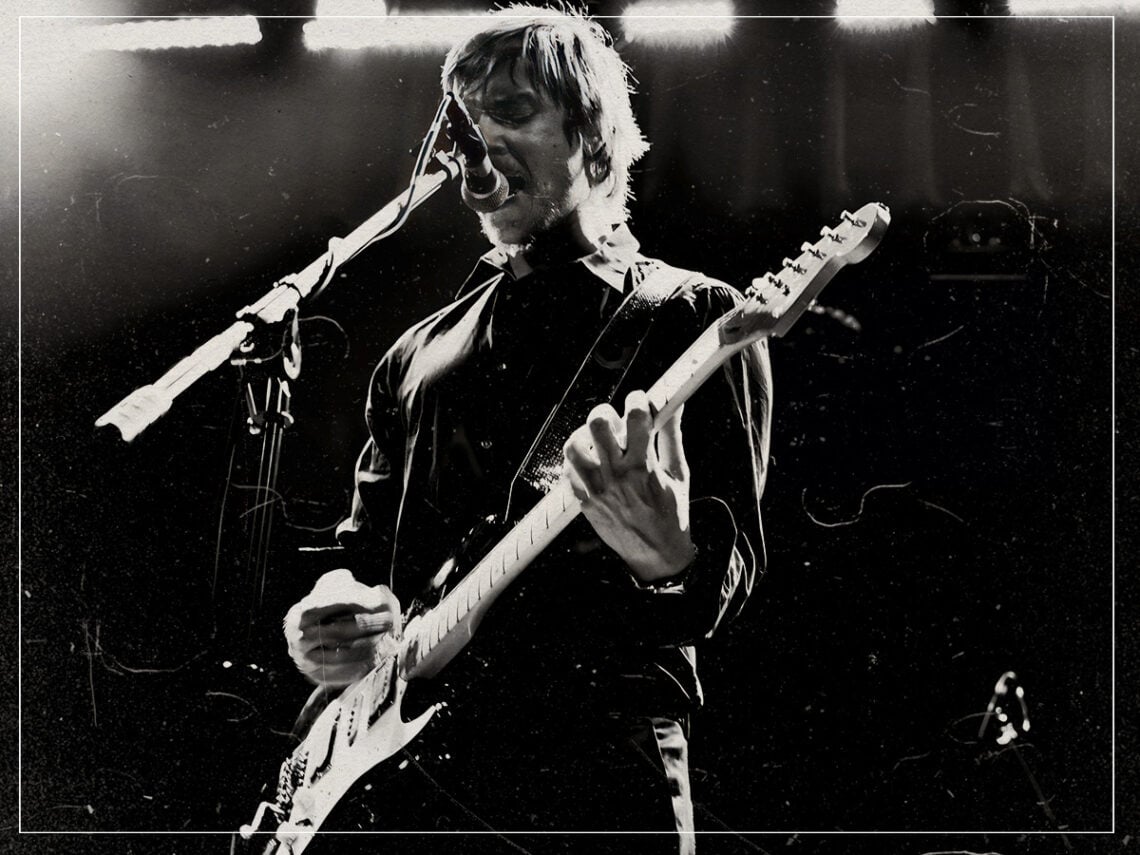
The song Interpol’s Paul Banks says sounds “like the afterlife”

It can be quite difficult to convey how music makes us feel, although Paul Banks tried his best to do so in describing one of his favourite songs, and since Interpol changed the meaning of cool during the 2000s, their frontman’s opinion on music certainly carries tons of weight.
Songwriters understand the value of capturing emotions in a song better than most, even if the product isn’t a literal translation of the feelings being dealt with, which is precisely why Banks’ description of a song by Buffalo Springfield as having moved him deeply makes so much sense, even though he wasn’t able to express in straightforward terms why it had such a strong impact on his soul.
Where Interpol’s Turn On the Bright Lights alone went on to inspire generations, Banks, too, is an extension of those who came before him, and while his influences span multiple genres and decades, the Canadian-American outfit is one of the bands that had one of the most profound imprints on his appreciation of creative expression.
During a chat with Shortlist back in 2014, he provided answers to a list of prompts about his favourites across different categories and varying levels of renown, with his favourite song from childhood being ‘Twilight Zone’ by Golden Earring, while ‘Motel Room’ by Vigilantes of Love is a beloved track that nobody else has heard of, and when it came to naming his favourite sad song, the singer-songwriter went with ‘Expecting to Fly’ by Buffalo Springfield.
“Deeply sad tone to this song, and very atmospheric,” Banks said about the cut, adding, “Incredible mood piece, hard to describe, but, to me, it sounds like the afterlife”.
Written by Neil Young and released on the group’s sophomore LP, Buffalo Springfield Again, this 1967 track offers a whimsical and tender experience with its breathtaking arrangement eliciting an evocative imagery while also bringing out emotions from within in a way only the perfect song can, for which this is a true contender. Moreover, what’s particularly unique about it is that there is a weighty sadness to it despite the relaxation it brings to those at the receiving end, helped by the sensitive lyrics.
While the words “If I never lived without you, now you know I’d die, If I never said I loved you, now you know I’d try” do encapsulate the overall sadness it carries, the sonic textures take it to another level that transcends black-and-white vernacular, effortlessly capturing a set of emotions that are tough to put into words.
Banks isn’t alone in attaching a lot of value to the song, which has also been featured in a range of films, from Coming Home in 1978 to Fear and Loathing in Las Vegas in 1998 to Joy in 2015, soundtracking different scenarios and genres across multiple eras, thereby speaking to its timelessness.
In addition to its place in cinema, ‘Expecting to Fly’ has also been covered by numerous artists over the years, with Thirteen Senses, Metric and Of Montreal just a few of the artists who’ve recorded their own renditions of the classic; each of these is lovely in its own right, though none quite match the wavelength of the original. It can be unclear what Banks meant in literal terms when invoking the afterlife comment, but there is definitely an angelic and divine touch to the sound of ‘Expecting to Fly’, such that, where most people don’t get so much as a glimpse into it, Neil Young and Buffalo Springfield were able to actually paint an impression in song form.
