


‘Zone’: Takashi Ito’s inexplicable experimental horror

Although the horror genre is undeniably vast, experimental horror films have always played a huge part in redefining the limits of the form. Since horror films capture the most visceral parts of the cinematic experience, experimental horror often conducts necessary examinations of the relationship between fear and voyeurism.
Japanese experimental horror cinema has found a global audience, especially due to beloved gems such as Nobuhiko Obayashi’s Hausu. Within that space, Takashi Ito’s cinema is a unique body of work which discards the conventions of genre filmmaking and attempts to create a new kind of film art.
During an interview with Image Forum, Ito once said: “Film is capable of presenting a fictional world as a vivid reality and creating a strange space that belongs only to this medium. My overriding intention is to alter scenes of everyday life and draw the audience (myself) into the vortex of supernatural illusion by using the magic of cinema.”
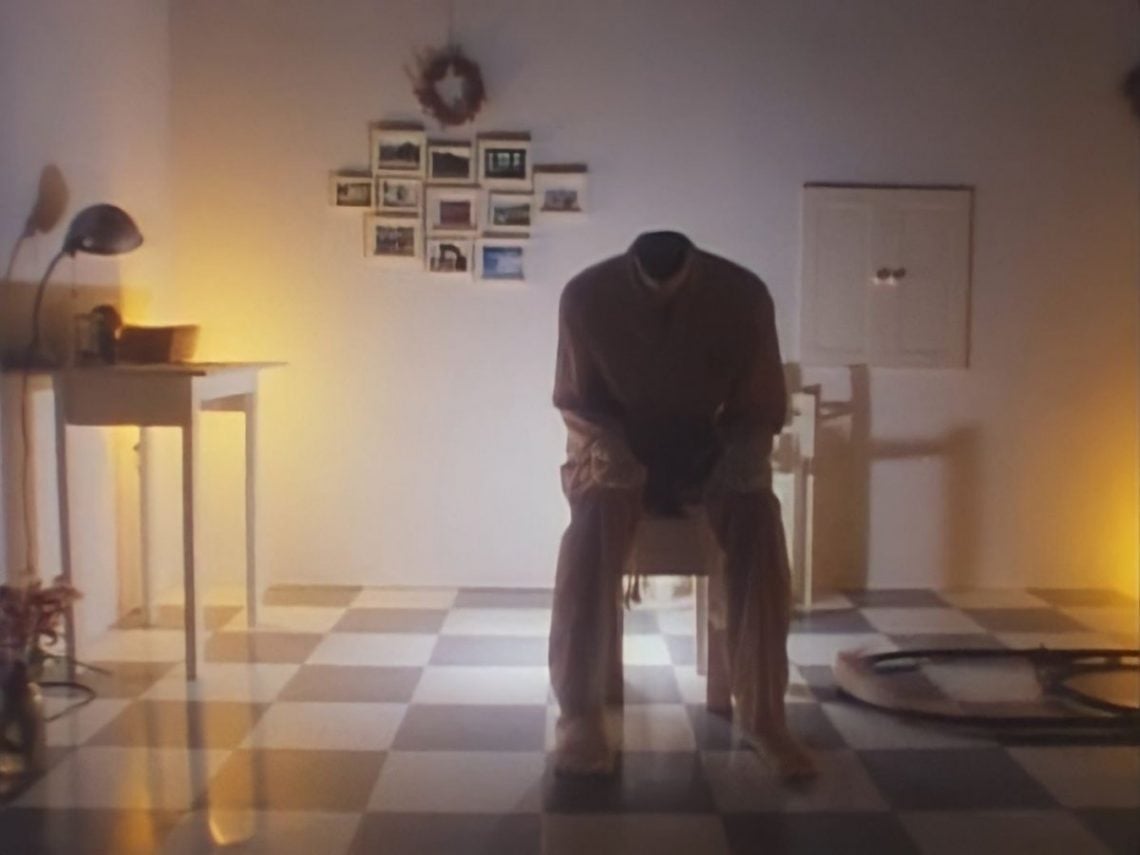
Ito’s 1995 short Zone is nothing short of an enigma, revolving around a man without a head who is restrained in a room. While the room contains material objects like a bizarre toy train set, it also hosts intangible objects from the past, the present as well as the future. When asked to describe the film, Ito claimed that it was a reconstruction of his own identity.
The director said (via Image Forum): “A film about a man without a face. His arms and legs bound with ropes, a disabled man is still without even a quiver in a white room. This man, enwrapped in wild delusions, is also a reconstruction of myself. A series of unusual scenes in this room that expresses what lies inside me. I tried to create a connection between memories, nightmares and violent images.”
The space that Ito constructs is undoubtedly haunted, bubbling to the surface of our screens as a deliberately superficial vision of something that is pretending to be a house. In fact, it’s more appropriately seen as a projection of a psychological prison that binds the subject to repressed trauma and the bitterness of a disintegrated past.
Ito plays around with the concept of moving images, especially moving photographs, which respond to touch. Not just that, the touch-image interaction is so powerful that it distorts the fabric of reality and destabilises the physical world. The idea might seem too mundane for those of us who are used to smartphones, but Ito’s achievement is truly incredible.
Watch the short below.
