


“I swear this song brainwashes me”: Understanding YouTube’s potentially fatal eating disorder playlists

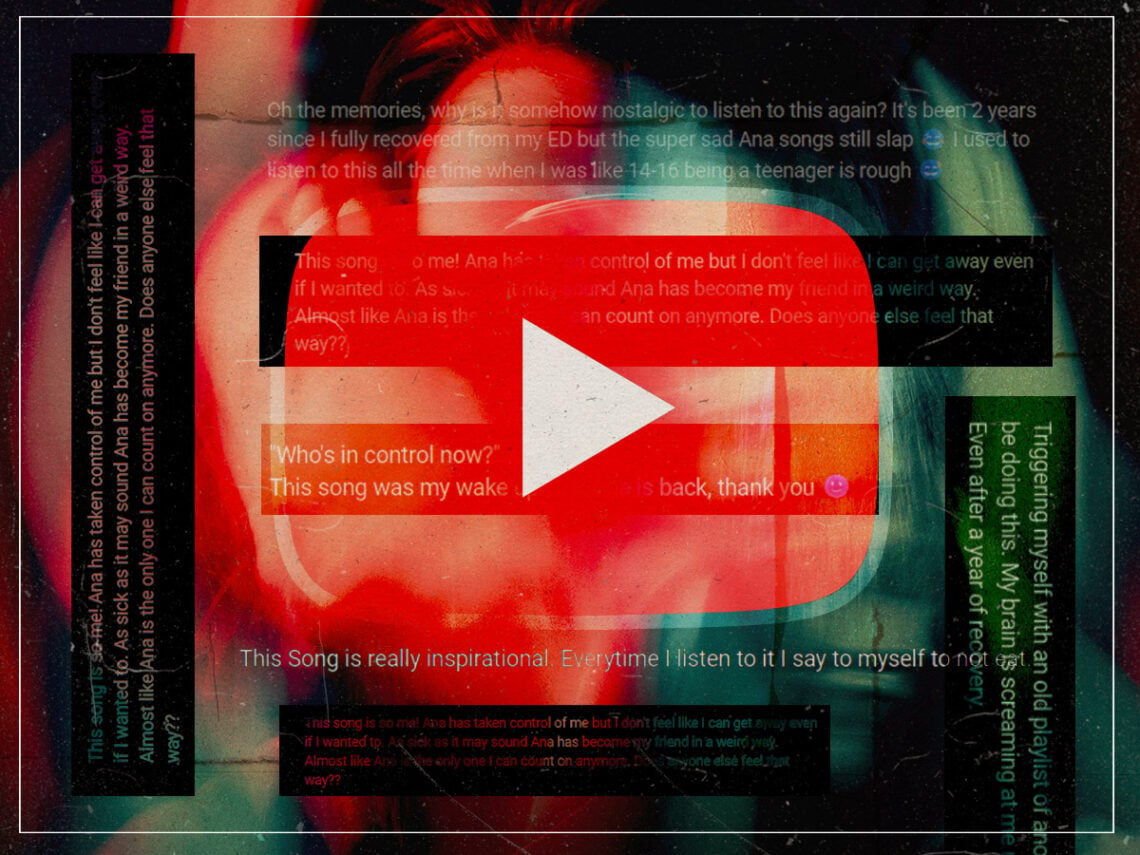
There’s a fan-made lyric video of Birdy’s ‘Skinny Love’ cover currently sitting on over 50million views on YouTube. Uploaded on September 8th, 2012, a majority of the comments below mention its inclusion in a particularly sad episode of The Vampire Diaries, which speaks well to its largely teen audience. If you scroll past the “#TVD Forever” posts, you’ll find something far darker. It’s been included on what is described as an “eating disorder playlist”, many of which are being accessed by children as young as 11. Vulnerable teens are using the comments sections of these music playlists as a self-made space to share alarming admissions about self-harming, eating disorders and suicidal thoughts, and have been doing so without intervention from YouTube for over ten years.
The playlists often use codewords to avoid YouTube’s community guidelines, but many include the words “eating disorder” and “pro-ana” directly. Although YouTube states: “We do not allow content on YouTube that promotes suicide, self-harm or eating disorders, that is intended to shock or disgust, or that poses a considerable risk to viewers,” these playlists have flown under the radar for over a decade, and have provided a dangerous platform where those suffering from eating disorders attempt to console and coach each other through their illnesses.
Sometimes, this is done in the hopes of helping each other, which is well intended but potentially life-threatening when considering how complex eating disorder treatment is. “That moment when you realise that the people that comment, care more than your family…” reads one comment. “I tricked my parents into thinking ana [sic] was gone but she’s really been here for years,” reads another. It illustrates how reliant viewers are on the community the playlists can provide but also how isolated they become from a healthy support system. Some viewers will return to edit their own comments in periods of relapse to update other commenters, which keeps them engaged in a space that’s directly hampering their recovery.
That’s because while some use it as a support network, others use the songs as a way to trigger themselves. Across multiple different playlists, songs with lyrics that discuss worthlessness, like ‘Never Good Enough’ by Rachel Ferguson, and songs that discuss being skinny, like Birdy’s cover of Bon Iver’s ‘Skinny Love’, are seemingly used by listeners to shame themselves into not eating, unbeknownst to the artists included. Commenters will share tips, their weight and BMI, and alarming admissions about the effects of these playlists. “It’s funny how one thing can turn me back to my eating disorder and cutting,” wrote one, with another admitting: “It’s sad cause I’m purposely looking for things to trigger my ED [eating disorder]”.
When Far Out sent a report about these playlists to Beat, the UK’s leading eating disorder charity, they said they were “incredibly concerned that these harmful eating disorder videos are easily available on YouTube”. Tom Quinn, Beat’s Director of External Affairs, said: “While some of these playlists encourage people with eating disorders to seek help, others share dangerous eating disorder ‘tips’ such as how to hide their eating disorder from loved ones. This will motivate those unwell to engage in harmful behaviours and become more unwell or could contribute to an eating disorder developing for the first time if someone is already vulnerable”.
But Quinn also highlights a painful sticking point. “Having an eating disorder can feel very lonely, and people often turn to online spaces to seek advice and connect with others”.
While other websites like Tumblr and TikTok have become increasingly stringent with eating disorder content young sufferers are seeking out, YouTube may be the only website a teen feels comfortable seeking advice from. Under the guise of listening to music, these teens have carved out their own corner of the internet to share freely, away from the eyes of parents or guardians.
“While it’s important that people have a place to share their worries,” says Quinn, “It’s the responsibility of YouTube to immediately remove videos that will cause harm”.
Alarmingly, some of the videos have the Beat number pop up underneath them, which shows, on some algorithmic level, that YouTube is aware of the dangerous content being accessed but hasn’t taken steps to take it down. While YouTube is not available for children under the age of 13, many commenters openly share that they discovered these videos when they were as young as 11 and are coming up with ways to create accounts to access these playlists to bypass the age filter.

“Millions of people have seen these playlists, which is especially concerning,” says Quinn, and the knock-on effect could be potentially fatal. Anorexia has the highest mortality rate of any mental illness. It can cause life-long health issues if not tackled early, and these playlists provide some of the youngest sufferers a community that allows them to struggle through it without medical guidance. Listeners use the songs included to shame themselves into disordered behaviours. One viewer wrote, underneath a song with lyrics that include: “I will make you steal and lie / I will hurt like hell / I will kill you in no time” with the comment: “I swear this song brainwashes me”.
“The Online Safety Act requires YouTube and other social platforms to make sure young people aren’t exposed to harmful eating disorder content online,” Quinn continues. “We urge YouTube to immediately remove playlists with dangerous information and to signpost people to quality eating disorder support. It’s also crucial that those creating content about eating disorders are not punished, as they are often unwell themselves”.
The use of these playlists is symptomatic of a disorder that encourages secrecy, competitiveness, and shame, all of which feature heavily in the comments. What is confused for a safe online community is actually a dangerous meeting place for vulnerable teens that has been allowed to flourish on YouTube for far too long.
YouTube responded by saying the website is a “community” that allows users to “speak openly about the challenges they face in life, often seeking support from others”. They noted that last year, their Community Guidelines were updated to “prohibit content about eating disorders that feature imitable behaviour, or behaviour that we worked with experts to determine can lead at-risk viewers to imitate,” which may explain why these music playlists fell through the cracks, despite featuring obviously associated buzzwords.
To that, they said: “In addition to the video content, our systems look at a range of other signals to assess if the content violates our policies. This includes things like certain buzzwords or phrases with hidden meanings, as well as audiovisual signals, which can be used to promote harmful practices”. This is done with a context caveat, and exemptions are made for educational and documentary content.
“We have teams around the world monitoring trends on sensitive topics, including eating disorders, to help us anticipate new risks and examine how trends may be evolving elsewhere on the internet”. At the time of writing, YouTube stated: “Upon review, we have terminated 14 channels and removed or age-restricted a number of flagged playlists and videos for violating our suicide, self-harm and eating disorders policy”.
At the time of writing, the Birdy video is still live on the platform, with 50million views.
If you or someone you know has been affected by the topics discussed in this article, you can contact Beat, the UK’s eating disorder charity, 365 days a year on 0808 801 0677 or beateatingdisorders.org.uk. In the US, contact NEDA.
