


‘Where Are You Going’: Yang Zhengfan’s cinema of inaction

If asked about the greatest films ever made about taxi drivers, the majority of cinephiles would immediately refer to Martin Scorsese’s era-defining 1976 work. Some might even single out Jim Jarmusch’s wonderfully breezy Night on Earth as a possible response to that strange niche prompt. As far as I am concerned, the answer is always going to be Yang Zhengfan‘s uncategorisable opus Where Are You Going.
In stark contrast to the spectacle of modern blockbusters, there have been recent trends in arthouse film festival circuits that have popularised the term ‘Slow Cinema’. Characterised by long shots, a focus on atmospheric emotion crafting, and unravelling narratives that do not follow traditional structures, the label has been utilised by many filmmakers to get into festival lineups instead of carrying the experimental origins of the form to the next step.
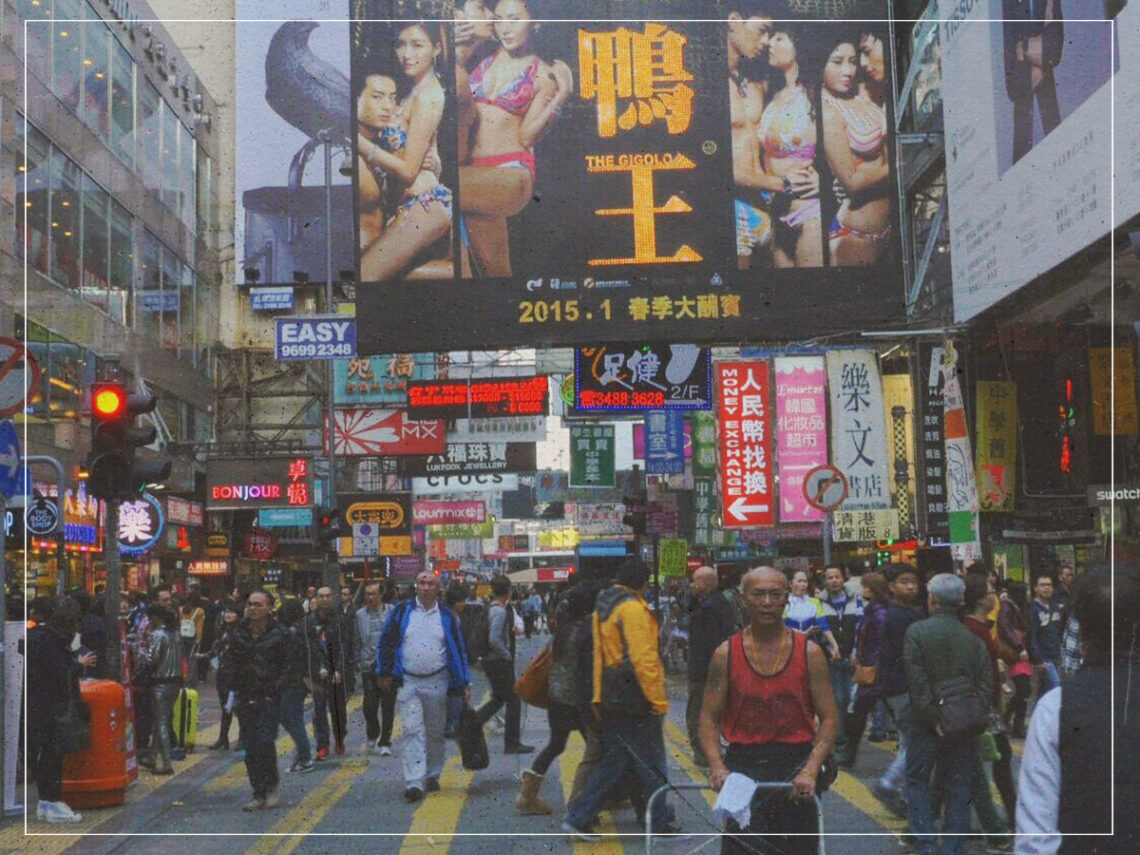
Where Are You Going is markedly different from these, conducting a fascinating exploration of Hong Kong through a seemingly obvious concept. With a camera placed on the front of a cab that makes its way across the sprawling city over the course of a day, Yang invites us to be an invisible passenger who silently occupies a little slice of time and space as the driver picks up and drops off customer, listening in on the delightfully nuanced conversations.
‘Slow Cinema’ is somehow meant to denote a deceleration of the usually fragmented frameworks of time that mainstream filmmaking has made us desensitised to. However, if the cinematic medium has the ability to reflect reality, Where Are You Going is one of its purest reflections, effortlessly tapping into the mundane flow of life and compensating for the absence of the spectacle by fulfilling the voyeuristic impulses that are fundamental driving forces for the art form.
If taxi drivers are the lifeblood of a city, Yang welcomes us into its endless circulatory stream to observe the chaotic rhythms that have become unique to urban spaces. We encounter some passengers who are too caught up in their own lives and others who are more than willing to strike up a conversation with the driver. We meet foreigners who are conflicted about their identity in Hong Kong and even someone returning to Hong Kong after a long time and facing a similar crisis. We simultaneously experience the paradoxical infinity and uniformity of human life sitting in a cab.
With a static camera that is always on the move and faceless characters who do not need to relinquish their anonymity in order to move us, Where Are You Going asks us to redefine what the cinematic experience can be. Using the medium as a tool to visualise our fantasies has been a thing since Georges Méliès’ era, as have documentaries that strive for social realism. However, this film does not fall into any of these boxes. It’s simply a slice of time itself.
During an interview, Yang unsurprisingly revealed that he has been deeply influenced by pioneers who are also grouped under the umbrella of Slow Cinema: “Well, Michelangelo Antonioni inspired me by his way of exploring the space in a film while I see how time has been captured and sculptured in Tarkovsky’s film. For contemporary cinema, I consider Lav Diaz as one of the greatest filmmakers, together with Apichatpong. Both of them are shaping the future of cinema. But when it comes to something about influence, I believe I was influenced a lot by Tsai Ming-liang, mostly the image, the sound, and the ambience he shaped in his films…”
But like all the great auteurs he mentioned, Where Are You Going resists categorisations. It’s the most striking portrait of Hong Kong in recent memory, seamlessly capturing the contradictions between the city’s past and the future, the countless differences and similarities between the people who call it home and promising a taxi ride that you’ll never forget.
