


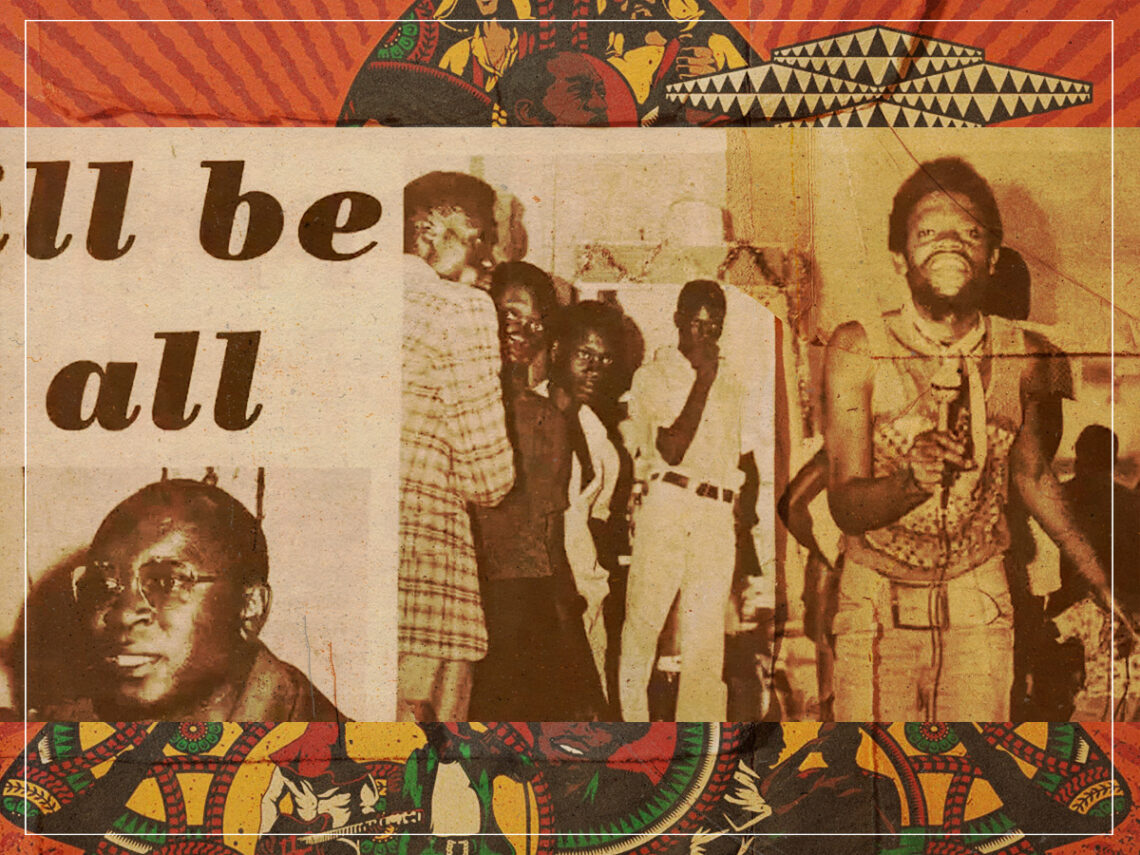
Witch: The pioneering sounds of 1970s Zambia

The continent of Africa has been awash with musical excellence and expression for centuries but, in more recent times, no one scene has enjoyed the same level of global popularity and infamy as the Zamrock scene of the 1970s. In the wake of independence from colonial rule in Zambia, local musicians took it upon themselves to establish a new national soundtrack for their vibrant nation. The result was a strange and infectious mismatch of British rock and roll and distinctive old-school Zambian influences pioneered by groups like Witch.
First formed in 1972 in the city of Kitwe, Witch (reportedly an acronym for ‘We Intend To Cause Havoc’) are often credited with the establishment of Zamrock as both a genre and local music scene. The group came about as a result of lead singer Emanyeo ‘Jagari’ Chanda and his youthful obsession with the few British rock and roll records that were brought over to Zambia when the nation was under the colonial rule of the British Empire. Following the period of independence, Chanda, along with legions of other budding young musicians, were able to use these influences to create a new sound for Zambia.
Establishing a cultural identity for your newly independent nation is, by no means, an easy task, but Chanda and Witch seemed to take it firmly in their stride. In fact, the group were the first Zambian band to record and release a full-length album in the form of 1972’s aptly named Introduction. The band quickly made a name for themselves and their own unique blend of garage rock, funk and psychedelia, inspiring countless other artists in the process.
Over the course of the next decade, Witch worked tirelessly to perfect the Zamrock sound. Backed up by a plethora of stunningly talented musicians from Zambia, Chanda had quickly achieved his primary goal of giving his home nation a distinctive sound. More than that, though, Witch created some of the most stunningly original and pioneering rock and roll music of all time, of any nation. So often, their work is hidden away in the ‘world music’ sections of record stores, completely ignorant of the fact that it blows most British and American rock out of the water.
A particular highlight within the discography of Witch came in 1976 with the release of their fourth studio album, Lukombo Vibes. The revolutionary album contains the usual distinctive tones of the garage rock outfit, but it features a much more prominent influence of heavy psychedelia. By 1976, psychedelic rock had typically fallen out of favour with the musical mainstream in the Western world, as the banal sounds of progressive rock began to dominate the airwaves. Conversely, Witch seemed totally immersed in the age of psychedelia, creating the kind of spaced-out sounds that could make even Jefferson Airplane blush.
Tragically, the Zamrock era would not last forever. By the late 1970s, multiple serious issues had befallen the group and Zambian society as a whole. For starters, the government of the nation was growing increasingly authoritarian, imposing curfews that forced most bands to play afternoon shows to avoid repercussions. In addition to this, the mid-1980s saw the African nation ravaged by an epidemic of HIV and AIDS, which seemed particularly prevalent within the music scene. So, after the release of their 1984 record Kuomboka, Witch disbanded the group.
Thankfully, though, that was not the end of the Witch story. Following a sudden resurgence in popularity during the 2000s, Chanda sought about reforming the group and returning to the stage. The release of the album Zango in 2023 certainly proved that, although they might have fallen into obscurity for some years, the power and infectious energy of the band’s sound has certainly never gone away.
