


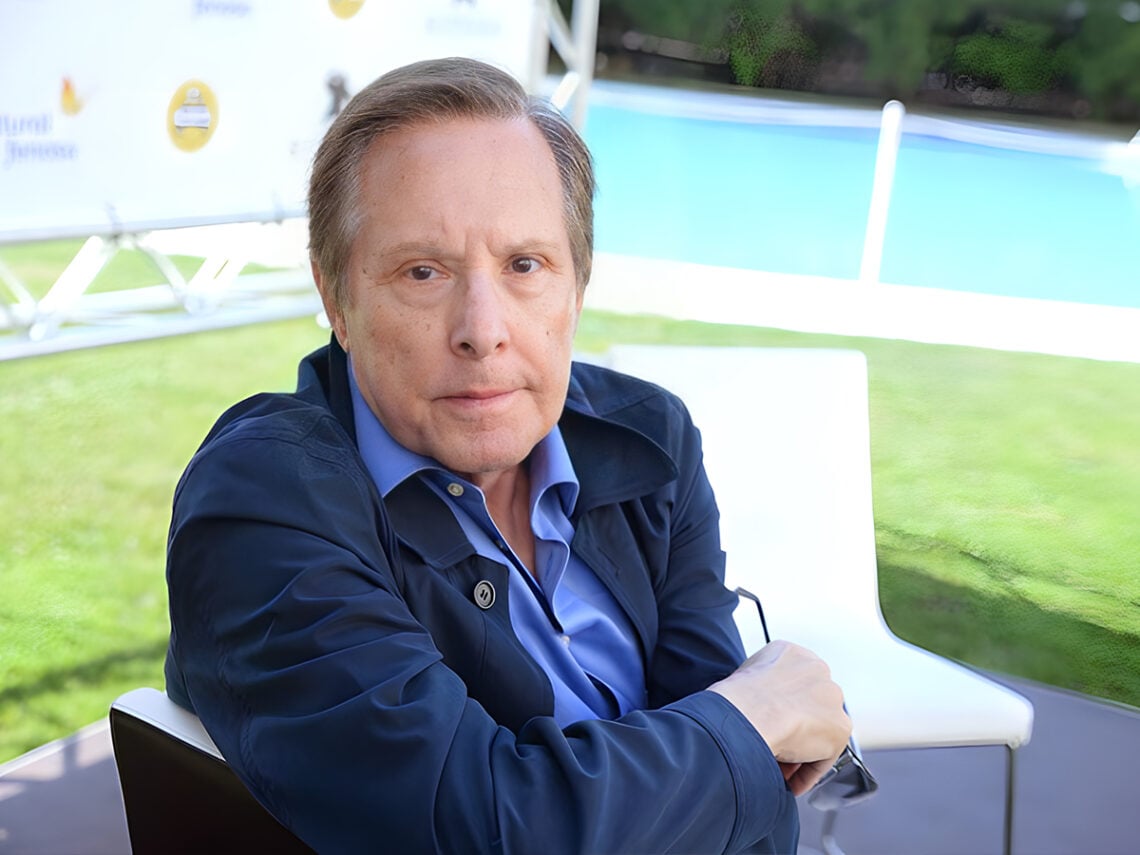
“You just have to make up a lot of bullshit”: William Friedkin’s novel way of dealing with method actors

William Friedkin was always a man who told it like it was. The maverick director would never sugarcoat anything, whether he was discussing the pitfalls of Hollywood, the realities of exorcism in the Catholic church, or how much he hated Al Pacino’s guts. This was especially apparent when he talked about the method actors he had worked with in his career. Fascinatingly, he revealed it often amounted to them making up “a lot of bullshit” to fill out their backstories, but he would help them do it.
When Friedkin was invited as the Guest of Honour to the Brussels International Fantastic Film Festival in 2012, he was his usual bluntly loquacious self. He first spoke about Killer Joe, the southern noir play by Tracy Letts that he had adapted into a searing movie starring Matthew McConaughey, Juno Temple, and Emile Hirsch. When talk turned to his hands-off approach to McConaughey’s performance in the film, the nuances of the different acting approaches he’d encountered in his career seized his imagination.
“I believe in spontaneity,” explained Friedkin. “I like it. I don’t believe in perfection; nothing is perfect in life.” For this reason, he revealed that he was always unlikely to ask for more than two takes of a scene unless something drastic occurred, like a lighting setup falling over. This approach worked perfectly with McConaughey, who Friedkin said knew how his character would walk and talk a lot better than his director ever did.
However, this style wasn’t always applicable to everyone Friedkin worked with. He explained that casting Tommy Lee Jones and Benicio Del Toro in his criminally underrated 2003 action thriller The Hunted revealed two diametrically opposed acting styles. Jones, as Friedkin revealed, was more like McConaughey in his craft. He said that the No Country For Old Men star “comes to work totally prepared. He knows his role; he knows his character.” All Friedkin had to do with Jones before he called “Action” was run through the blocking of each scene, and the veteran star was good to go.
On the other hand, Del Toro was another kettle of fish. Friedkin claimed that he often questioned the blocking of the scene, wondering, “Why do I come in over there? Maybe you could find me laying on the ground over here… Maybe I go up here and turn my back and look over there.” Inevitably, this would lead the Sicario star down a rabbit hole of his character’s past, with Friedkin joking that he’d ask questions like, “How would my character think about his father when he was 12 years old?”
While Friedkin was being facetious with his description of Del Toro’s method acting approach, he assured the audience that both tactics could yield great performances. He insisted, “Benicio is just as good as Tommy Lee, but their process is completely different.” Indeed, Del Toro’s “method” didn’t aggravate Friedkin, and it wasn’t better or worse than Jones’ matter-of-fact style; it was simply an alternative path to the same goal.
In the end, Friedkin believed that it was part of his job as a director to facilitate getting great performances from his cast. If that meant he had to engage with a method actor and help them fill in their character’s tortured backstory, he’d do it.
He reasoned, “You just have to make up a lot of bullshit. Some actors need that, and some actors are just cast right and ready.”
