


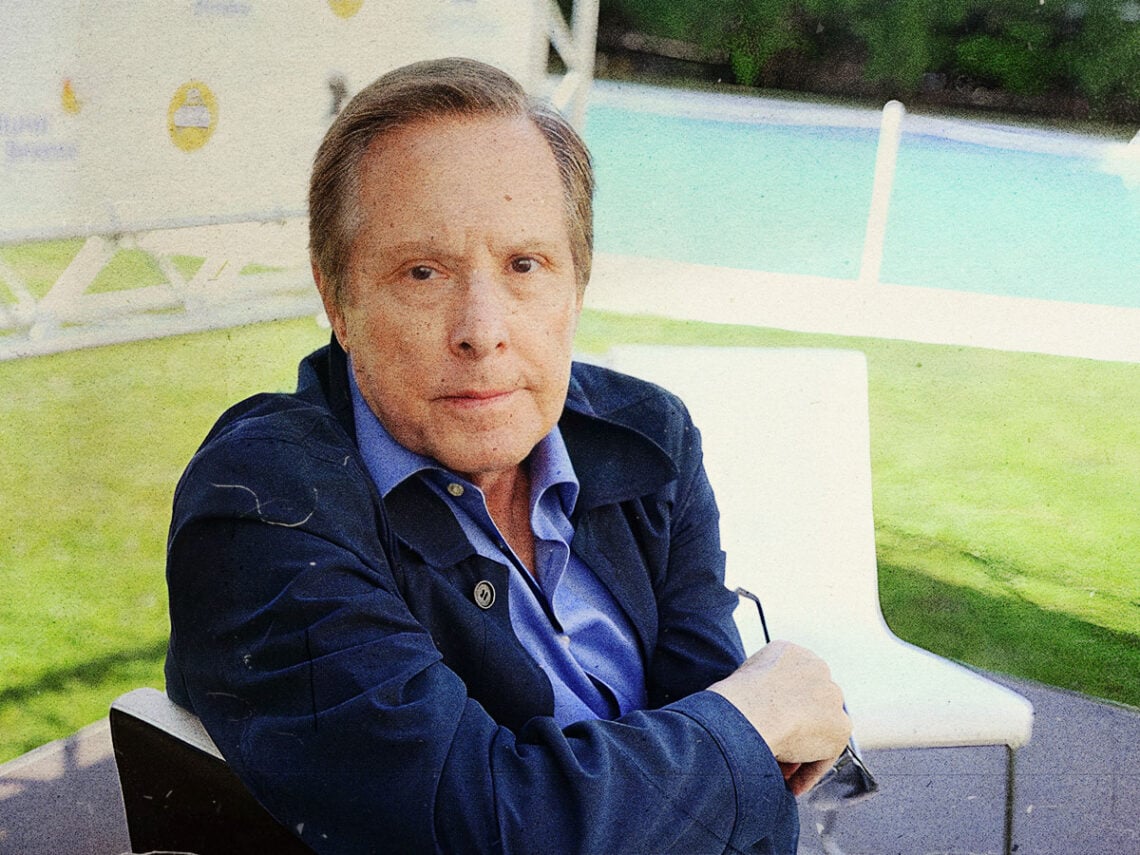
When William Friedkin’s counterfeit money caught the Secret Service’s attention: “This guy was an artist”

William Friedkin‘s film-making approach wouldn’t last two weeks in modern Hollywood. This isn’t because the maverick genius was a bad director or because his filmmaking style wouldn’t fit with modern cinema – far from it, in fact. Instead, Friedkin simply couldn’t operate in today’s system because he was a maniac who would go to any lengths to get what he wanted from actors or crew members. Over the years, he did some things on movie sets that were borderline illegal and a whole bunch of other things that left that border in the far distance.
Take, for instance, the time he found himself in hot water with the Secret Service because counterfeit money made for one of his films found its way into circulation – and may have even been spent by the director himself.
Going through a potted history of Friedkin’s crimes in the name of cinema reveals a man who always felt the ends justified the means. He repeatedly fired a shotgun on the set of The Exorcist to make sure his cast looked scared out of their minds at all times. He filmed the car chase in The French Connection without any permits from the city of New York, on streets littered with actual pedestrians. He nearly killed himself, a few cast members, and stunt drivers while shooting the insanely dangerous bridge-crossing sequence in Sorcerer. Oh, and he employed a real counterfeiter to create fake money for 1985’s To Live and Die in LA because fake money from the prop department wouldn’t cut it.
Indeed, the movie – a story of two Secret Service agents hellbent on capturing a rogue counterfeiter played by a young Willem Dafoe – is still seen as one of Friedkin’s best to this day. It can’t be denied that the authenticity he sought with the counterfeit money shines through in the movie. Dafoe was taught how to print actual money by a counterfeiter brought to Friedkin by a law enforcement agent who had previously arrested him. “This guy was an artist,” Friedkin marvelled. “If I was the government, I’d hire that guy to make the money cheaper!”
The film has an extended sequence of Dafoe’s character doing his illicit work. It seems so real because every shot that doesn’t include Dafoe’s face features the real counterfeiter’s hands going through the process. In total, around a million dollars worth of fake money was printed for the movie, but with three intentional errors that would mark it as counterfeit. In theory, this meant it couldn’t be used in the real world, even if some of it was somehow spirited off the set after the crew burned all the bills.
Amazingly, though, this is exactly what happened – and the fake bills were successfully passed in many local businesses. In total, $500 of the counterfeit movie money escaped the set, and the Secret Service were soon knocking on the doors of Friedkin’s props and special effects heads.
The next thing Friedkin knew, he was on the phone with California US attorney Robert Bonner, who told him it was illegal to print counterfeit money, even if your intention is just to use it in a movie. Bonner encouraged Friedkin to voluntarily come in for questioning, to which the maverick director shot back, “Get a warrant, Mr Bonner, and I’ll come in with a lawyer.” No warrant was forthcoming, and he never heard from Bonner again.
By the time the story made The Washington Post on August 31st, 1985, Friedkin’s spokesperson had an explanation ready for how the money had gotten off-set. “The money was marked, ‘This is not legal tender,'” they insisted. “Apparently, one of the crew members took about $500 home from the set as a souvenir. He put it in a drawer. One of his kids found it and spread it around on the streets.”
The best part about the whole situation, though, is that Friedkin waited until the statute of limitations had run out on any potential legal case against him and the production before he admitted that he’d spent some of the bills, too. In a To Live and Die in LA making-of documentary, Friedkin grinned, “I used to spend these fake twenties,” and in his memoir The Friedkin Connection, he confessed to passing them in “restaurants, shoe-shine parlours, and elsewhere.” As he put it, “The money was that good.”
