


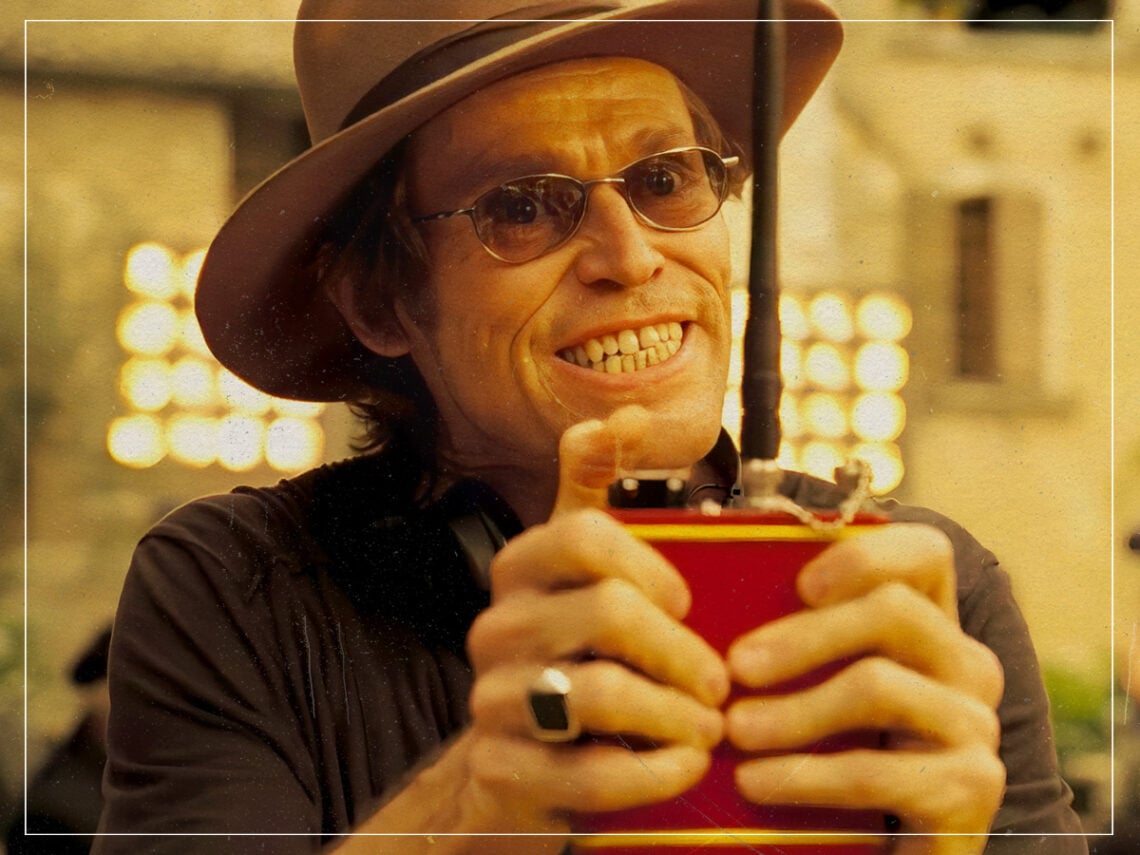
How Willem Dafoe got fired from a movie that changed Hollywood forever: “I was the lamb for sacrifice”

Willem Dafoe has been involved in some of the greatest movies ever made. The Grand Budapest Hotel, The Last Temptation of Christ, and Platoon are among his most prominent screen credits. As Norman Osborn in Sam Raimi’s Spider-Man, he became one of the first modern comic book movie villains, helping lay the groundwork for the modern superhero onslaught.
As with all actors, however, Dafoe has probably lost more jobs than he’s landed. He came within inches of being involved in one of the most important movies ever made, although, as strange as this sounds, he’s probably very glad that he never made it into the credits.
Dafoe’s first credited film role was in Kathryn Bigelow’s cult classic motorcycle drama The Loveless, but his actual debut screen appearance had come the previous year in the infamous Michael Cimino Western Heaven’s Gate. His memorable visage can be seen in the background of several shots featuring Kris Kristofferson, playing a character called Willy who, in the actor’s own words, was a “glorified extra”.
He told SFGate, “I was there for three months and I worked a lot. It was the kind of thing where you were hired to play an unscripted character and then they developed these smaller characters.”
Unfortunately, the future star was one of the many casualties of Heaven’s Gate’s notoriously troubled development. “One day we were doing a lighting set-up for a long time; basically eight hours standing in place, and a woman told me a joke in my ear and I laughed at a moment of silence,” he recalled. “Cimino turned around and said, ‘Willem step out,’ and that was that. I was the lamb for sacrifice.”
The movie needed to shed financial weight in a hurry and he had just offered them a golden excuse. Despite not seeing production through to the end, Dafoe did end up in the final cut, but with his name removed from the credits. Luckily for him, Heaven’s Gate was so bad that it fundamentally changed the way Hollywood operated. The days of runaway directors were over.
The film was a complete disaster, over-budget and riddled with issues. It bombed at the box office, making less than 10% of its costs back, and was also panned by critics. It is still regarded in some circles as one of the worst movies ever made. Its poor results essentially killed distributor United Artists, prompting its sale to Metro-Goldwyn-Mayer.
Cimino, who had nearly gotten fired himself during production, was saddled with much of the blame. As a result, studios got scared about letting directors have creative freedom over their projects. The personality-driven films that had dominated the New Hollywood era and had made stars of Steven Spielberg and Martin Scorsese were deemed too dangerous, and studios began to exert more control on what they put out.
Interestingly, in the years since its disastrous debut, critical opinion on Heaven’s Gate has drastically changed. Various re-edits have emerged that show the film in a much better light, completely altering its cultural cache and finding support in the likes of Spielberg, a far cry from how it was originally received.
In 2012, ahead of a new cut of the film, Dafoe was asked about Heaven’s Gate again, this time by Jigsaw Lounge. He explained that he had come to terms with his firing and that he hadn’t really thought about its legacy. “I worked a lot, I didn’t have an expectation,” he said of his experiences on set. “Anyway, that’s a long time ago,” he concluded, drawing a line under this bizarre chapter in his life.
