


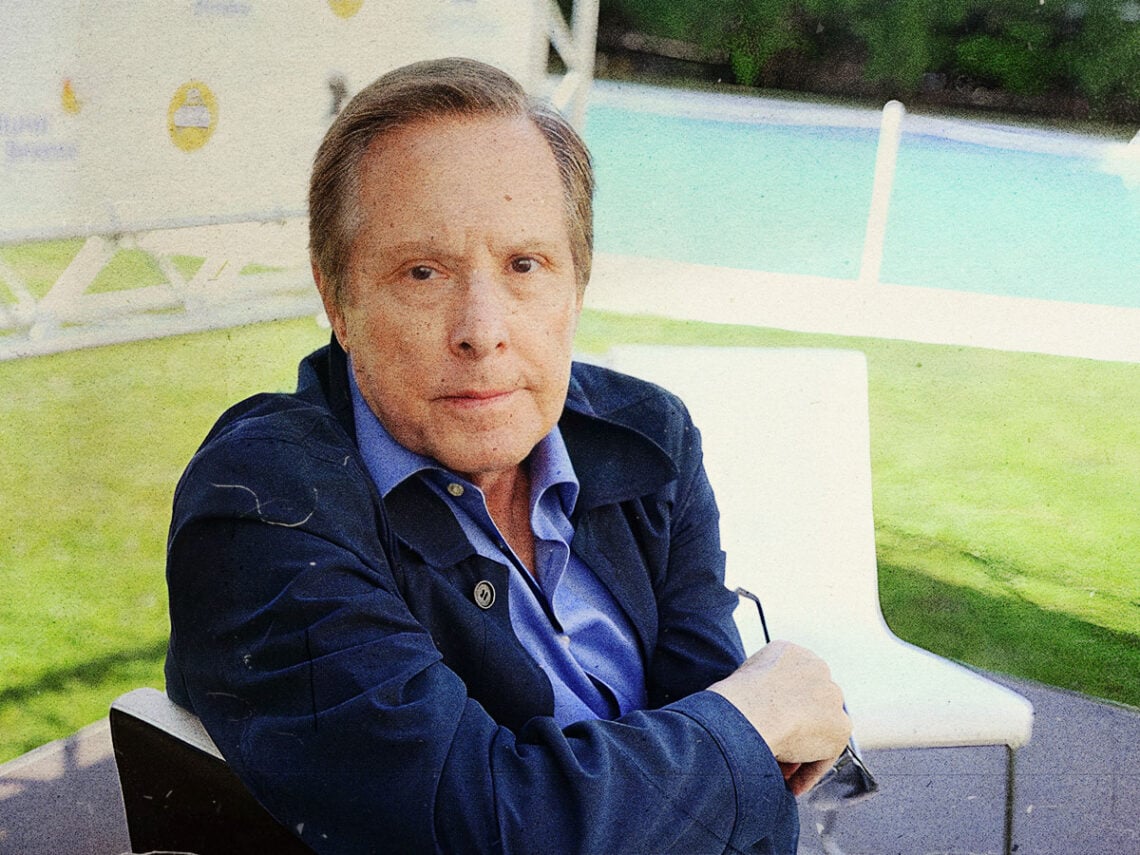
Why William Friedkin thought he’d be a serial killer if he wasn’t a director: “Violence uncurbed is dangerous”

If you like horror movies, you’ve most likely seen The Exorcist, a thrilling tale of demonic possession and religious chaos. Directed by William Friedkin, it is interesting to note that the filmmaker never intended for it to be a horror movie, although it has since become one of the most terrifying stories in cinema history, shocking countless viewers for decades.
He once told TheLipTV, “[Bill] Blatty [screenwriter] and I never spoke of making a horror film. We talked about making a film which was about the mystery of faith. I felt that The Exorcist story was one of the most powerful things you could do in dealing with the mystery of faith and God’s love and forgiveness.” However, the result was a terrifying odyssey into the powers of fear and religion combined, complete with spinning heads, invasive medical operations, and gross liquids spilling out of orifices.
Friedkin didn’t make another horror movie until 1990’s The Guardian, preferring to work within the thriller and crime genres. The director began his career in the late 1960s, directing the Sonny and Cher movie Good Times before releasing the seminal The Boys in the Band, an important milestone for queer cinema. The filmmaker quickly rose to prominence in the early 1970s, not just because of The Exorcist – the first horror film to win an Oscar – but also due to his incredible film The French Connection.
The director continued making movies until he died in 2023, with his last film, The Caine Mutiny Court-Martial, emerging following his death. Proving himself to be a dedicated filmmaker until the end, Friedkin’s career spanned genres and mediums as he demonstrated his talents across film, television, and theatre. He channelled his passion into cinema and art, which was a good thing because the filmmaker once admitted that if not, he’d probably have chosen a much more sinister route.
One of his last films, Killer Joe, centres around a family’s plot to kill a woman in order to benefit from her life insurance. Talking to The Guardian, Friedkin explained that he was inspired by themes of “loneliness, paranoia and obsession.”
He then added, “I’ve from time to time felt the urge to do violence. I still do, but I curb that.”
This led the filmmaker to perhaps reveal a little more about the inner workings of his mind than he should have. “My conscience kicks in and I’m able to deal with that through the films I do. If I wasn’t a film director I might have become a serial killer. I was very angry with no reason to be. We grew up in poverty, like in Killer Joe, but I didn’t know I was poor. Everyone I knew lived the same way.”
He concluded, “Violence uncurbed is dangerous. You have to channel it. Many of the great painters or composers led very violent and strange lives.” Thus, it seems as though Friedkin has channelled all of his passion and strong feelings of anger and emotion into his work, much of which is filled with violent male characters who abuse their power or get themselves involved in criminal activity.
