


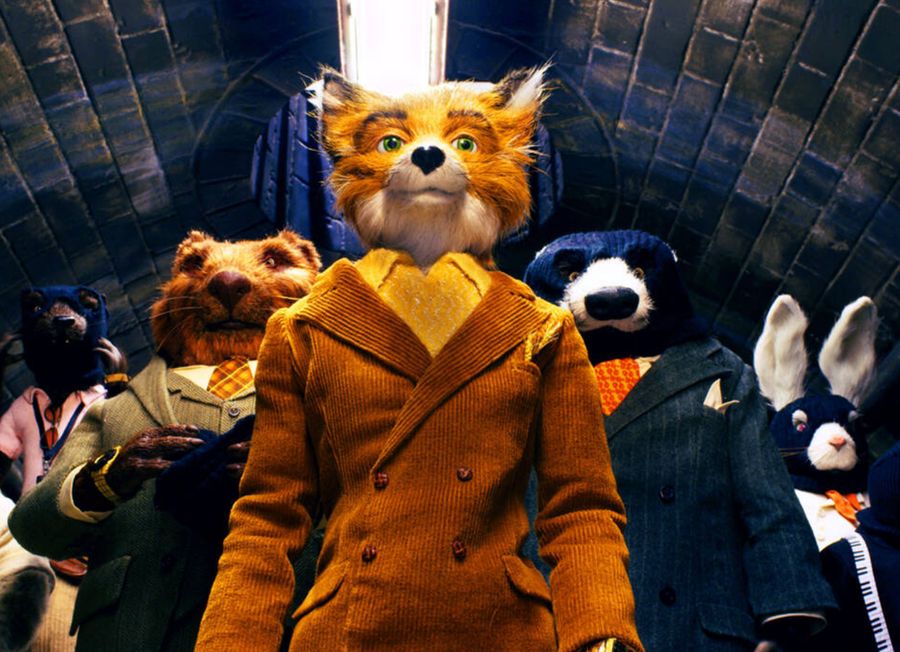
Why Wes Anderson thought ‘Fantastic Mr. Fox’ was too “personal” to be a hit

If you were to rank the films of Wes Anderson based purely on their uniqueness to the director’s aesthetic and style, Fantastic Mr. Fox could very well be at the top of the list. With meticulous design, surrealist dialogue, a throwback soundtrack, and a strong emphasis on “twee” compositions, Anderson’s first foray into stop-motion animation remains his most emblematic and easily-identifiable work.
Despite Anderson’s fingerprints being all over Fantastic Mr. Fox, the film was famously Anderson’s first (and so far only) adaptation of someone else’s work. The original Fantastic Mr. Fox was a children’s novel written by Roald Dahl, the same author behind classics like The BFG and Charlie and the Chocolate Factory. Dahl crafted a unique style all his own, making it difficult for audiences to initially see Anderson’s vision reconcile with Dahl’s already-established tone.
Ultimately, it might have been one of the reasons that the film underperformed at the box office. Grossing just $21 million in the US against a $40 million budget, Fantastic Mr. Fox was initially a bomb for Anderson. When asked by Film4 in a 2014 interview, Anderson placed the blame mainly on himself for the film’s lack of revenue during its theatrical run.
“With Fantastic Mr. Fox, I think I thought that I was taking less of a risk than I ever had,” Anderson revealed. “I thought, ‘I’m going to do an animated Roald Dahl story. This will guarantee me an audience.’ Which then, in the course of making the movie, I think I managed to prevent that from happening.” Dahl’s work had previously been adapted using stop-motion animation in the 1996 film James and the Giant Peach, which also had paltry box office returns.
Anderson remained creatively satisfied with the final product. “The process every day of making the film is every phase of production happening all at once,” Anderson explained. “That goes on for two years of this sort of thing. And the techniques of animation are very interesting in their storytelling tools that I was sort of picking up. So, for me, I really found all kinds of inspiration in going through that process, as well as just loving making the movie itself.”
According to Anderson, the film might have been limited from the outset due to his chosen animation style. “The choice of doing the film in stop motion, in America I think, that’s sort of a way to reduce the number of people who are going to see the film automatically,” Anderson said. “I think as it went along, what happened was as we made the film, each step of writing it… I got more and more invested in it than I expected to be. It became more and more personal, and I always felt we were trying to do Roald Dahl, but I also thought we were finding a lot of room to invent our own things to go in this.”
“So, in the end, it ended up being something that I feel is a very personal film that I feel very close to,” Anderson concluded. “It feels like my work, but it doesn’t really feel like what I would necessarily picture as a hit cartoon.”
Watch Anderson explain his thoughts on Fantastic Mr. Fox down below.
