


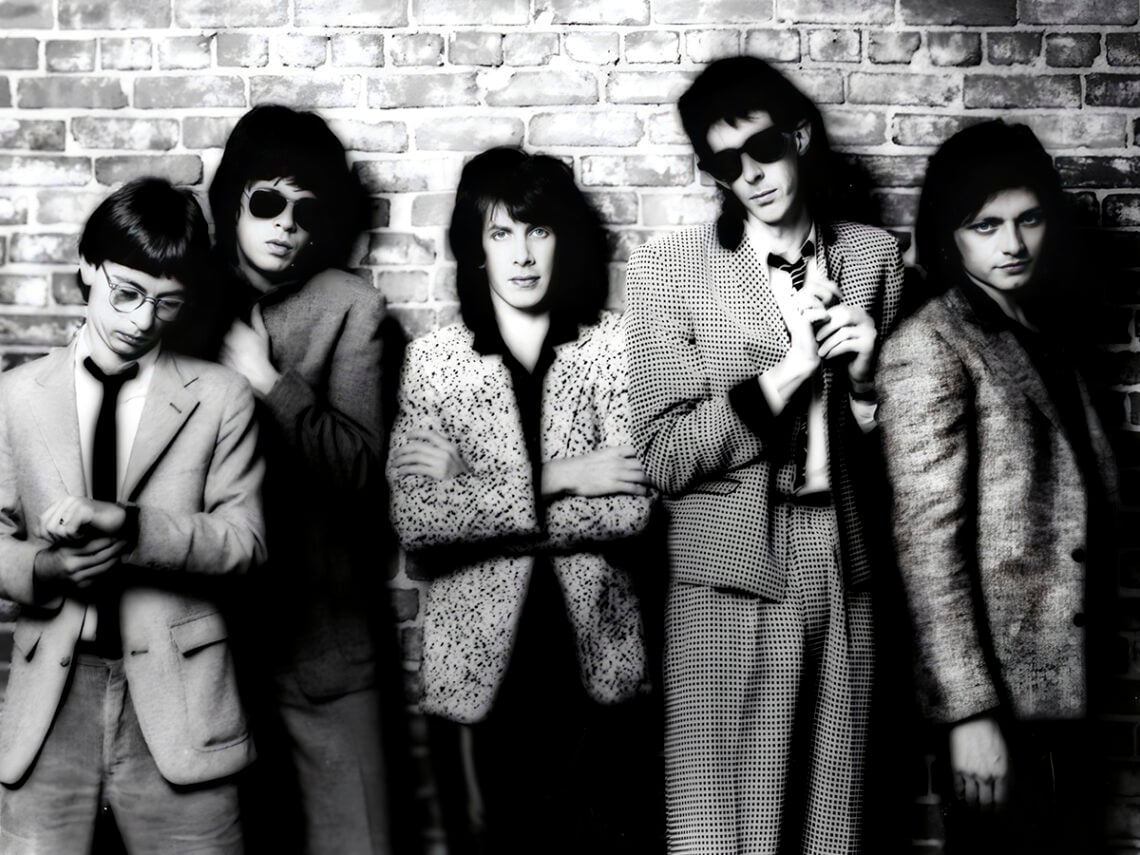
Why The Cars were the anti-Kiss: “We are not show business characters”

The Cars are good evidence for the idea that good songs will win out in the end.
For a band that formed and flourished during the heydays of punk, disco, prog, metal, and electro-pop, they were far less dependent on costuming and make-up than most of their early MTV contemporaries, and as a result, were probably a bit less vividly remembered for a while after their 1988 break-up.
Over the subsequent forty years, though, time has been kind to the Cars and the songbook of frontman Ric Ocasek, in particular. While his genius-level melodicism tends to get a lot of the recognition, Ocasek was also unusually skilled at moving seamlessly between silly bubblegum lyrics and heart-on-the-sleeve ballads—the latter of which he typically handed over to bassist Benjamin Orr for a more “trained” lead vocal.
“I would always sing the funnier ones,” Ocasek told the Chicago Tribune in 2006, referring to Cars hits like ‘My Best Friend’s Girl’ and ‘You Might Think’.
Ocasek had a similarly clear understanding of what sort of image he wanted the Cars to project during their live shows. As a guy who enjoyed his time in the studio considerably more than spending months on a tour bus, he wasn’t particularly motivated to follow the rock and roll concert trends of the era either, i.e. pyrotechnics, smoke and lasers, giant stage props, choreographed theatrics, etc. By quite stark contrast, in fact, the Cars became somewhat famous for their minimalism and aloofness on stage; a stationary coolness more akin to the Velvet Underground.
“A lot of people used to talk about [our stage show] being cold and distant,” Ocasek said in ‘06, “but that was something I intended it to be. I didn’t want to prod the audience; I wanted to retain the mystery, so we didn’t talk to the audience much.”
Cars guitarist Elliot Easton seemed fully on board with Ocasek’s philosophy when describing the band’s stage presence during the height of their commercial success in 1984.
“Everybody’s so used to the heavy metal posturing,” Eastman told the Hamilton Spectator. “We think that type of thing is very silly.”
In 1984, “heavy metal posturing” meant exactly the sort of thing that was perfectly spoofed in one of that year’s best films, This Is Spinal Tap. It was the cliches born from bands like Kiss that had turned hard rock and glam into a sort of product-selling theater, leading to the age of hair metal and all the “Hello, Cleveland!” stage banter that came with it.
“I’m not into show business,” Ocasek said during the Cars’ 1984 tour, when they were supporting the hit-laden album Heartbeat City. “We are not show business characters. . . . I don’t insult the audience’s intelligence. We just don’t want to be pretentious.”
Even though the Cars are now generally remembered as being part of the post-punk scene broadly known as “New Wave,” the late Ocasek, who died in 2019, was the furthest thing from a scenester or a trend chaser. If anything, his instincts throughout his career were to observe the tried and true method and look for an alternative.
“You’ve got to open the wrong door,” he said, “take the wrong roads, head in the wrong direction to find something new. That’s been my life.”
