


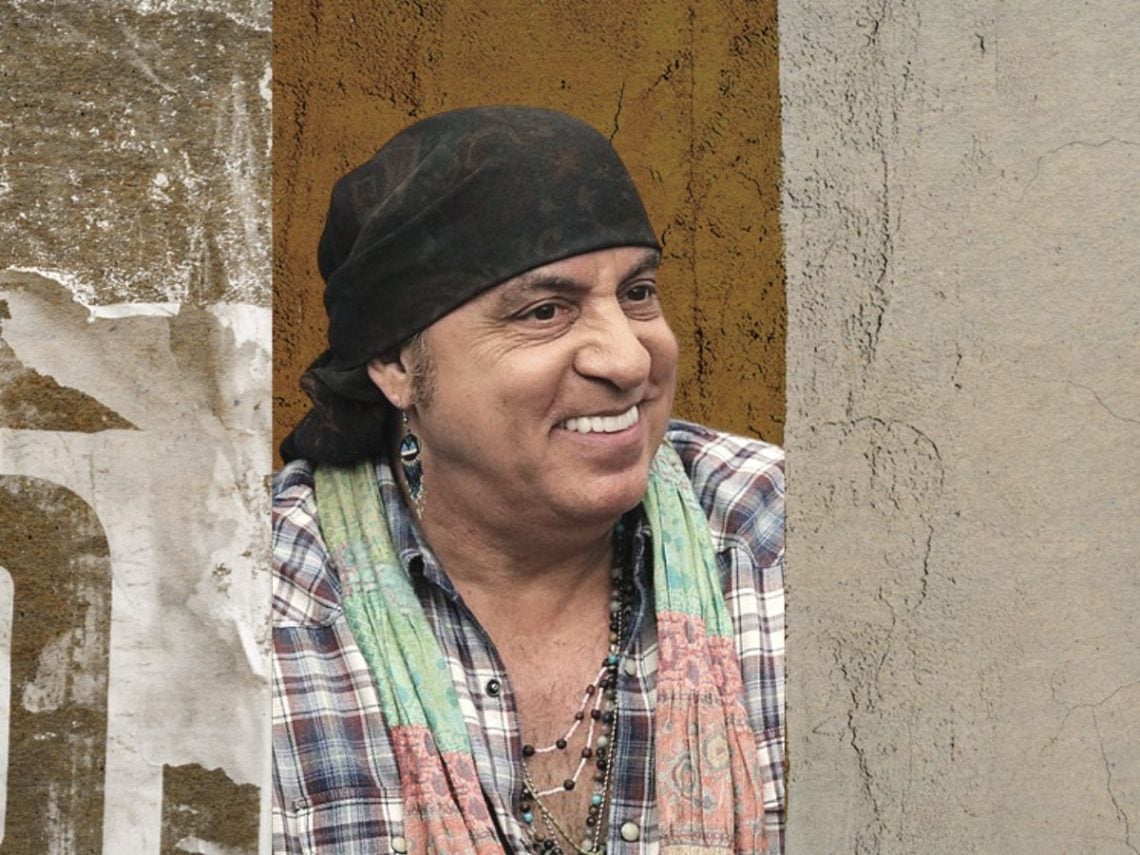
Why Steve Van Zandt thinks rock music is “irrelevant”

The music industry is full of legends, and one of the most eminent is the multi-talented rockstar-turned-actor Steven Van Zandt. An acclaimed guitarist, he is most famous for being in Bruce Springsteen’s E-Street Band and has propped ‘The Boss’ up for decades. As a musician, he is so respected that the likes of Meat Loaf, Pearl Jam and Nancy Sinatra have all covered his songs.
However, he is not just an esteemed musician; his list of acting credits is also stellar. His most prominent role came as Silvio in The Sopranos, but he’s also starred in Lilyhammer and lent his talent to Martin Scorsese’s The Irishman. Elsewhere, he has pledged himself to various charitable causes and has invariably shown himself to be one of the most affable men in rock.
Despite this multifarious career, before all else, Van Zandt is a revered musician. This status has made his thoughts on music some of the most coveted out there, with his nuggets of wisdom always welcomed. When he sat down with Spin in March 2022, he gave one of his best takes yet.
It was immediately brought to Van Zandt’s attention that he had recently said that rock ‘n’ roll has become “irrelevant”. Asked how things came to be, he responded with an informed answer that’s hard to question.
He started by clarifying his original point: “It’s irrelevant in terms of the industry. We must hasten to add that live it is the biggest thing. The last few generations just don’t really go out to see bands on a nightly basis, which is what we did, but they will go to festivals. I think they’re a very healthy way of keeping things alive.”
“In the industry itself, we went back to a pop era. The rock era lasted — I clocked it almost exactly 30 years from the Rolling Stones to Kurt Cobain’s death. Almost exactly since’ 65-’94. Then we returned to a pop era”, he continued.
“‘Pop era’ is where we found rock in the first place. Now we’re back to a pop era, which is mostly mediocre stuff but that’s okay. Rock has now returned to the cult, perhaps where it belongs. It was a cult in ’65 and ’66 when we staged the coup on the charts with The Beatles, or British invasion, and now we’ve returned to the cult where I think, naturally, in a lot of ways, rock belongs.”
“The infrastructure’s changed, you don’t have the local clubs, the local theatres necessarily. You don’t have the tour support, that’s long gone. Every band gets sick when I tell them this, but bands got $250,000 to make a record. You also got $250,000 to tour. That was normal. Because you have to develop. That’s where greatness comes from. Greatness comes from development. Nobody’s born great.”
He concluded: “All of that and plus radio playing local bands– I would call the biggest FM station in town, talk to the DJ and request songs. That’s the other reason why rock has now withdrawn from the mainstream. MTV both gave it a boost to ridiculous sales, but at the same time, it helped to kill it. We used to be very excited when a band came to town. You could barely get a picture of them in a magazine.”
