


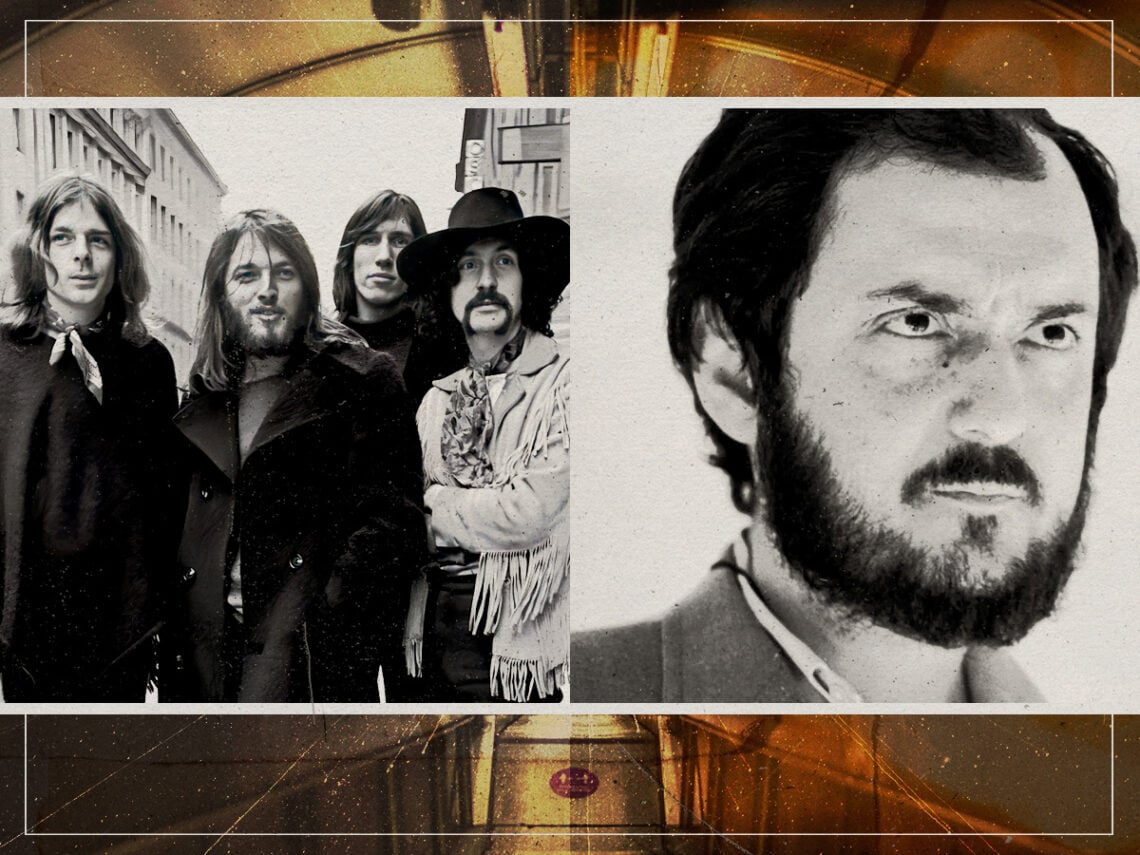
Why did Pink Floyd stop Stanley Kubrick from using their music?

Being featured on a film soundtrack for the legendary Stanley Kubrick is an opportunity few musicians could ever refuse, regardless of their status or reputation. The chance to have your music accompany the visionary work of a cinematic icon like Kubrick is almost universally irresistible—unless, of course, you’re Pink Floyd.
There are undeniable parallels between the work of Pink Floyd and Stanley Kubrick. In fact, you could go as far as to say that they are each other’s equivalents in their respective field. They’ve both travelled into territory which explores future dystopia, and their work on paper fits together like a hand in glove. Despite Kubrick’s best wishes, we never got the opportunity to see this happen in actuality, and Floyd’s reasoning is the definition of petty.
A long-standing rumour suggests that Pink Floyd’s track ‘Echoes’ was created to feature in Stanley Kubrick’s classic film 2001: A Space Odyssey. The song appeared on their 1971 album Meddle, released three years after the movie. While it’s plausible that the film influenced the creativity behind the track, contrary to popular belief, Pink Floyd never intended for it to be part of the Kubrick effort. However, their paths would continue to cross in the future.
When Kubrick came calling to request ‘Atom Heart Mother’ to be featured in A Clockwork Orange, the band refused. Nick Mason, who was asked in 2018 by an Uncut reader about why the band famously turned down Kubrick, suggested that past issues got in the way. “Probably because he wouldn’t let us do anything for 2001,” explained the drummer. “It sounds a bit petulant! I don’t remember whether he did ask for something from ‘Atom Heart Mother’. We’d have loved to have got involved with 2001 – we thought it was exactly the sort of thing we should be doing the soundtrack for.”
Meanwhile, Roger Waters first acknowledged the band’s refusal to allow the track to be used in the film when he spoke with Great Lake in 1973, explaining: “He just phoned up and said that he wanted it,” the Pink Floyd founder recalled. “We said, ‘Well, what do you want to do?’ And he didn’t know. He [said he] wanted to use it ‘how I want, when I want’.’ and we said right away ‘Right, you can’t use it’.”
Interestingly, Roger Waters later expressed some regret over the decision to refuse Kubrick. In a separate interview, he admitted that it might have been a mistake to reject the offer, given Kubrick’s genius and the film’s lasting impact on cinema.
Meanwhile, though Mason admitted that the band would have loved to contribute to 2001: A Space Odyssey, it’s likely that if Kubrick had called to ask for permission, the conversation would have ended just as abruptly. Both Pink Floyd and Stanley Kubrick were fiercely protective of their creative autonomy, and the concept of collaboration didn’t align with their desire for full control. In reality, the word “democratic” didn’t apply to their approach to joint projects.
Despite the refusal, Kubrick and Pink Floyd’s paths remained intertwined in popular culture. Kubrick would go on to use classical music, such as Beethoven, in A Clockwork Orange, while Pink Floyd’s later works, like The Wall, became renowned for their own cinematic qualities, often compared to the grandeur and ambition seen in Kubrick’s films.
Though their art may have stemmed from a similar creative space, the steadfast refusal of both Pink Floyd and Kubrick to relinquish control made any collaboration between them impossible. However, it was precisely this fiercely independent spirit that defined their work. Without that uncompromising attitude driving their creations, neither would be remembered as the mercurial talents they are today.
