


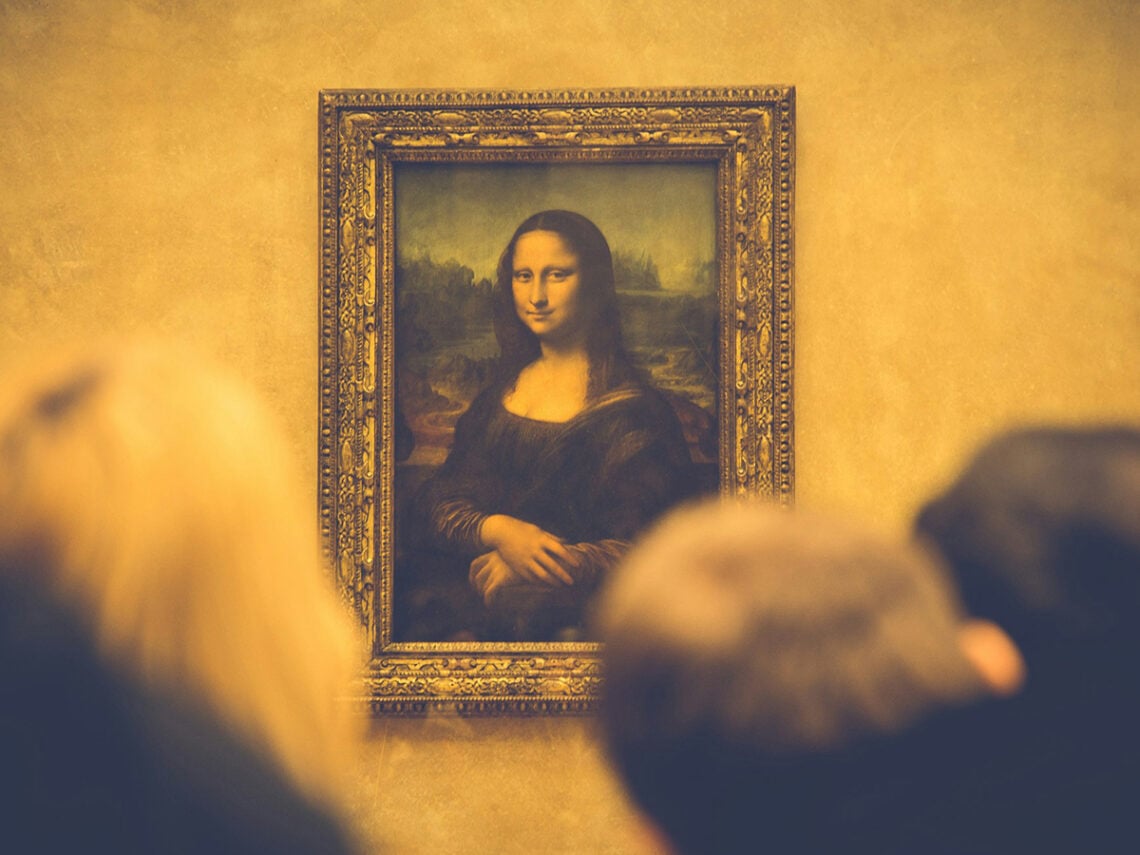
Why is the ‘Mona Lisa’ in the Louvre and not in Italy?

Anyone who has ever perused the overpopulated tourist spots in Italy‘s busiest cities will also understand the enriching experience of artistic and cultural immersion.
There’s nothing like it, really. Italy is home to countless names that we’d all do well to know more about, from Caravaggio to Sandro Botticelli. Florence is a gorgeous embarrassment of riches when it comes to artistic works and monuments, sporting everything you could ever wish to stumble across, like the statue of David, to just about everything you might be lucky enough to witness across three floors at the Uffizi Gallery.
Rome isn’t too shabby, either. Aside from all the most obvious reasons that it makes for one of the best and most beautiful holiday destinations in the whole world, Rome is what you might call a city of endless gems, from the Trevi Fountain to the impossibly intricate Sistine Chapel ceiling. Or in fact, any chapel – if you happen upon literally any, you’re bound to be awe-inspired. It’s just a fact of Italy. There’s beauty everywhere.
When you start to truly pay attention to Italy’s artistic history, beyond just what you see on any given street in the capital city, or any other TikTokified place for that matter, things get a little overwhelming. There’s a lot to take in, a lot of stories to sink your teeth into, and sometimes a lot of violence and gore to unpack if you’re into things like Caravaggio’s Medusa.
Back over in Tuscany, though, the city holds the one name that continues to capture everything most of us will ever need to know about Italy’s storied artistic history – Leonardo da Vinci. And with that name always follows the name of one of the most famous paintings in the world: the Mona Lisa. The art piece itself has become subject to countless conspiracies over the years, like whether there’s a hidden meaning to decode, or whether her eyes follow you if you move around.
There’s also the kicker – whether she’s become a Mandela effect or not, with some suspecting her smile used to be different, more obvious, perhaps. But one that baffled historians for a long while was why da Vinci took so long to complete it, having started and finished it across several years. Though it may not look like it, the Mona Lisa is an exceptionally intricate piece, and da Vinci himself was a perfectionist. So, that probably had a lot to do with it.
But another mystery around the Mona Lisa is the fact that, given da Vinci was an Italian artist, why has it been hanging up in Paris’ Louvre Museum since 1804? In all fairness, many people have taken issue with this over the decades. One museum worker actually tried to steal the painting back in 1911 because he believed that it belonged to Italy. He even tried to sell it for two years in Florence, until he was discovered and arrested for this theft.
Last year, archaeologist Zahi Hawass argued that the piece belongs to Italy and said he would try to speak to the Italian culture minister to bring it back home. But as of today, the Mona Lisa still sits proudly on display in the Louvre. Why? Well, in fact, the answer is fairly simple.
Da Vinci actually lived his final years in France, meaning the painting was with him during his final years. He also sold it to François I, the French King, in 1518. After the French Revolution, it belonged to the French Republic, eventually making its way to the Louvre, where it has stayed ever since.
There’s much to be said about where the Mona Lisa should or shouldn’t be, especially when you consider the fact that da Vinci started the painting in Italy but ultimately finished it in France. Legally and administratively, it belongs to France, and da Vinci also had personal ties there before he died. But given that the artist himself started it in his native Italy, and the fact that it means so much to the country culturally, it’s easy to see why some would argue that it’s a long, long way from home, and has been for far too long.
