


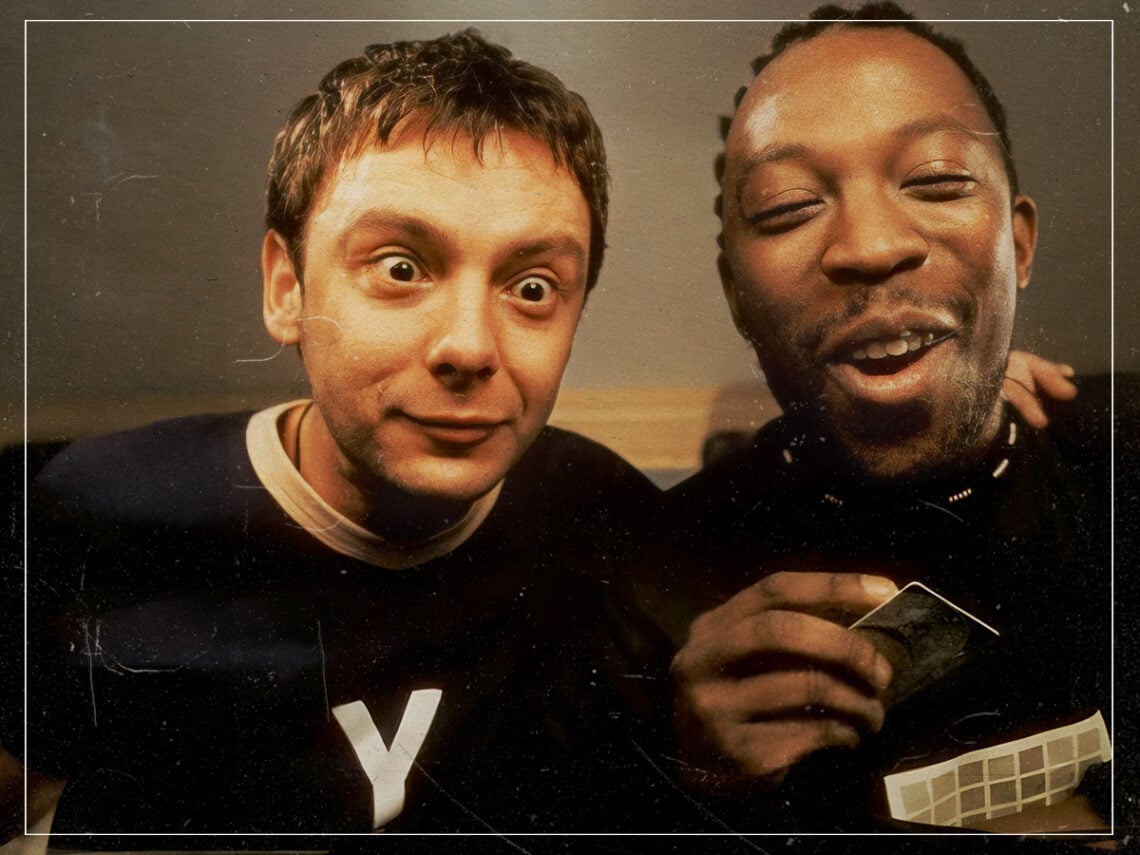
Why is the sunrise scene in ‘Human Traffic’ so inexplicably euphoric?

Age certificates for movies are used to ensure that no cheeky whippersnapper tries to sneak into the screening of a violent horror film too disturbing for their confused little minds, yet, for many movies, they suggest the exact age at which a viewer will get the most out of a film. There are few better examples of this than Justin Kerrigan’s 1999 coming-of-age comedy Human Traffic, an ode to the pure bliss of youthful exuberance and anticipation.
Released at the turn of the new millennium when British culture was in flux between the extremely lame era of ‘Cool Britannia’ Britpop and the forthcoming influence of the digital age, Human Traffic is a film of effortless purity that bottles an ephemeral era – that liberated airlock of adolescence. Penned and directed by Justin Kerrigan, a young Welsh filmmaker who was on his way out of such a lifestyle but who was very much informed of the scene, the movie set out to be a realistic portrayal of British club culture at the turn of the new millennium.
Set in Cardiff, the film is an odyssey of just one night out experienced by a group of five friends, each shamelessly emerged in the 1990s clubbing scene where drugs provide the foundation for any and all ‘great night’. While focusing largely on John Simm’s Jip, a chippy chap who is perturbed by his struggles to maintain an erection, the film sways from friend to friend to create a rich tapestry of life for the youngsters.
The charming piece of filmmaking that pops out has since gone on to act as a wistful porthole into the past for former late-night ravers looking to revisit the glory of their youths without waking their spouses or terrifying their kids. Human Traffic is, indeed, a time capsule that captures the mood, tone, and culture of the late 1990s with pinpoint accuracy, but more so, it is a film that captures something more humanly truthful about the wonderful impertinence of youth.
Much like any young creative wishing to imprint their identity onto the big screen, Kerrigan creates a film that feels more like a mood board of concepts and skits, where crowds sing crude reworks of the national anthem, ‘spliff culture’ is sincerely broken down and throwaway gags are given needless breathing room. It’s exactly the kind of snappy, colourful and truthful content that would grip the attention of any excitable youth looking to see themselves reflected in cinema.
One such moment is something of a throwaway vignette, a moment at the end of their exhilarating night where the pills have worn off, the body has given up, yet the mind refuses to shut down as if it is stunned into a state of twilight euphoria.
This contemplative feeling of finite melancholy and warm glee is perfectly captured when the group drives home from the after party, and Kerrigan turns the camera to the dawning sun rising over the city as the Orbital track ‘Belfast’ swims in the background. Punctuated by the ethereal enchantment of the song, the scene inspires a swirling euphoria in the heart, taking viewers back to the days of youthful rhapsody, where the tweeting birds of the morning would welcome you home with jubilant plaudits.
For younger viewers, it’s an honest reflection of their life they so rarely see brought to the screen, and for those who once partied into the night, it’s a gateway into another time and place. Those were, indeed, the days.
