


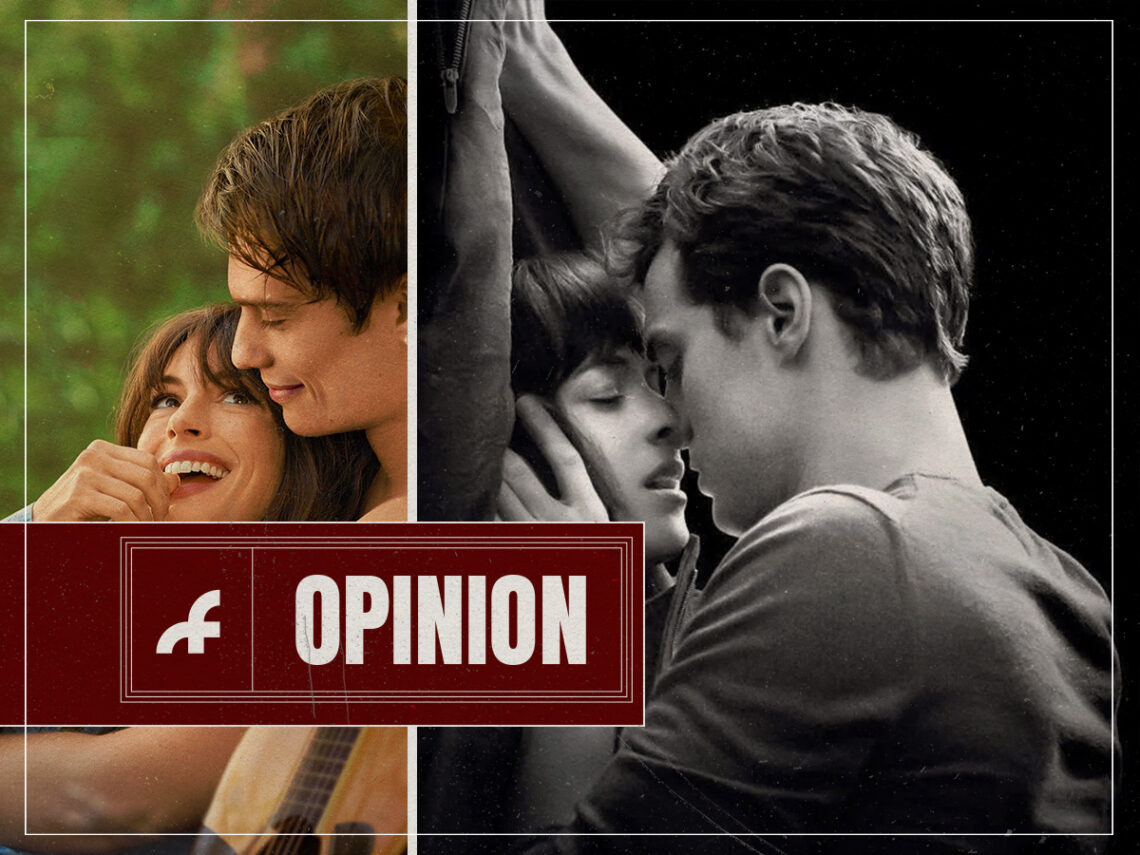
Hear Me Out: Hollywood needs to stop adapting fan fiction

If you weren’t a teenage girl during the 2000s or 2010s, you might not be familiar with the extent of the fan fiction phenomenon that boomed on sites like Wattpad and Tumblr during this time. While fan fiction has technically existed for decades, with writers taking pre-existing people or characters and using them for their own fictional narratives, the internet unleashed a new platform for budding writers to put themselves into imaginary relationships with celebrities, particularly boyband stars and actors from teen-oriented shows.
On sites like Wattpad, in particular, users could upload chapters whenever they liked, writing whole books over the course of weeks or months, attracting lots of readers who revelled in the unrealistic storylines about their favourite artists or characters written by other fans. However, since anyone can access these sites, anyone can write these stories. Unknowingly, thousands of readers have likely read smutty pieces of fan fiction which were actually written by girls as young as 12 or 13, using their limited knowledge of sex and relationships, mainly taken from movies, television and other fan fiction, to pen wholly romanticised, and often problematic, portrayals of love and intimacy. Still, the ones written by adults, usually featuring clumsy prose and undeveloped storylines, tend to bear the same issues.
That’s not to say there isn’t great fan fiction out there, but the ones which have gained the most popularity are the ones that have been turned into movies – and none of them are good. The most recognisable is Fifty Shades of Grey, a hugely successful movie that spawned two sequels despite being critically panned. The series is adapted from the book trilogy written by E.L James, who based the novels on Twilight fan fiction she had written under the name Snowqueen Icedragon.
Clearly a big fan of the iconic vampire-themed novels and films, James eventually changed the names of the characters in her Twilight fan fiction and reworked her scandalous story, which was initially called Master of the Universe, into three parts to form the Fifty Shades trilogy. The first movie was released in 2015, four years after the first novel was published, with Dakota Johnson and Jamie Dornan playing the lead roles.
The film is undeniably terrible – stiffly acted, cringe-inducing and unbearably long – yet its saucy content has attracted lots of viewers who can’t get enough of the movie’s painfully uncomfortable trope: virginal ‘good girl’ protagonist meets dominant man with anger issues who shows her a whole new world (BDSM). When a movie is adapted from a terribly written book that romanticises an abusive relationship and depicts a hideous amount of toxic masculinity, it’s not going to be good, is it? Fifty Shades is the ultimate proof that fan fiction shouldn’t be adapted for the big screen, but Hollywood couldn’t be more blind to the matter.

A few years later, a notorious book called After, which was first published in 2013 on Wattpad, was made into a film. The novel, written by Anna Todd, who rapidly published a chapter a day online, is a mess. Not only is it poorly written, but Todd’s novel is even worse than Fifty Shades when it comes to its tropes and themes. It follows a similar set-up – a virginal ‘good girl’ is enticed by a ‘bad boy’ with emotional issues. However, the characters are college students, with the male lead, Hardin Scott, based on a real person – Harry Styles.
The singer has been the subject of much fan fiction, it seems, with After being the worst. Todd describes this Styles archetype (some of his tattoos are even the same) as abusive and repulsive, yet she paints his behaviour as attractive, protective and sexy. The films, starring Josephine Langford and Hero Fiennes Tiffin, are just as awful as their written counterparts, with cheesy, clichéd dialogue and poor acting becoming their main features.
Both Fifty Shades and After promote incredibly unhealthy relationships, so obviously steeped in classic Wattpad tropes, such as women wanting a protector and sex being a radical part of the protagonists’ self-discovery despite clearly being pressured into it. The problem with these movies is that their source materials are pieces of amateur fiction – poorly written without proper character development or regard for the message being sent to the reader.
A recent addition to the canon is The Idea of You, starring Anne Hathaway and Nicholas Galitzine, based on the book of the same name by Robinne Lee. Although it might not technically be classed as fan fiction, the writer did admit to taking inspiration from Styles. The film follows Hathaway’s Solene as she falls for a much younger boyband member she meets at Coachella while with her teenage daughter.
Surprisingly, the film has been receiving relatively good reviews. It has been praised for being a unique look at a relationship between an older woman and a younger guy and for exploring divorce and motherhood. Still, whether you think the film is good or not, it’s hard to separate the image of Styles from the character of Hayes, whose name is close enough, as is his British accent and spattering of arm tattoos.
When a movie is clearly the product of a writer imagining themselves in a relationship with a real-life celebrity, it’s hard to take the film seriously. When we can obviously identify such a famous figure as Harry Styles within one of the main characters, the movie begins to feel a little corny – uncomfortable, even. There is surely room in Hollywood for movies based on fan fiction that is well written – ones without the typical toxic tropes associated with the format and ones devoid of characters so blatantly borrowed from pre-existing people. So far, though, this hasn’t been achieved.
